

Research HighlightsRobotic Mowers: Potential Weed Control Option
Highlights:
- Autonomous mowers designed to control weeds in row crops could offer a new option for weed control.
- On-farm extension trials demonstrated both the potential improvements and advantages of this approach.
- Technical issues reinforce the value of relying on extension research to test new products and practices.
By Laura Temple
Fields could eventually be managed like they belong in an episode of The Jetsons. Technology companies are developing autonomous robots for tasks like planting and spraying herbicides.
Heather Darby, professor and agronomic and soils specialist with University of Vermont Extension, is exploring an alternative approach to weed control — autonomous mowing robots.
“In the East in general, many people live near farms, causing lots of environmental scrutiny,” Darby says. “Some states are banning specific herbicides. Farmers need information about other ways to control weeds in soybeans and other crops, while minimizing the use of pesticides.”
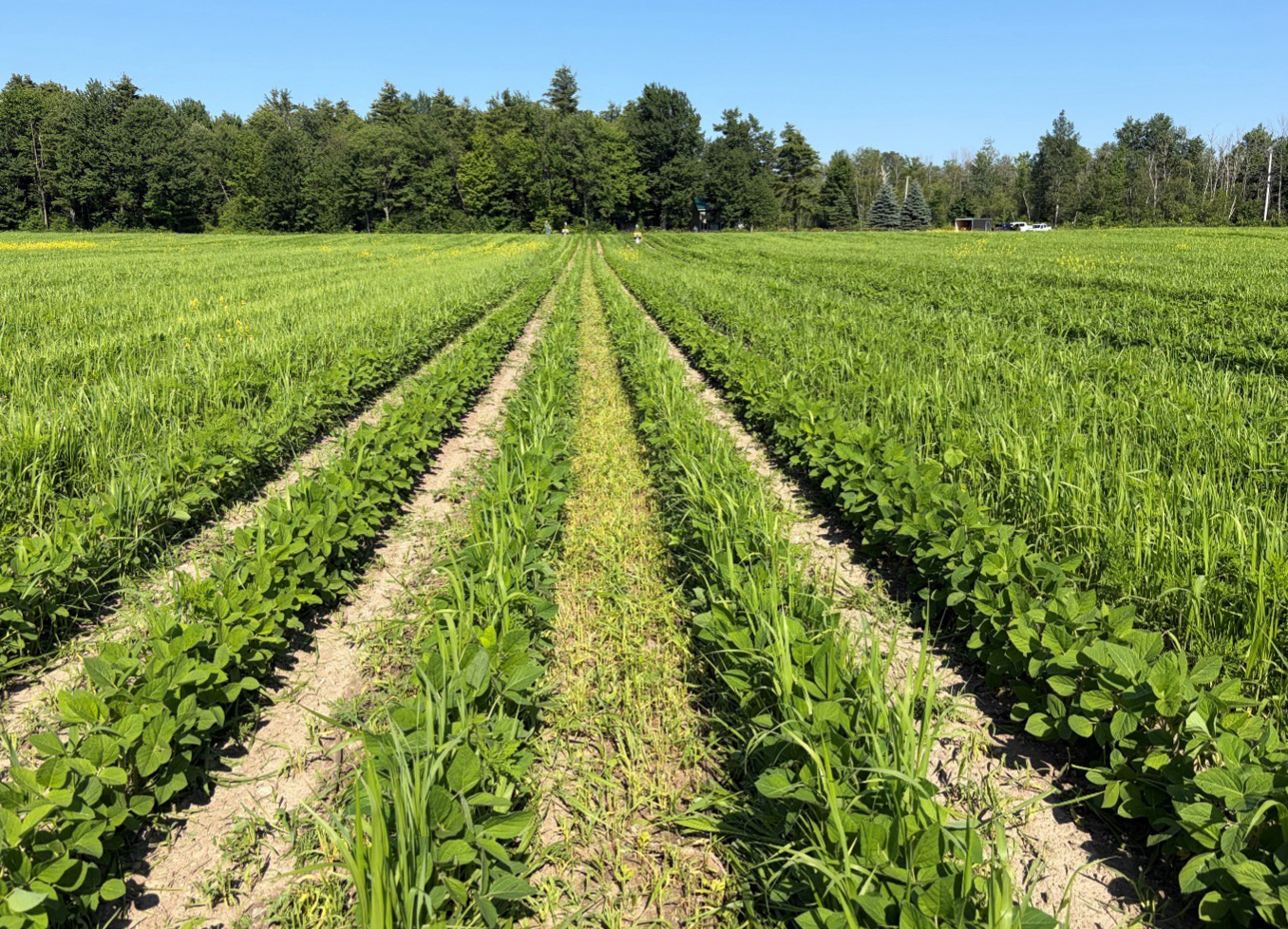
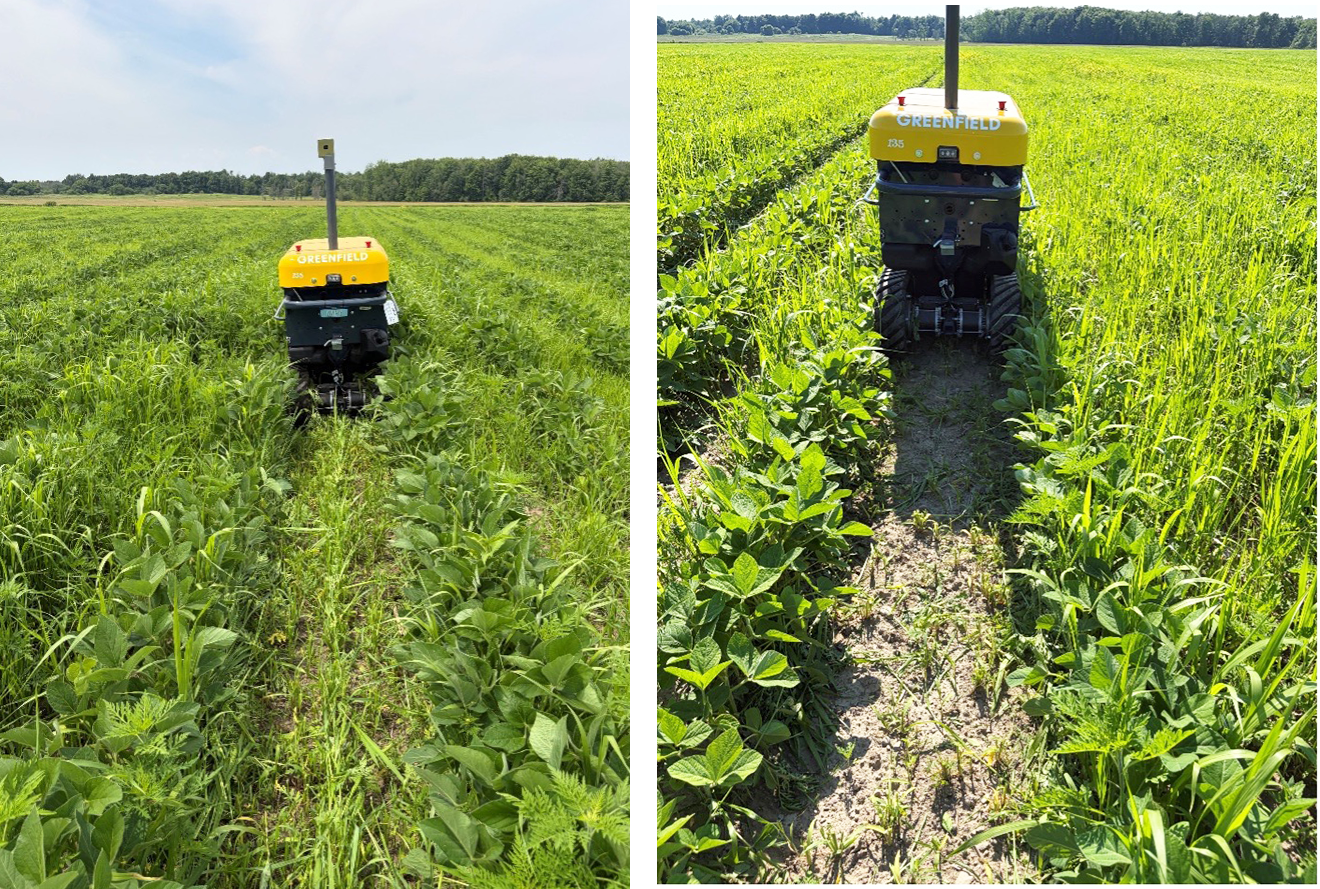
She learned about robots designed to support weed control that run a mower deck. They move on tracks designed to navigate between 30-inch rows in soybeans, corn and other row crops. Two rechargeable batteries power each robot for between 3 and 4 hours at a time. Darby purchased a set of six for her research program.
“As researchers, we should be trying these things,” she notes. “The robots were bigger and taller than I expected.”
With support from the Eastern Region Soybean Board, she planned on-farm trials with six cooperators to learn how these robotic mowers fit with other weed management options.
“We are learning a lot about how this promising system works,” Darby says. “We also experienced why it makes sense for extension researchers to explore new technologies before farmers invest.”
Technological Growing Pains
Darby explains that the current iteration of these robots requires fields to be mapped by drones with specific software. The maps define field rows and the space between the rows where the robots will run. They must be made when the crop is about 4 inches tall, but before significant weed pressure emerges between the rows.
“Anything that could go wrong, did go wrong for us,” she says. “We all learned a lot together.”
The drone literally crashed during the first effort to create field maps. When a replacement drone finally became available, weeds had grown enough that the fields were hard to map accurately. When running robots in fields, a hard-to-find issue with the GPS base station — a mouse-chewed wire — resulted in lost time.
Proving the Concept
Because of the technical challenges, in-field trials weren’t carried out exactly as planned. Though some cooperating fields had to be sprayed with herbicide to protect yield potential, Darby ran the robots in some cooperating fields to control Virginia creeper and bindweed.
“Once we had accurate maps and working hardware, the robots worked as advertised,” she reports. “They move relatively fast, up to about 6 miles per hour.”
Through an app, operators tell the robots what row to go to and manage the height of the mower deck. All the robots in a fleet communicate and work together to cover a field. They also report field issues, when batteries are low and when they need to return to the base to charge.
One of Darby’s cooperators was relying on the robots for weed control in an organic soybean field. By the time the robots were able to run in the field, weed pressure was heavy.
“The robots mow weeds well,” she says. “They managed the heavy weed pressure well. Cultivating fields like this one creates ridges that make harvesting harder.”
Future Possibilities
Despite the technical challenges, Darby believes that further research will reveal the potential for these robots.
“Right now, drone mapping creates real time constraints,” she says. “The company is working toward using the maps created at planting to drive the robots.”
In the meantime, her research will tackle questions to determine how to best use these robots.
- Should farmers start with pre-emergence herbicides?
- How often do weeds need to be mowed?
- Can this approach help manage herbicide-resistant weeds?
She also plans to explore other uses for these robots.
“A foliar feeding unit has already been developed,” Darby says. “Work on a possible cover crop seeding unit is underway. I am 100% committed to evaluating this technology.”
Although the first year of this research didn’t go as planned, it exemplifies the value of university research.
“Farmers can let us figure out how new technology works, so we can deliver recommendations they can use,” she says. “That’s the role of extension.”
Additional Resources
The Future of Weed Management is Automation – SRIN article
Exploring Autonomy and Minimizing Soil Compaction at Planting – SRIN article
Meet the Researcher: Heather Darby SRIN profile | University profile
The Soybean Research & Information Network (SRIN) is funded by the Soy Checkoff and the North Central Soybean Research Program. For more information about soybean research, visit the National Soybean Checkoff Research Database.
Published: Oct 5, 2026


