


Research HighlightsNematode Knowledge Leads to Successful Strategies
Highlights:
- Multiple nematode species can steal soybean yield in Southeastern fields.
- Farmers need nematode sampling and speciation to learn what nematode species are attacking crops in specific fields.
- Based on known nematode pressure, farmers can develop strategies like planting resistant varieties, rotating crops or treating with nematicides to reduce populations and protect future yields.
By Laura Temple
Many soybean growers hear about “nematodes” and think just soybean cyst nematode. That’s not always accurate.
“South of the Mason-Dixon line, root-knot nematode species take over,” says John Mueller, professor of plant pathology at Clemson University. “If we get calls from growers about potential nematode problems, 20 end up being root-knot nematode, compared to just four or five for soybean cyst nematode.”
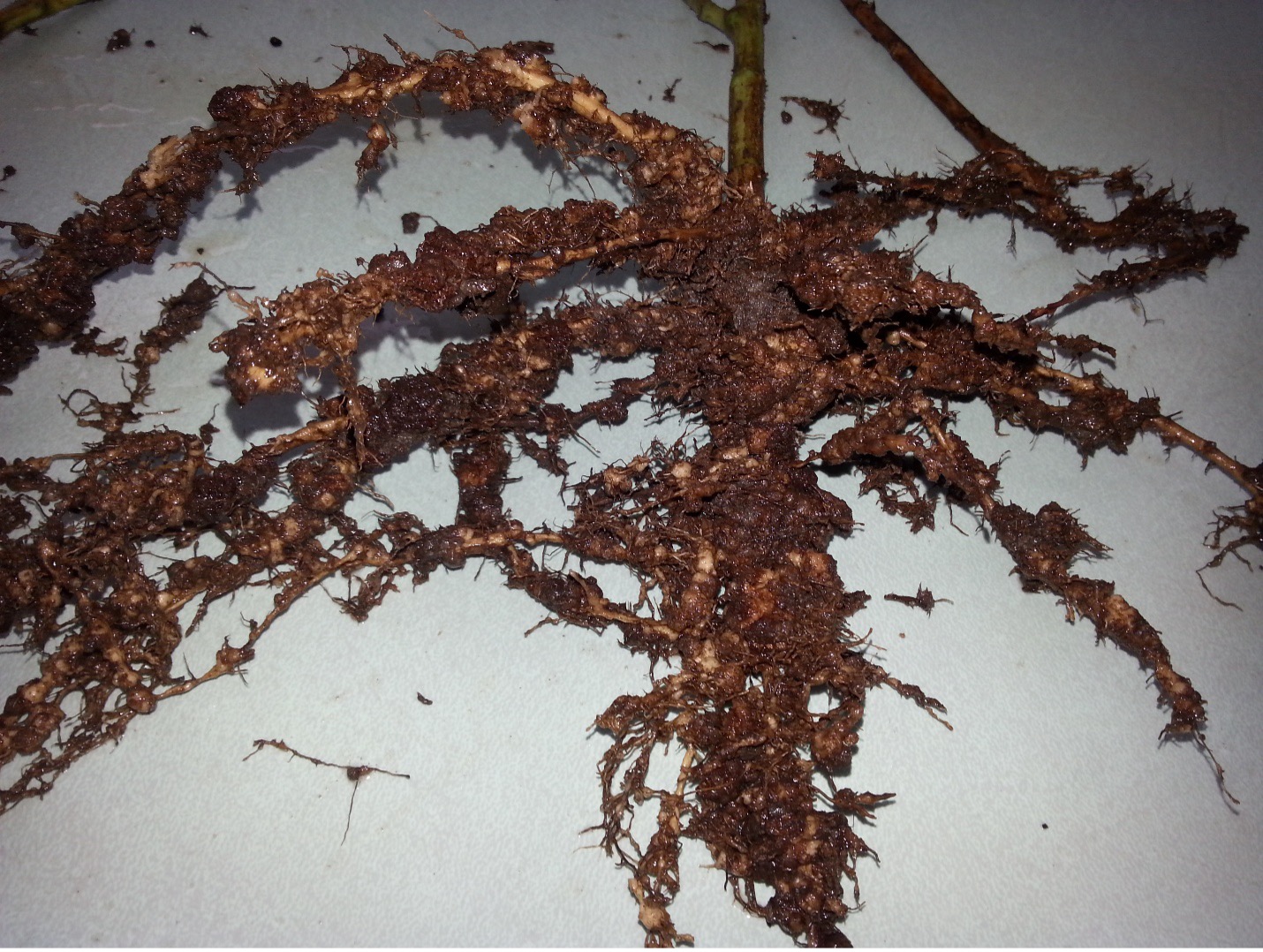
Though southern root-knot nematode is predominant, fields can host additional species of root-knot nematode. Guava root-knot nematode can show up in vegetable fields and also infects cotton and soybeans. Multiple crops, including soybeans, can host peanut root-knot nematode, despite its name. He adds that Columbia lance nematode and reniform nematode also show up in Southeastern fields and can cause significant yield loss.
Mueller cites multiple reasons for the diverse nematode pressure in South Carolina and neighboring states.
- Warmer temperatures allow different nematode species to overwinter.
- Sandier soils are more conducive to lesser-known nematode species.
- Crop rotations may include soybeans, corn, cotton, peanuts, tobacco and other crops that host a variety of nematodes.
“We’ve surveyed nematode pressure in South Carolina several times,” he says. “Soybeans and cotton have the most nematode damage with about one-third of fields having one or more nematode species present at damaging levels.”
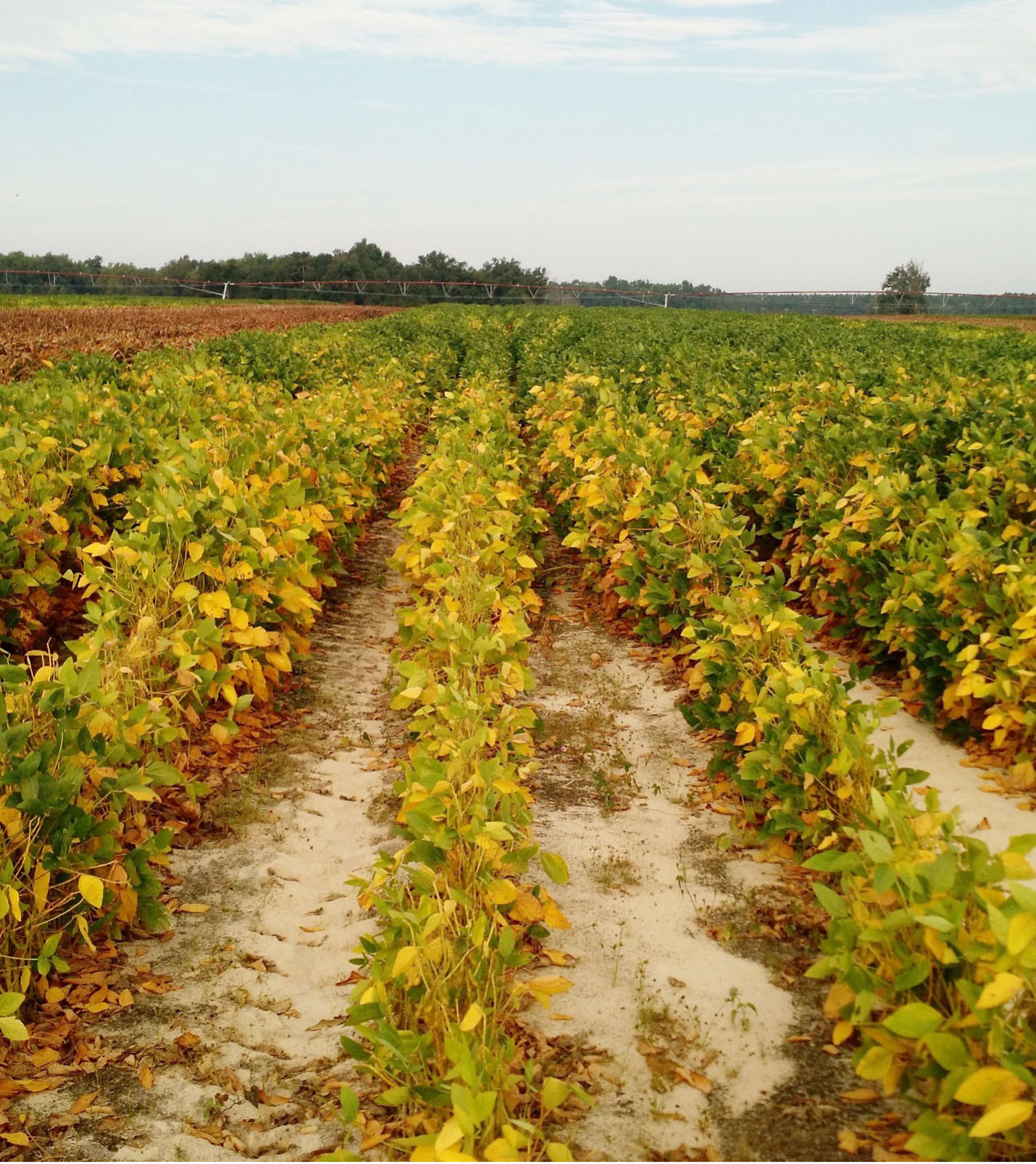
He notes that corn handles nematode pressure better because it is planted in March, into cool soil. Many nematode species are inactive at lower soil temperatures. As spring progresses, soil temperatures rise. When soil temperatures 4 inches deep warm to between 60°F and 65°F, most nematodes become active and start to feed on crop roots. By that time, corn has germinated and has a large enough root system to better withstand nematode feeding and subsequent yield losses.
Nematode Sampling
The diversity of plant-parasitic nematodes creates unique challenges for regional farmers. To address those challenges, the nematology lab at Clemson’s Edisto Research and Education Center offers free nematode sampling for South Carolina farmers.
Farmers can work through local county extension agents to collect and submit nematode samples. This program has been funded the last three years by Soy Checkoff funding from the South Carolina Soybean Board. The program includes identifying the species of root-knot nematode recovered. This procedure can cost as much as $50 to $75 per sample when run at private labs. Based on the nematode species and population density, Mueller and local extension agents help farmers develop a management strategy for their specific operation.
Mueller explains that soil fertility samples don’t work for understanding nematode pressure.
“Samples for soil fertility are taken between crop rows,” he says. “Hungry nematodes are found in the root zone, just 2 to 4 inches from the row. If pulling samples by hand, you should feel the probe cut through roots.”
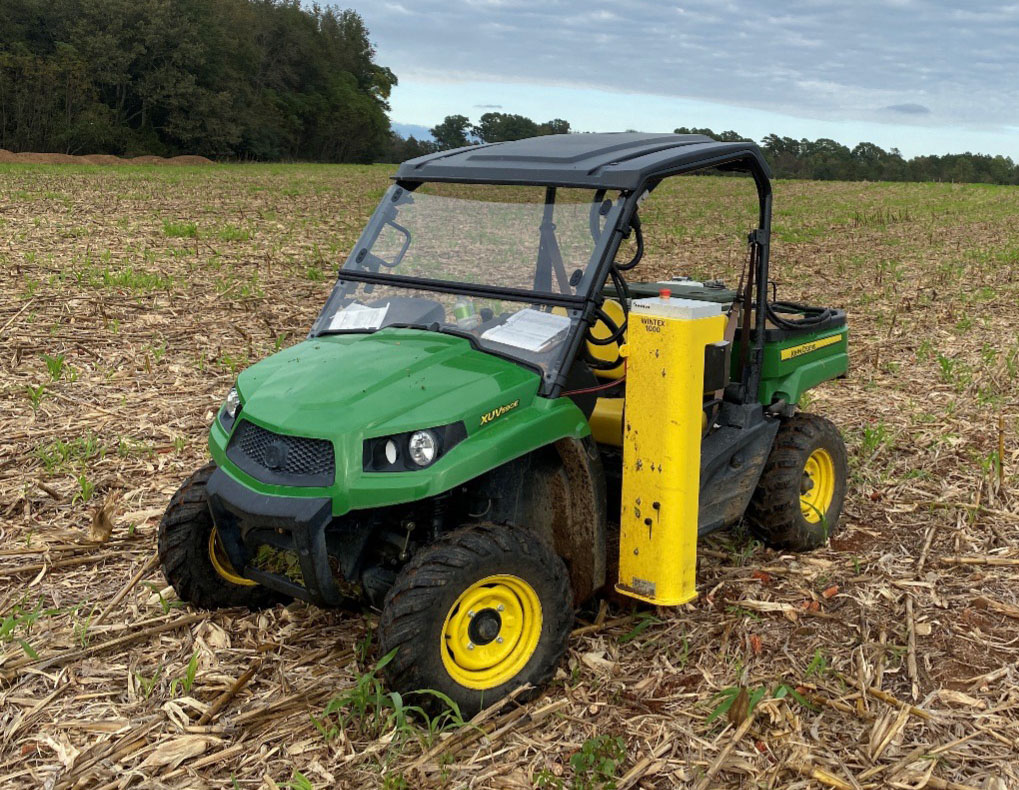
An automated sampling system allows the team to efficiently sample 20 to 30 fields in a day. Nematode soil samples aggregate about 10 soil cores in roughly 20-acre blocks. The cores go 8 to 10 inches deep to get an accurate estimate of nematode densities in the root zone. Nematode sampling is best done after harvest in September and October, when populations have been feeding on hosts throughout the growing season and soil temperatures ensure they are still active in the 8-inch zone that is sampled.
“Nematodes migrate vertically 2 to 3 feet in hot summers or cold winters,” Mueller explains. “We time sampling for when they are in our 8-inch sample zone.”
The lab can provide both nematode population counts and speciation, so farmers understand what nematodes lurk in specific fields.
“In 2025, we took 350 samples and provided results, including root-knot nematode speciations where appropriate,” Mueller says. “Information is king. The more farmers know about the nematodes in fields, the better job they can do knocking back the numbers below damaging levels.”
Management Strategies
Based on nematode numbers and species, Mueller and others tailor recommendations to reduce those populations for each operation. Strategies usually revolve around three practices.

- Host resistance
- Crop rotation
- Nematicides
Farmers may start by selecting soybean varieties with resistance to the nematodes in their fields, if such varieties exist.
Mueller says that South Carolina farmers are planting more soybeans from Maturity Groups 4, 5 and 6, instead of MG 7 and 8 varieties grown in the past. It can be difficult to find MG 4 or 5 soybean varieties with resistance to root-knot nematodes.
“There is no resistance to Columbia lance nematode,” he notes. “And very few soybean varieties have resistance to reniform nematodes.”
With these limitations in soybean resistance, crop rotation becomes critical. In rotations that include cotton, farmers can select cotton varieties with resistance to southern root-knot nematode or reniform nematode. Peanuts are non-hosts for Columbia lance, reniform and southern root-knot nematodes. Where soybean cyst nematode shows up, farmers can rotate to cotton or corn.
Cover crops also impact nematode pressure. For example, farmers should avoid planting legume cover crops in fields with root-knot nematode or lance nematode populations. Some brassicas are non-hosts for nematodes. However, termination timing and method can impact how cover crops interact with given nematode populations.
“In cases with high enough pressure to warrant nematicide, that can be an option,” Mueller says. “However, nematicides can cost more than $30 per acre. Seed treatments are not as effective as in-furrow treatments, which can be expensive.”
He believes there is a time and place for almost every practice, but cost is a factor. The team works with farmers to find the right solutions for their situation and help them stay focused on the nematode species that live in their fields.
Additional Resources
Understanding Nematode Populations is Key to Selecting Resistant Varieties – SRIN article
Southern Root-Knot Nematode Shifting with Soybean Management – SRIN article
New Resistant Varieties Prove Challenging for Nematode Management in Soybeans – SRIN article
Detecting and Managing Plant-Parasitic Nematodes on Soybean in South Carolina – Clemson Extension publication
Introduction to the Plant-Parasitic Nematodes Affecting Row Crops in South Carolina – Clemson Extension publication
Symptom Identification and Sampling Methods for Nematodes in South Carolina – Clemson Extension publication
Meet the Researcher: John Mueller SRIN profile | University profile
The Soybean Research & Information Network (SRIN) is funded by the Soy Checkoff and the North Central Soybean Research Program. For more information about soybean research, visit the National Soybean Checkoff Research Database.
Published: Oct 19, 2026


