Threecornered Alfalfa Hopper
Overview
The threecornered alfalfa hopper, Spissistilus festinus, occasionally becomes a problem in southern soybeans. It naturally occurs throughout Central and North America, as far north as Canada. However, in the mid-south and southeastern states, host plants availability and the environment combine to provide ideal habitats.
The insect prefers legumes like soybeans, alfalfa, other beans, cowpeas, clovers and peanuts. They sometimes infest other crops, like cotton, tomatoes, melons and small grains.
In soybeans, threecornered alfalfa hoppers can appear throughout the season, from emergence through late reproductive growth stages. Both adults and nymphs feed on soybeans by piercing stems and leaf petioles and sucking sap. They can girdle stems with a series of punctures in a circle around them, weakening the stems. That can lead to lodging, breakage, stand reduction or poor pod fill weeks after the damage, depending on soybean growth stage. The resulting damage may not reach economic levels because soybeans compensate well.
Life Cycle
Adults can overwinter in grass, shrubs and trees. Eggs overwinter inside plant tissue. Both adults and nymphs migrate from available vegetation to crop fields in late spring. Nymphs average five instars, gradually developing wing pads.
Though development and generation timing depends on temperatures, at least two generations usually mature in soybeans, with the final generation leaving the field to overwinter.
Scouting
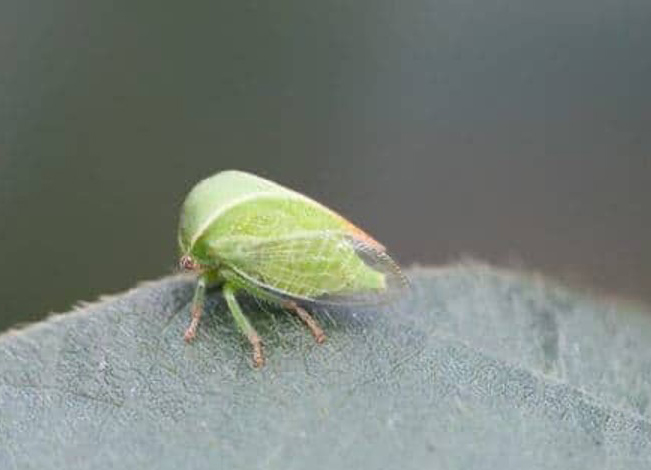
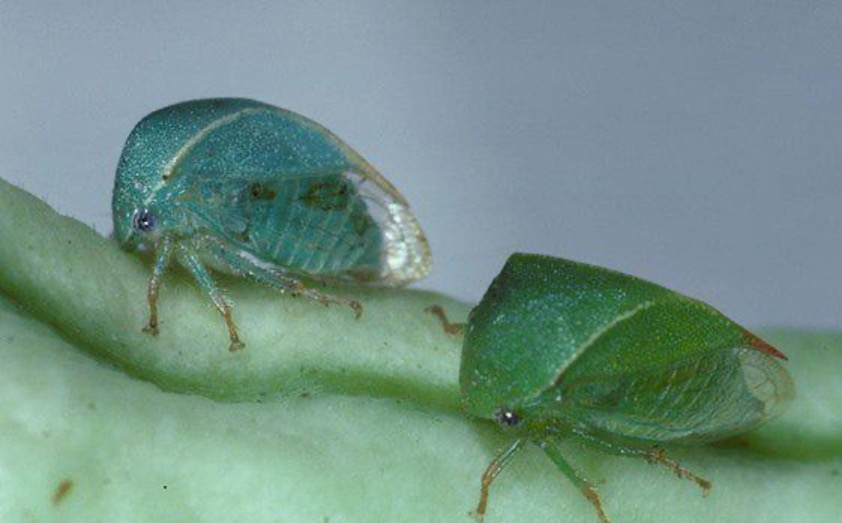
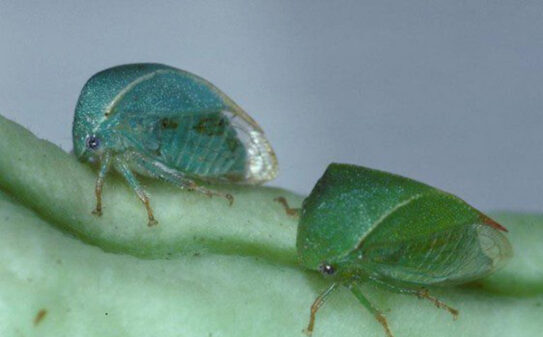
Threecornered alfalfa hoppers are small, wedge-shaped insects. They are named for their triangle shape when viewed from above. Field edges tend to host higher populations, and fields with high levels of crop residue, including no-till fields, carry a higher risk of infestation.
Identification
Adults
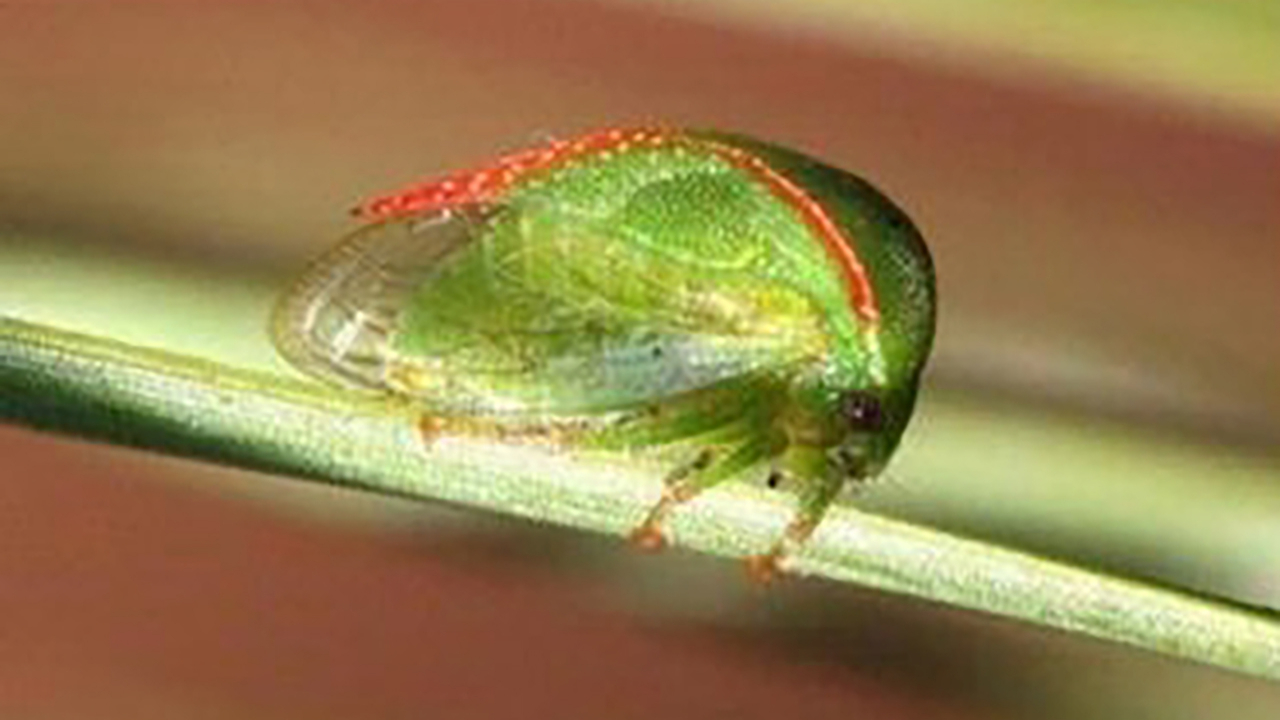
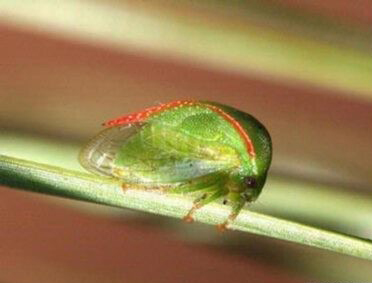
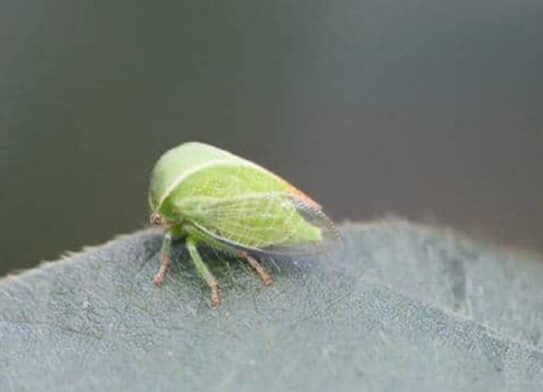
Adult threecornered alfalfa hoppers are light green and measure 6 to 7 millimeters, or about ¼ inch. Males have red or orange stripes on their “shoulders.” Females are slightly larger than the males. These mobile insects hop when disturbed.
Nymphs
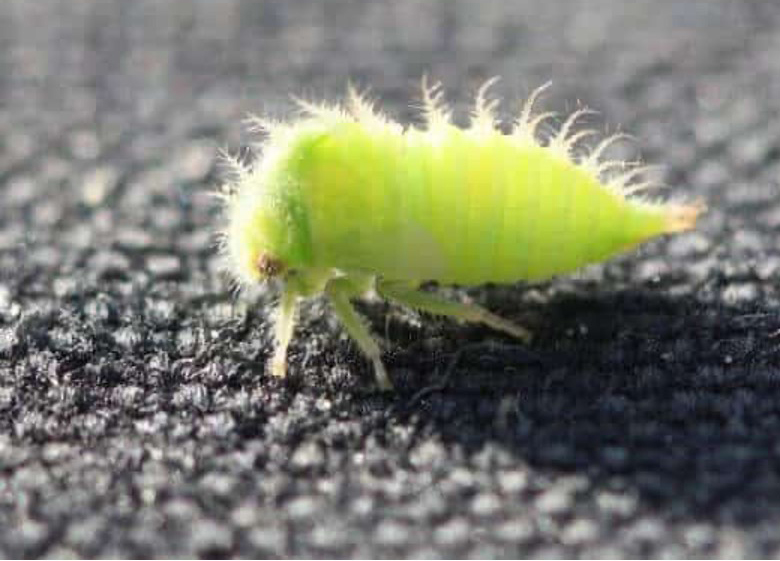
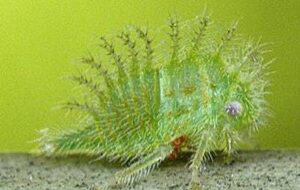
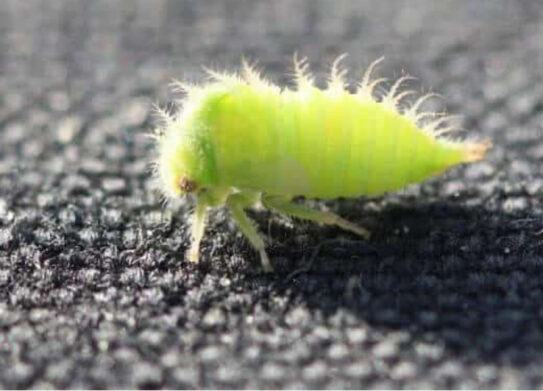
In their early instars, straw-colored or white nymphs measure about 2 millimeters. As they progress through later instars, they turn green, grow to about 4.6 millimeters and become more mobile and active. Throughout this stage, their legs, antennae, eyes and abdomen remain white and spines cover their bodies.
Sampling
During vegetative growth, scout soybeans before V7 to monitor pest populations. Sweep nets can capture adults, because they hop and fly when disturbed. Sweeping may also cause girdled plants to snap, revealing damage. For nymphs, inspect plant bases and lower stems for girdling. Economic damage is uncommon, so treatment thresholds vary and may not be well established. Check with local and state extension for relevant recommendations.
Management
Mowing and managing weedy field borders where threecornered alfalfa hoppers overwinter may reduce populations before they migrate to fields and prevent economic damage. Seeding field edges more heavily reduces the impact of early lodging or stand loss.
Insecticide seed treatments provide some protection for soybean seedlings early. Injury may still occur, but that could provide adequate protection in at-risk areas like small fields and field edges.
If feeding reaches economic levels of damage, third, fourth and fifth instar nymphs contribute the most injury. Insecticides applied during these stages suppress populations. Organophosphates and pyrethroids are effective, but using insecticides with little residual activity may allow reinfestation.
Resources
Pests of Alabama Soybeans: Three-Cornered Alfalfa Hopper, Alabama Cooperative Extension System
Threecornered Alfalfa Hopper in Kentucky Soybeans, University of Kentucky
Threecornered Alfalfa Hopper, North Carolina State University Extension
Threecornered Alfalfa Hopper, University of Tennessee
Images provided by University of Georgia, University of Tennessee Institute of Agriculture, Johnny N. Dell, John C. French