

Research HighlightsFungicide Trials Reveal Disease Treatment and Resistance Trends
Highlights:
- Years of Iowa fungicide trials consistently show that foliar fungicides provide a yield response only when disease is present.
- Determining the need for in-season fungicide should include monitoring area disease risk, scouting fields and using available decision support tools.
- Resistance to strobilurin (QoI) fungicides is common in major Midwest foliar soybean diseases.
By Laura Temple
Trends emerge over time.
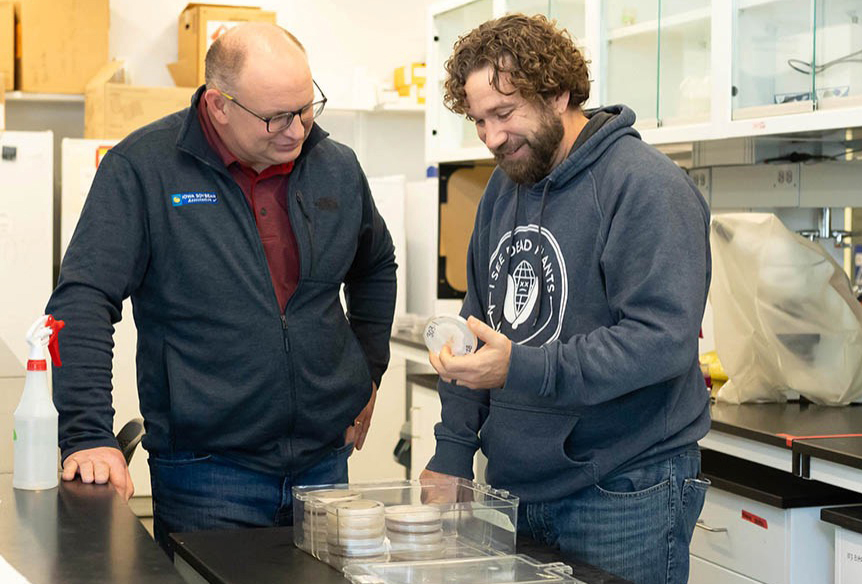
Daren Mueller, professor and extension plant pathologist at Iowa State University, has observed emerging trends in his annual fungicide trials. Every season since 2012, he has led statewide foliar fungicide trials, testing up to 20 treatments in plots at six university research farm locations around Iowa, thanks to ongoing Soy Checkoff investment from the Iowa Soybean Association.
“The data we gather each year, regardless of disease pressure, has become more valuable over time,” he says. “It shows trends in return on investment, development of fungicide resistance, presence of new diseases and more.”
Foliar fungicide applications are optional, and he encourages farmers to decide each season if treatment makes sense.
“When fields don’t have disease, the yield response almost all the time is zero,” Mueller reports. “In healthy soybeans in Iowa, we rarely see a meaningful yield response to a fungicide.
“However, when disease is present, even at low levels, there is a response,” he continues. “If there’s enough disease to notice, it’s enough to nick yield.”
In those cases, he says spraying usually at least breaks even, covering the investment in the fungicide and application. Across five years of trials, disease reached levels high enough to produce a meaningful yield response and a positive ROI from a foliar fungicide in about 20% of the trials.
“I credit soybean breeders for the low return,” Mueller says. “Soybean varieties have good levels of resistance to common Midwest soybean diseases.”
Determining Disease Presence
Under significant disease pressure, foliar fungicides do pay. However, fungicides provide the most value when applied before diseases develop.
Mueller’s fungicide trial dataset helps refine prediction tools designed to support farmers deciding when soybeans need a foliar fungicide application and when they don’t. For example, the data helped validate the development of a predictive model for frogeye leaf spot.
“In this area, frogeye leaf spot probably drives disease pressure,” he says. “We’ve had significant frogeye leaf spot in about three of the last 15 years.”
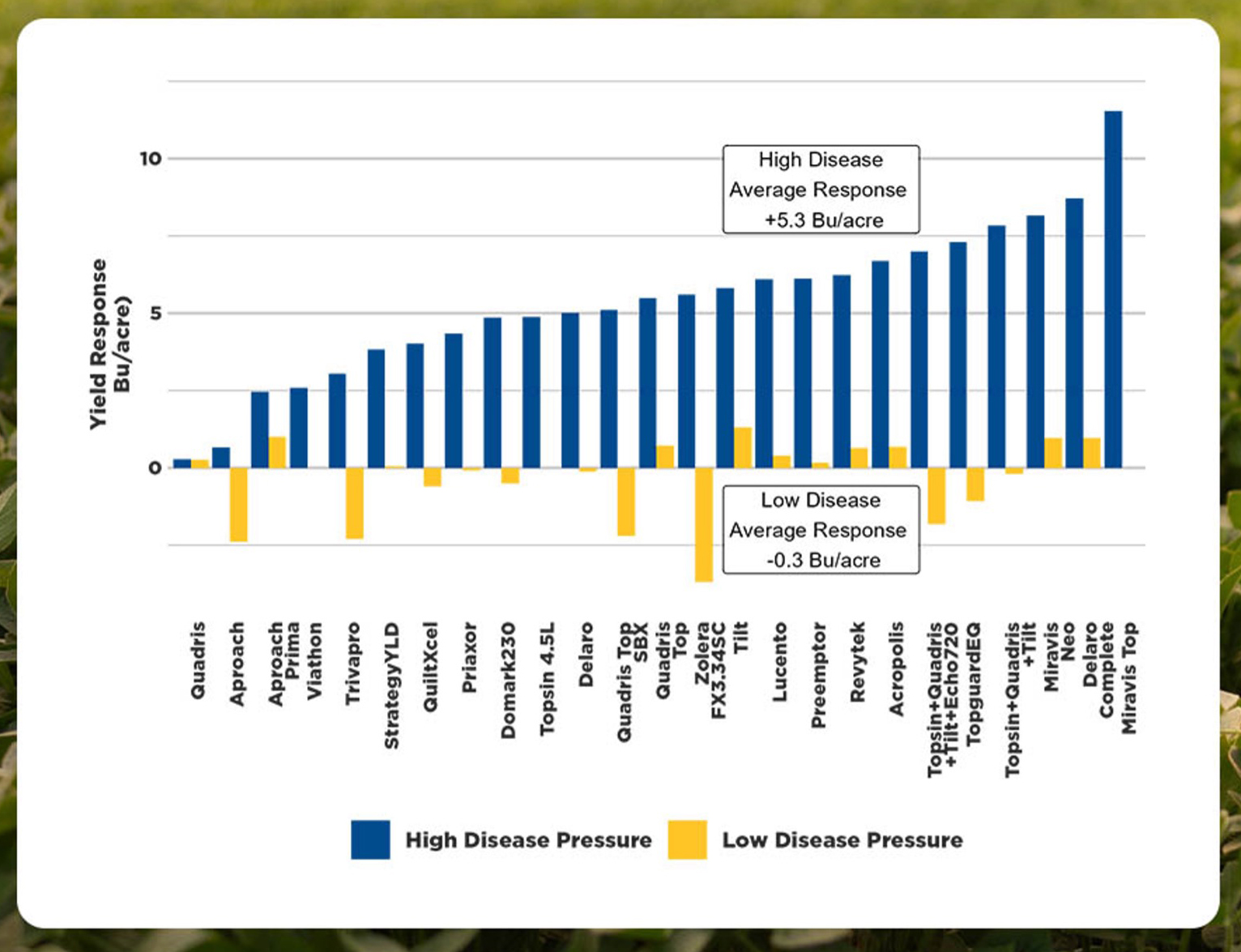
The Iowa data will also support an ROI tool being developed through Crop Protection Network collaboration. Many universities and companies have developed or are creating similar tools.
“These predictive models are in their infancy, and tend to be clunky,” Mueller notes. “But, they are getting better. Historical data like ours helps.”
He believes these tools play a role in scouting for diseases.
“Scouting is more than walking through fields,” he says. “I also recommend ‘armchair scouting,’ or being informed about disease pressure.”
Mueller encourages farmers to monitor the local and regional chatter about diseases from sources they trust. That could be newsletters like Iowa State’s Integrated Crop Management News, agronomists or crop advisors for area retailers or input suppliers, social channels like X or Facebook or even word of mouth like the local coffee shop. This tells farmers about local pathogen threats.
As soybeans reach early reproductive growth and start flowering, he recommends farmers go to their fields to see what is out there. They should look at crop growth and environmental factors, like the presence of any type of moisture that could allow those pathogens to infect their soybeans.
“With that information, pick a representative disease and monitor its risk factors,” Mueller explains. “Don’t just look for disease, figure out what will trigger disease pressure in the area.”
This is where predictive tools and long-term trends can help farmers decide if foliar fungicide makes sense or not.
Reality of Fungicide Resistance
When disease is present, farmers need to treat with effective fungicides. Mueller has been monitoring the diseases that show up in the fungicide trials for resistance. Resistance, specifically to strobilurin fungicides in the quinone outside inhibitor (QoI) fungicide group, is trending up.
“All our frogeye leaf spot samples are resistant to QoI fungicides,” he reports. “Nearly 100% of Cercospora leaf blight is resistant, as are a lot of strains of Septoria brown spot.”
To ensure disease control and slow the development of resistance, farmers should apply fungicides with multiple active ingredients or rotate products with different modes of action.
Logging these samples has also revealed new or unexpected disease pressure. One year, Mueller’s team found anthracnose leaf blight, which looks a lot like Septoria brown spot.
“Gathering years of disease and fungicide data also helps as we work with other plant pathologists around the country,” Mueller says. “Working together and sharing data makes our network and collaboration powerful, and we are all able to help farmers more effectively.”
Additional Resources
Fungicide Research and Resistance Monitoring – Iowa Soybean Association article
Fungicide Efficacy for Control of Soybean Foliar Diseases – Crop Protection Network publication
Crop Risk Tool – Crop Protection Network
Assessing the Value of Foliar Fungicides – SRIN article
Soybean Fungicide Evaluations Validate When to Treat – SRIN article
Meet the Researcher: Daren Mueller University profile
The Soybean Research & Information Network (SRIN) is funded by the Soy Checkoff and the North Central Soybean Research Program. For more information about soybean research, visit the National Soybean Checkoff Research Database.
Published: Oct 26, 2026


