

Research HighlightsNew Tools can Help Farmers Improve Soybean Disease Management
Highlights:
- A team of soybean pathologists is conducting trials on high intensity fungicide programs and biological fungicide product effectiveness across seven North Central states.
- A unique trial on biological control treatments for white mold is part of the project.
- Soybean diseases will get their own decision-making tool to help farmers know if and when a fungicide application will be most effective.
By Carol Brown
Soybeans are resilient, but they have their enemies. Diseases can cause a range of issues from reduced yield to plant death. Through ongoing research supported by the North Central Soybean Research Program, a team of pathologists continues to study soybean diseases to help farmers improve disease management and preserve soybean yield potential.
Richard (Wade) Webster, North Dakota State University soybean pathology specialist, leads the team of experts from seven states including Indiana, Iowa, Michigan, Nebraska, North Dakota, Ohio, and Wisconsin. The team enters year three of the project and results have already produced decision-making and return-on-investment tools, with more to come.
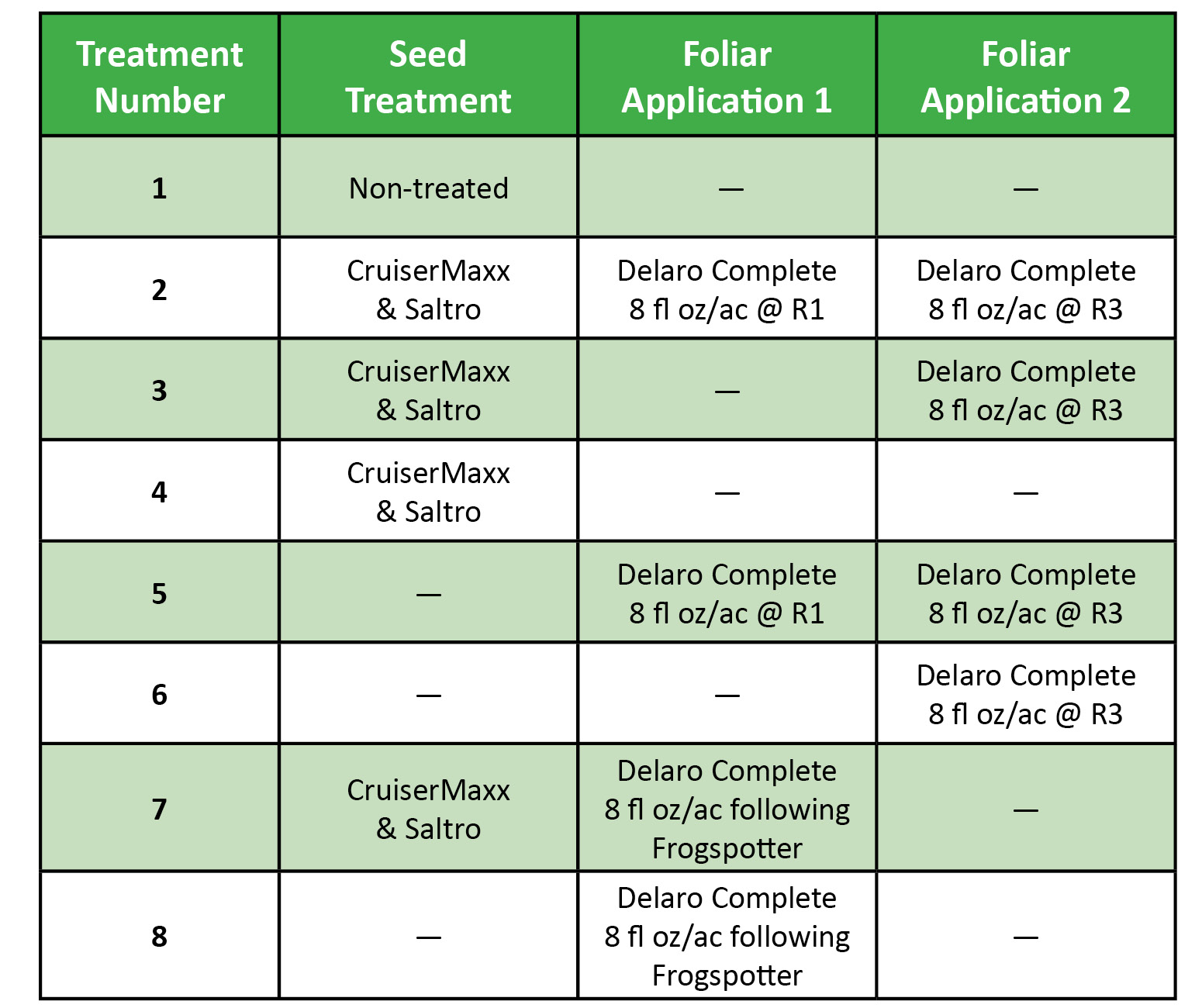
“We are conducting uniform field trials in all seven states, comparing high intensity and low intensity treatment strategies,” Webster says. “High intensity includes a premium seed treatment package with a two-pass fungicide program. There are combinations of treatments as well as no seed treatment with no fungicide applications (Table 1).”
The idea, he says, is to understand whether the disease management intensity will have an effect on yield across the North Central region. By the end of crop year 2027, the team will have collected data for a total of 21 site-years. This research component is led by Dylan Mangel, University of Nebraska plant pathologist. The team developed a frogeye leaf spot predictive model, available on the Crop Protection Network, from data collected through the previously funded NCSRP project.
“Based on the frogeye leaf spot model, we’re developing a technology-informed treatment predictive model. It takes weather data into account and recommends when a fungicide application will be most effective,” Webster says. “Through integrated management of the different strategies, we want to know if these intensity programs will have an effect on seed quality at the end of the season.”
Unique Approach to White Mold Research
The team is taking a unique approach toward biological control agents and how effective they are in reducing the fungal pathogen Sclerotinia sclerotiorum, which causes white mold in soybeans. This portion of the project is led by plant pathologist Damon Smith and graduate student Amit Sharma at the University of Wisconsin-Madison.
“We are using biological fungicides, which degrade and eat at the overwintering sclerotia,” Webster says. “We’re looking at their ability to degrade the pathogen in an off year. For this component, all of the research plots are empty with no crop being grown.”
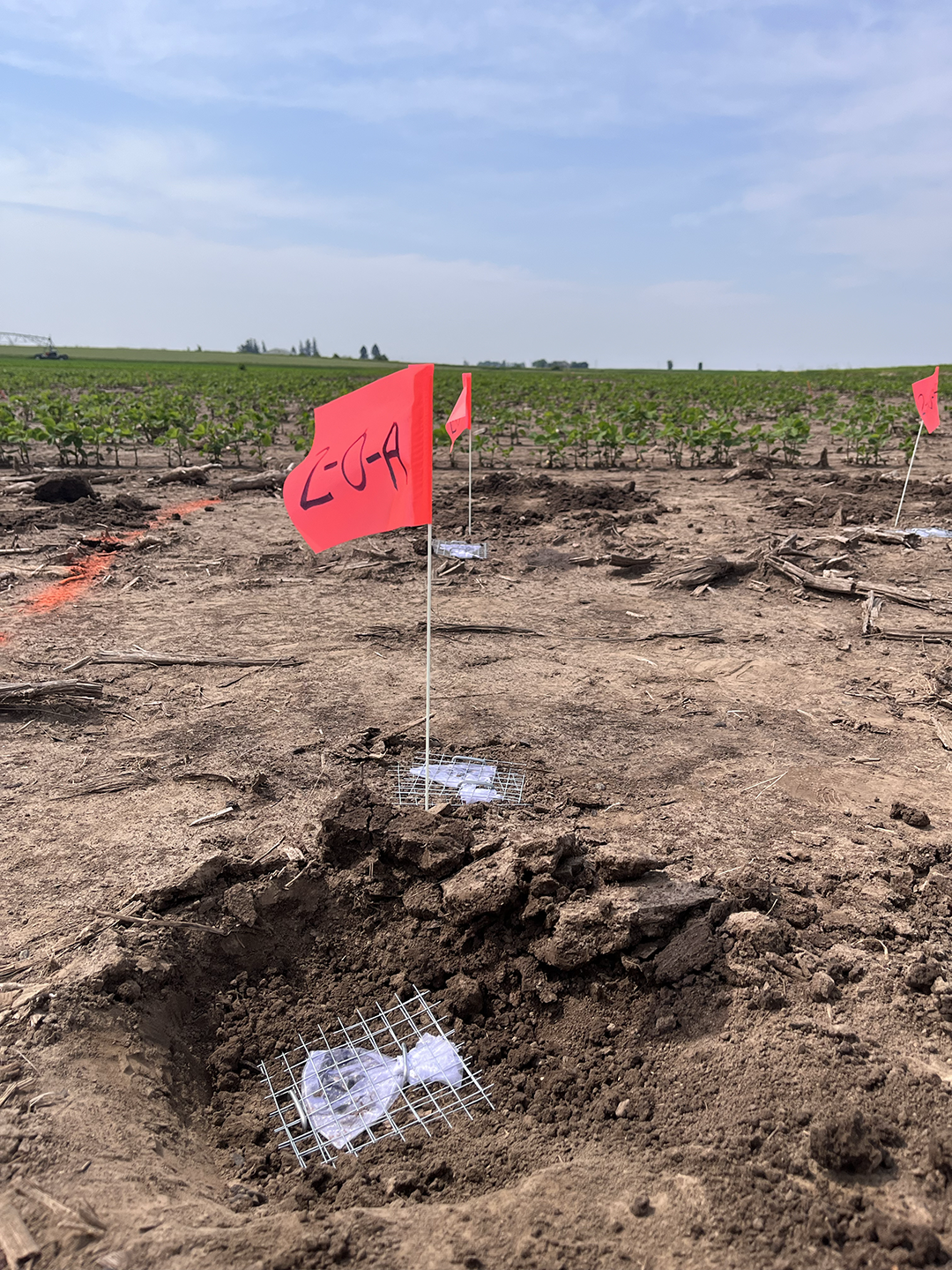
During the winter, the team grew sclerotia in the lab and placed the fungi in mesh baggies. These are buried, to mimic tillage, and placed on the soil surface in the empty plots. Each group placed about 3,000 sclerotia in their respective research plots. They immediately sprayed the biologicals, which include two fungal (Coniothyrium and Trichoderma) and one bacterial product (Pseudomonas), over the bags and the soil surface. The team checks the bags in July, August and September, retrieving some of the sclerotia and placing them on growth media in the lab to see if they are still viable. They leave some bags to overwinter in the plots and then sample the sclerotia in the spring.
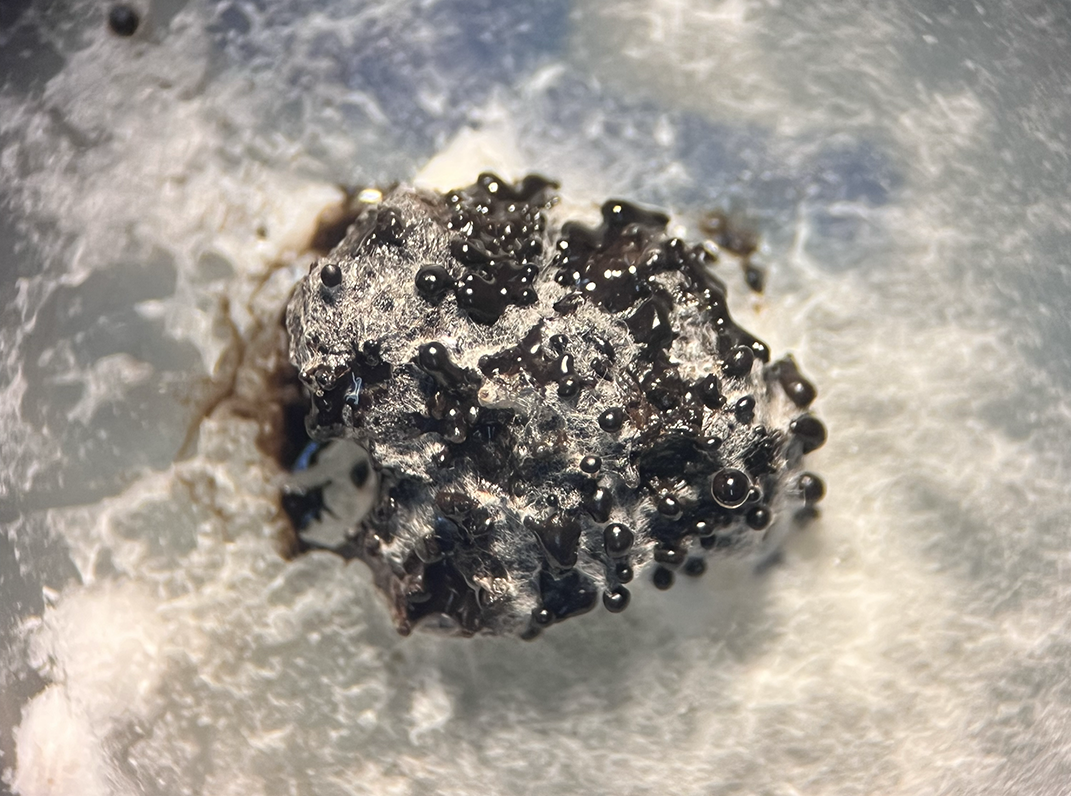
“We want to see the degradation over the full year and look for differences between the buried and surface sclerotia,” Webster explains. “We are seeing fascinating results and big differences between years. In some cases, the sclerotia are completely gone and sometimes they are fully intact and still viable.”
In 2026, the team added a soil testing component to this trial to learn how soil type and soil properties can change the biological products’ effectiveness. They are also conducting trials on biological seed treatments for Pythium/Phytophthora and sudden death syndrome.
Foliar Soybean Disease Research
Another component of the project is conducting uniform foliar fungicide trials on frogeye leaf spot, Cercospora leaf blight and septoria brown spot. The team is using 10 different fungicide programs, looking at product efficacy as well as application timing.
“These diseases become bigger issues the further south we go in the North Central region,” Webster comments. “Dylan Mangel reports high levels of frogeye leaf spot in Nebraska this season.”
These field trials, led by plant pathologist Darcy Telenko at Purdue University, include treatments of commercially available products that farmers are using across the region. They are applying products at R3 growth stage and some are also applied at R5 (Table 2).
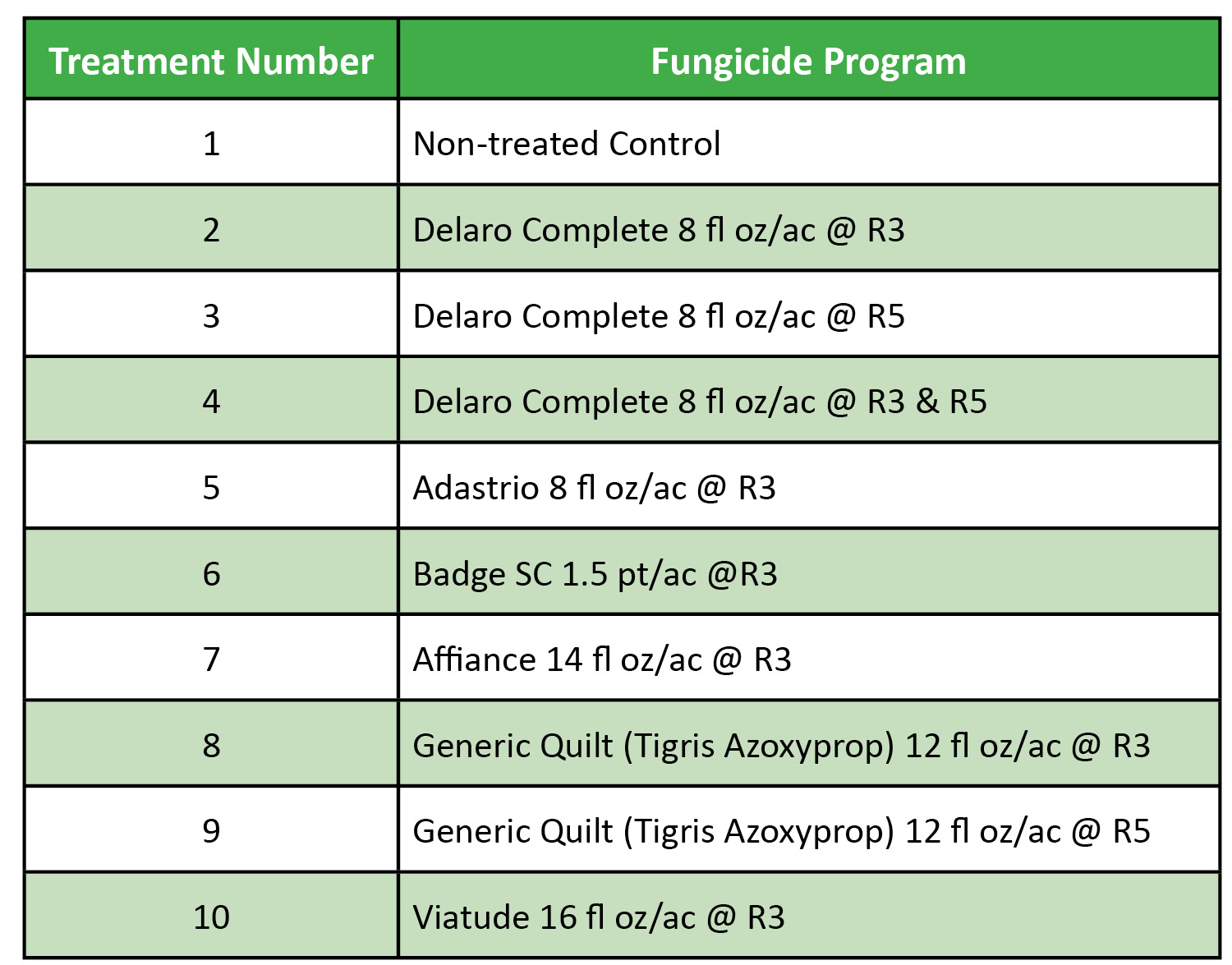
“We added a fungicide application at R5, as a response from a hurricane in 2023, in which Indiana and Ohio received the remnants of in September,” he says. “It brought a lot of moisture and, we think, a lot of pathogens as there were a lot of late-season disease issues. Fungicide protection would have been gone by the time the hurricane came through.”
Applying a foliar fungicide later than R3 in the North Central region is less understood, therefore collecting data on late-season applications will help the team learn how this could affect the soybean crop.
Putting It All Together
Taking the research results and deciding the best way that farmers can use the information is just as important as the research itself. The results are informing new decision-making support tools, and the team has developed several already.
“Frogeye leaf spot was added to the crop risk model and the white mold ROI calculator was released last year,” says Webster. “We’re now developing a similar ROI calculator for soybean foliar diseases. We’ve also updated several extension publications including Fungicide Efficacy for Control of Soybean Foliar Diseases, and Fungicide Efficacy for Control of Soybean Seedling Diseases.”
Lastly, the team is in the process of developing a farmer survey to gain insight on topics they are knowledgeable about and where might the pathologists need to provide more information. The survey component is led by soybean pathologist Horacio Lopez-Nicora at Ohio State University. In 2025, they conducted farmer listening sessions to gather qualitative data and the survey is on track to go to farmers this winter.
Additional Resources
Crop Protection Network Tools – including Soybean Disease Loss Calculator, Fungicide Efficacy Tool, Crop Risk Tools, and ROI Calculators
CPN TV – includes videos on how to use the Soybean White Mold ROI Calculator and more
White Mold ROI Calculator Available for North Central Farmers – SRIN article
Fungicide Efficacy for Control of Soybean Foliar Diseases – Crop Protection Network fact sheet
Fungicide Efficacy for Management of Soybean Seedling Diseases – Crop Protection Network fact sheet
Meet the researchers:
- Richard (Wade) Webster SRIN Profile | University Profile
- Dylan Mangel University profile
- Darcy Telenko SRIN profile | University profile
- Horacio Lopez-Nicora SRIN profile | University profile
- Damon Smith SRIN profile | University profile
The Soybean Research & Information Network (SRIN) is funded by the Soy Checkoff and the North Central Soybean Research Program. For more information about soybean research, visit the National Soybean Checkoff Research Database.
Published: Oct 12, 2026


