

Research HighlightsReevaluating Insect Treatment Thresholds
Highlights:
- A Clemson research team revisited 45-year-old insect treatment thresholds to verify and expand them for current soybean production practices and insect pressure.
- Simulating insect damage allowed for precise evaluation of a wide range of injury levels.
- Updates will include new thresholds for stand loss due to insect feeding that can also inform management from other types of stand loss.
By Laura Temple
Soybean production has changed in the past 45 years, including technology, prices and best practices.
But some things, such as insect treatment thresholds, have remained the same.
“Soybean varieties, practices and input prices have changed,” says Jeremy Greene, professor of entomology at Clemson University. “Do decades-old thresholds for treating for insects in South Carolina still make sense?”
He notes that many changes in soybean production help farmers. However, those changes could affect insect population dynamics. For example, the weed control technology built into most soybean varieties increases both the cost and the attractive monoculture in fields. How does having fewer weeds in soybean fields impact insect feeding?
While reducing soybean tillage conserves water and fuel and improves weed control, insects that pupate or deposit eggs in the soil now mature undisturbed instead of being killed by tillage. Plus, freshly terminated weeds or crop residue can harbor insects that then move into crops as they emerge.
Raising soybeans under irrigation makes them more palatable and attractive to insects.
When combining these factors with increased input costs, Greene saw value in revisiting treatment thresholds for insects in soybeans. The South Carolina Soybean Producers invested Soy Checkoff funds to support this practical research.
He breaks the insect complex into three categories.
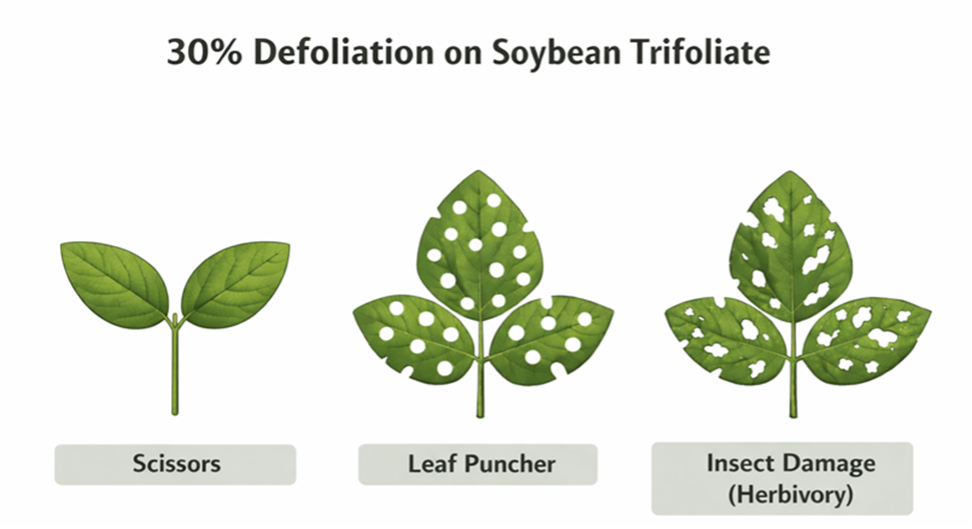
- Defoliators, like grasshoppers, soybean looper, leaf-eating beetles and other caterpillars, feed on soybean leaves. Existing thresholds recommend treating when defoliation damage surpasses 30% during vegetative growth stages up to bloom, and 15% after that, during reproductive growth.
- Stem feeders, including kudzu bug, stem borers and threecornered alfalfa hopper, damage or completely eat through soybean stems. Clemson does not have treatment thresholds for this pest category.
- Pod feeders, like stink bugs and podworm, damage developing soybean pods and seeds, directly impacting crop yield and quality. Population density when scouting defines these treatment thresholds.
“It’s a challenge to find the density at which insect damage causes economic damage to soybeans,” Greene explains. “We’ve conducted field trials, but we can’t control insect pressure in those plots. Sometimes it’s like fishing in the wrong spot. We plant trials, but insects don’t always show up in the controlled area we have designated for the research.”
Simulating Insect Damage
To better test and develop insect treatment thresholds, Greene and one of his graduate students, Adam Whitfield, developed trials that simulated defoliation and stem feeding damage. They used both mechanical and chemical methods to mimic insect damage. Their team kept plots pest-free, so that any yield differences could be attributed to the man-made “insect” damage they inflicted.
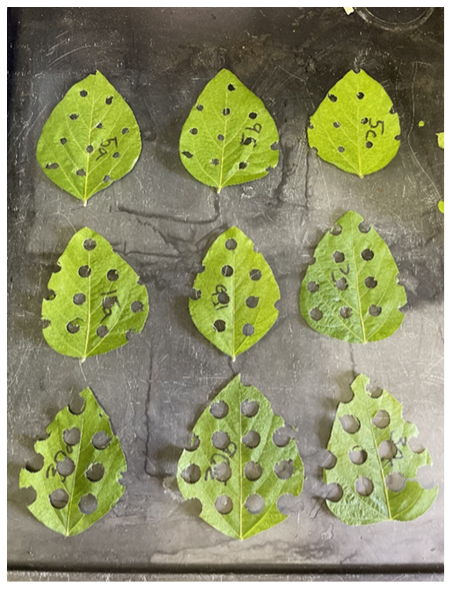
To imitate defoliation damage, they worked with an engineering team to create a 3D-printed leaf puncher to create holes of different sizes and densities on soybean leaves.
“In past trials simulating insect defoliation, leaflets from soybean leaf trifoliates would be cut out to equal a specific percent damage,” Whitfield explains. “Creating holes in the leaves is more physically representative of how insects damage them.”
Their team used interchangeable plates in the leaf puncher to administer insect damage representing 0%, 5%, 15%, 30%, 40% and 100% damage. They caused all damage levels at three soybean growth stages: mid-vegetative growth at V8, early reproductive growth at R2, and during R5, when pods are filling.
“Across treatments, we found that soybeans can tolerate more defoliation than we thought,” he reports. “And, scouts aren’t consistent in rating defoliation, often overestimating damage.”
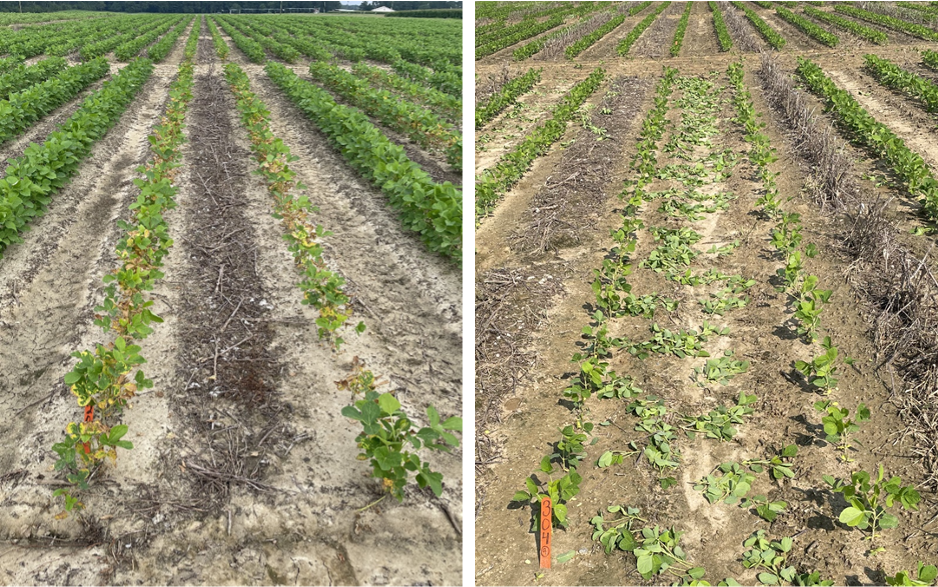
They copied stem feeding damage by mechanically cutting out soybean plants at varying percentages in replicated plots. In another set of plots, they chemically imitated damage by mixing different percentages of seed with and without glufosinate tolerance, or LibertyLink technology, and then spraying to remove the intolerant plants.
“Stem-feeding insects either puncture the stem, causing stunting, or completely damage it, killing the plant,” he says. “This research can help farmers understand the impact of other types of stand pressure, like hail damage or deer feeding.”
In these plots, the team administered damage using both methods at rates that simulated 5%, 10%, 20%, 30%, 40%, 50%, 60%, 70% or 80% stand loss. They inflicted loss at three growth stages: during early vegetative growth at V4, mid-vegetative growth at V8 and early signs of reproductive growth at R1.
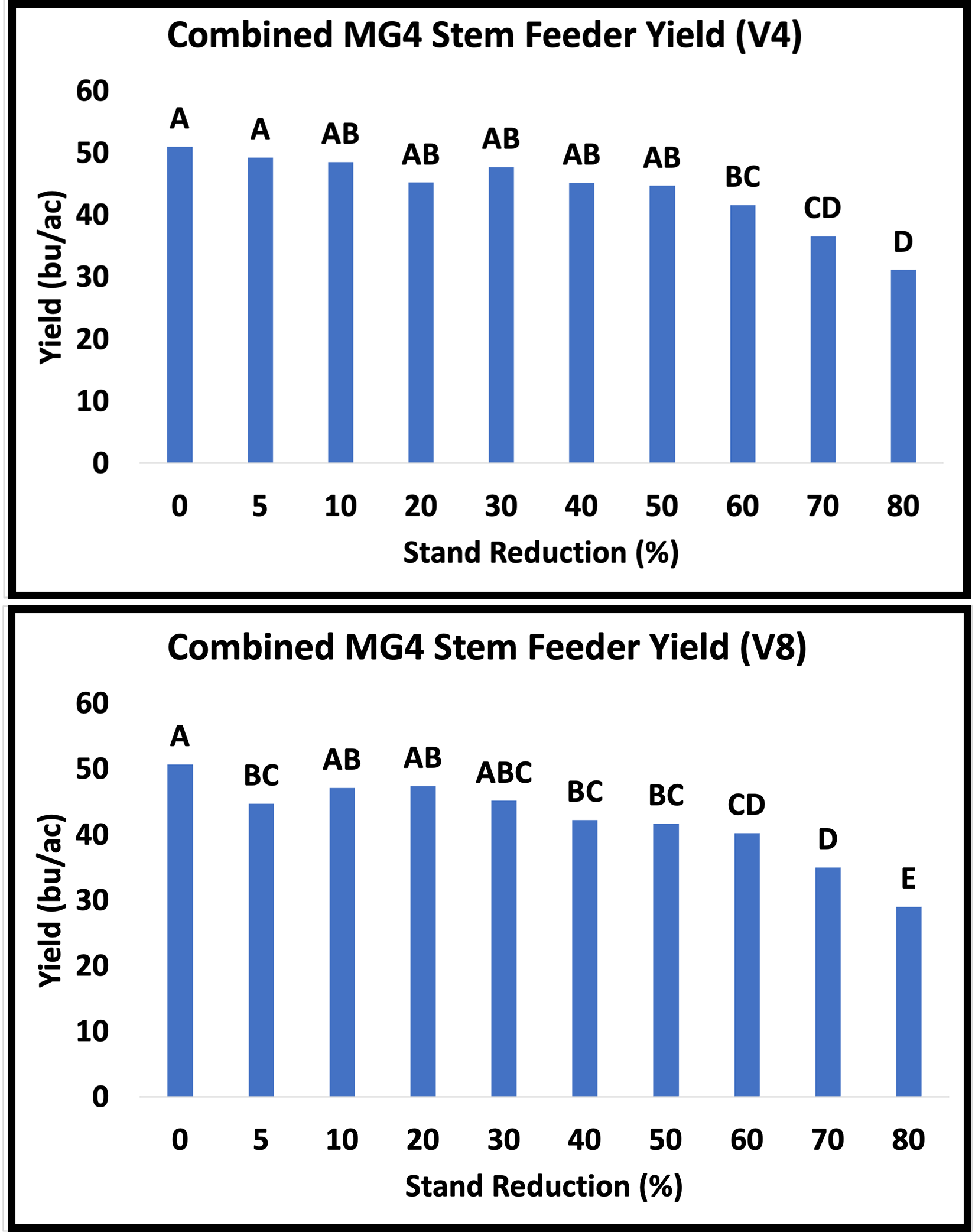
Bottom graph: In plots in later vegetative growth stages (V8), data indicates a statistical yield drop between 30% and 40% stem feeding damage, supporting the establishment of that insect threshold later in the season. Source: Adam Whitfield
In addition to yield, the team gathered pod counts, seed counts and seed weights from these trials.
“Soybean plants can compensate for significant stand reduction, especially early in the season,” Whitfield says.
Using Natural Populations of Pod Feeders
Greene and Whitfield relied on natural populations of pod feeders like stink bugs to evaluate existing thresholds. They tested a range of thresholds: the standing population threshold, double threshold, half threshold and aggressively treating all insect pressure.
“We saw no difference in yields based on treating sub-threshold levels of insects,” Whitfield reports. “There’s no need to over-treat with insecticides. That just wastes money.”
Accounting for Soybean Resilience in Thresholds
Based on three years of these trials, Greene and Whitfield concluded that soybeans can tolerate much injury, especially early in the season. Thresholds in South Carolina will reflect these findings, while building in cushion to allow for damage between reaching treatment levels and actually spraying a field.
- Defoliation: Although soybeans withstood higher rates of defoliation, especially during vegetative growth, Greene plans to stick with existing defoliation thresholds of 30% prior to blooming and 15% after blooming.
- Stand loss from stem damage: Although soybeans could withstand up to 60% or 70% stand loss, especially early in the season, Greene intends to set stand loss thresholds for insect treatment or replanting at 40% to 50% stand loss during vegetative growth up to the V4 growth stage. From the V8 to R2 reproductive growth stage, he will set the threshold for treating insects at 30% to 40% stand loss. These new thresholds can inform management decisions for other types of stand loss.
- Pod damage: This research affirmed the current thresholds for pod feeding insects, and Greene will continue to recommend treatments at the current populations densities noted for stinkbugs, podworm and similar pests.
Farmers must scout for insects, but they can rely on updated treatment thresholds to indicate when to spend on insecticides.
Additional Resources
Low Insect Pressure Trials Reinforce Value of Thresholds – SRIN article
Evaluating Profitable Stink Bug Thresholds and Treatment Timing – SRIN article
3D Scouting Tool Improves Accuracy of Soybean Defoliation Estimates – SRIN article
Determining Need for Insecticide Insurance – SRIN article
Meet the Researcher: Jeremy Greene SRIN profile | University profile
The Soybean Research & Information Network (SRIN) is funded by the Soy Checkoff and the North Central Soybean Research Program. For more information about soybean research, visit the National Soybean Checkoff Research Database.
Published: Jun 22, 2026


