


Research HighlightsForging New Stink Bug Management Tools
Highlights:
- Stink bugs consistently threaten Southern soybeans and pressure is building in the Midwest, but farmers have limited management tools.
- Potential new insecticides target stink bugs effectively, without impacting pollinators.
- Unique research is identifying a variety of soybean characteristics that can deter stink bug feeding to provide more tools for integrated pest management.
By Laura Temple
Farmers can tackle almost any challenge — if they have the tools they need. Complex challenges often call for a wider range of tools.
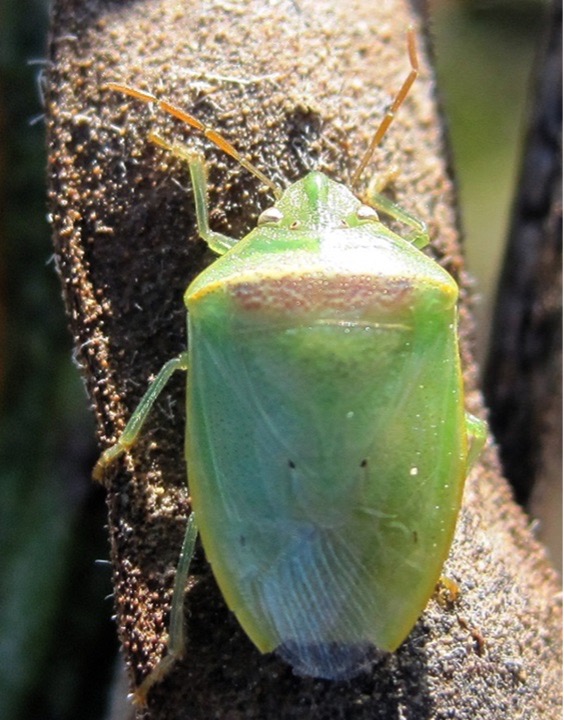
Take the stink bug complex. As many as 12 different stink bug species can be found in Southern soybean fields. Stink bugs are becoming more common in Midwestern fields, though populations tend to include just one or two species. They attack developing soybean pods and seeds.
“Stink bugs are becoming more of a consistent problem in soybeans,” says Jeff Davis, a professor and entomologist at Louisiana State University Agricultural Center. “Farmers have limited tools for integrated management of these insects.”
He explains that historically, three insecticide classes provide reliable control of the complex, especially the red-banded stink bug: organophosphates like acephate, pyrethroids and neonicotinoids. The EPA may remove acephate, further limiting available tools.
“Most farmers in Alabama, Arkansas, Louisiana, Mississippi and Texas mix all three modes of action together for effective control that lasts just 14 days,” he adds. “Unlike with weed control, entomologists don’t encourage mixing modes of action because of how that builds resistance in insects.”
Davis is leading research to develop new tools that fight stink bugs in soybeans, thanks to ongoing Soy Checkoff support from the United Soybean Board. This work seeks to identify new modes of action for chemical control and characteristics that improve soybean resistance to stink bug feeding.
Finding New, Targeted Insecticides
Current insecticides used for stink bugs provide broad-spectrum control, meaning they also impact beneficial insects and pollinators. A new insecticide mode of action available in 2026, plinazolin, sold as Vertento for soybeans, also offers broad-spectrum control.
“Testing to date shows that the new insecticide should work well,” Davis says. “It is slower-acting, but it should be long-lasting.”
He and Daniel Swale, associate professor of insect neurophysiology and toxicology at the University of Florida, have focused on identifying targeted new active ingredients that don’t harm beneficial insects. Swale has experience researching mosquito and tick control. Stink bugs also have piercing, sucking mouthparts, so they are investigating similar options.
Stink bugs pierce through pods and produce a gelling saliva that coats their stylet mouthparts to create a straw to suck up fluids in developing soybeans. Davis and Swale have found natural plant compounds and synthetic chemicals that paralyze the muscle and salivary glands that create that saliva and sucks fluids through it.
“When there’s a hole in a straw, it doesn’t work,” Davis explains. “The products we are testing prevent stink bugs from feeding so they starve, protecting soybeans pods and seeds.”
He adds that this mode of action does not affect pollinators, and they are in the process of checking the impact on natural stink bug predators.
“We’ve identified promising options that have proven effective in the lab and greenhouse,” he reports. “While they are not yet formulated, we are moving to field trials to continue testing.”
He believes this work will lead to new chemical options for integrated stink bug management.
Identifying Resistant Soybean Characteristics
At the same time, Davis and his team have been looking for ways to improve host plant resistance to stink bug feeding.
“Breeders have been working on this for decades, but stink bugs species are diverse and there isn’t a clear phenotype, or plant characteristic, that impacts them,” he explains. “That makes it hard to identify host-plant resistance.”
His current research focuses on traits that discourage stink bugs feeding. With that data, breeders can identify genes that convey those traits and incorporate them into high-yielding soybean varieties.
“The goal with breeding is always yield, but we also aim to reduce seed damage and limit stink bug populations,” Davis says.
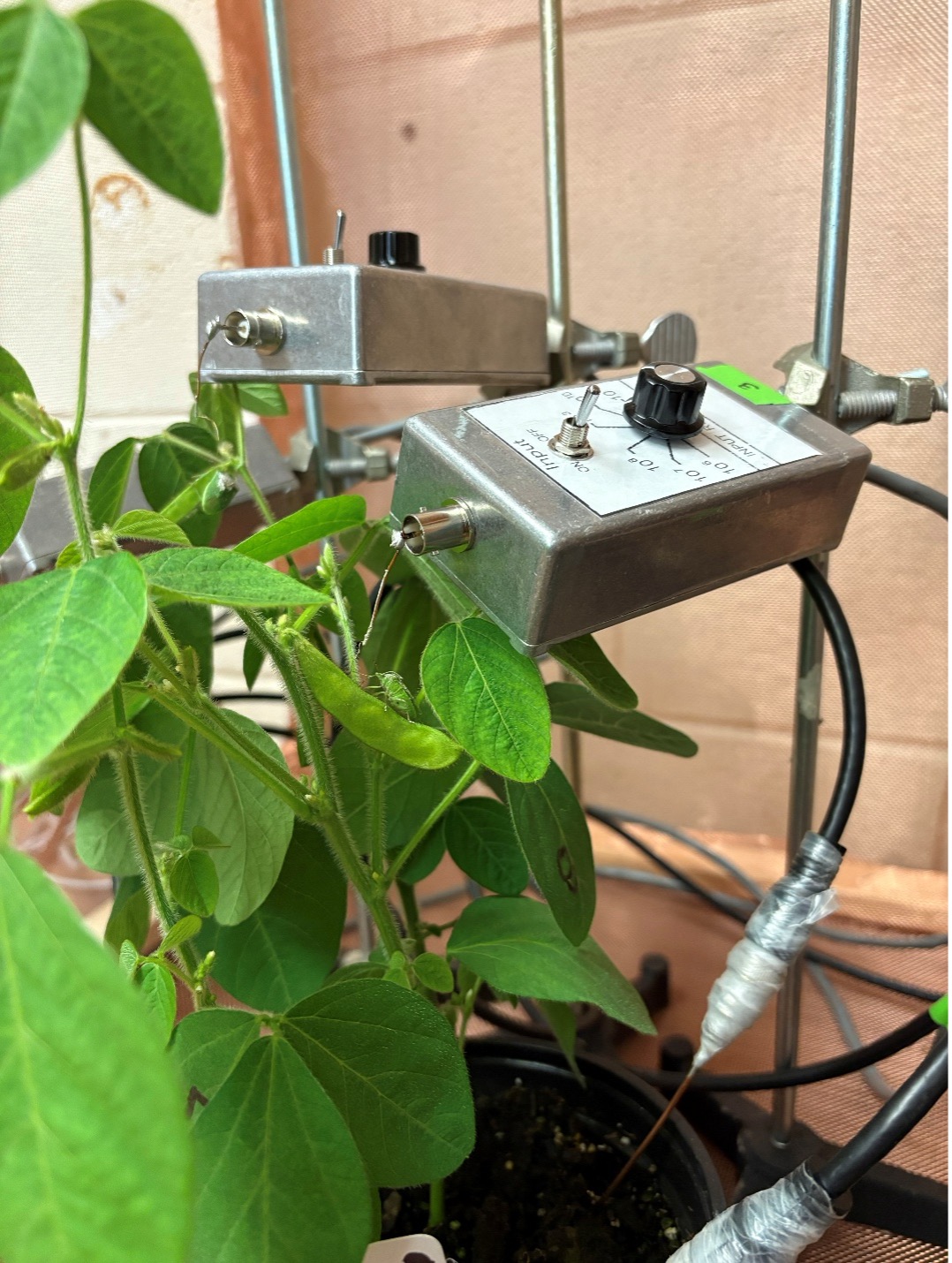
His team is investigating physical characteristics like pod toughness, pod hairiness and more. Such research requires creative, detailed approaches in the lab, greenhouse and field.
- Penetrometers measure the force needed to penetrate pod walls and seeds of different soybean varieties.
- Davis and his team count and compare numbers of the trichomes, or hairs, growing on pods from different varieties, and shave some pods. They monitor stink bugs as they feed on or avoid options.
- Electropenetrography uses electronic bio-monitoring, running a mild current through stink bugs and soybeans to measure location and time that it takes the bugs to pierce through pods and into seeds.
“The longer it takes for stink bugs to pierce pods, the more time natural enemies and insecticides have to disrupt feeding,” Davis explains.
His team also tests for soybean antibiosis, or anything soybeans produce that antagonize stink bugs or make the seeds less palatable.
“We feed different soybeans to stink bugs, looking for varieties that affect pest health, populations dynamics or reproduction,” he says.
As his team identifies characteristics that help protect soybeans from stink bug damage, they pass information on to the breeding team. As varieties have characteristics identified or bred into genetics, large plot studies in the field provide real-world data and observations.
“Because such measuring takes lots of time, progress is slow,” Davis notes. “However, we are seeing incremental change and developing IPM tools, thanks to Soy Checkoff support.”
Additional Resources:
Stink Bugs – SRIN information page
Evaluating Profitable Stink Bug Thresholds and Treatment Timing – SRIN article
Assessing Stink Bug Strategies – SRIN article
Developing a New Method to Monitor Stink Bugs in Soybeans – SRIN article
Meet the Researcher: Jeff Davis SRIN profile | University profile
The Soybean Research & Information Network (SRIN) is funded by the Soy Checkoff and the North Central Soybean Research Program. For more information about soybean research, visit the National Soybean Checkoff Research Database.
Published: Jul 27, 2026


