

Research HighlightsManaging Tough Weeds with Resistance to Multiple Herbicides
Highlights:
- Pigweeds like waterhemp and Palmer amaranth continue spreading in New York and northeastern states.
- Many invasive populations already carry resistance to one or more soybean herbicides.
- Managing these pigweeds requires pre- and post-emergence herbicides with multiple modes of action and other integrated weed management tactics.

By Laura Temple
Like an experienced party crasher, Palmer amaranth has been showing up uninvited in fields beyond its original geography for years. In 2019, it arrived in New York, already carrying resistance to multiple soybean herbicides. It’s cousin waterhemp had already invaded in 2014, also boasting multiple herbicide resistance. These weeds are forcing soybean farmers to adapt their management programs.
Vipan Kumar, associate professor of weed science at Cornell University, explains that invasive weeds like waterhemp and Palmer amaranth have been spreading throughout the state. With funding from the New York Corn and Soybean Growers Association and the USDA National Institute of Food and Agriculture, or NIFA, he is leading research to help farmers understand the scope of weed resistance problems.
“We are screening invasive and other weed species for herbicide resistance,” he says. “Then, we are looking for successful control options in New York field crops.”
Resistance to Multiple Herbicides Is Common
At harvest, Kumar and his team collect mature seeds from weeds that survived the season in field crops, including soybeans. They grow those seeds into 3- to 4-inch weed seedlings in the greenhouse and test the effectiveness of foliar applied herbicides commonly used in soybean and corn production.
In 2025, they collected waterhemp populations from 25 counties across the state and Palmer amaranth from two counties in western New York.
“Almost all the waterhemp we found is resistant to glyphosate and ALS inhibitors like Synchrony,” Kumar reports. “Between 50% and 70% of the tested populations also show resistance to atrazine, a photosystem II inhibitor, and mesotrione, an HPPD inhibitor.”
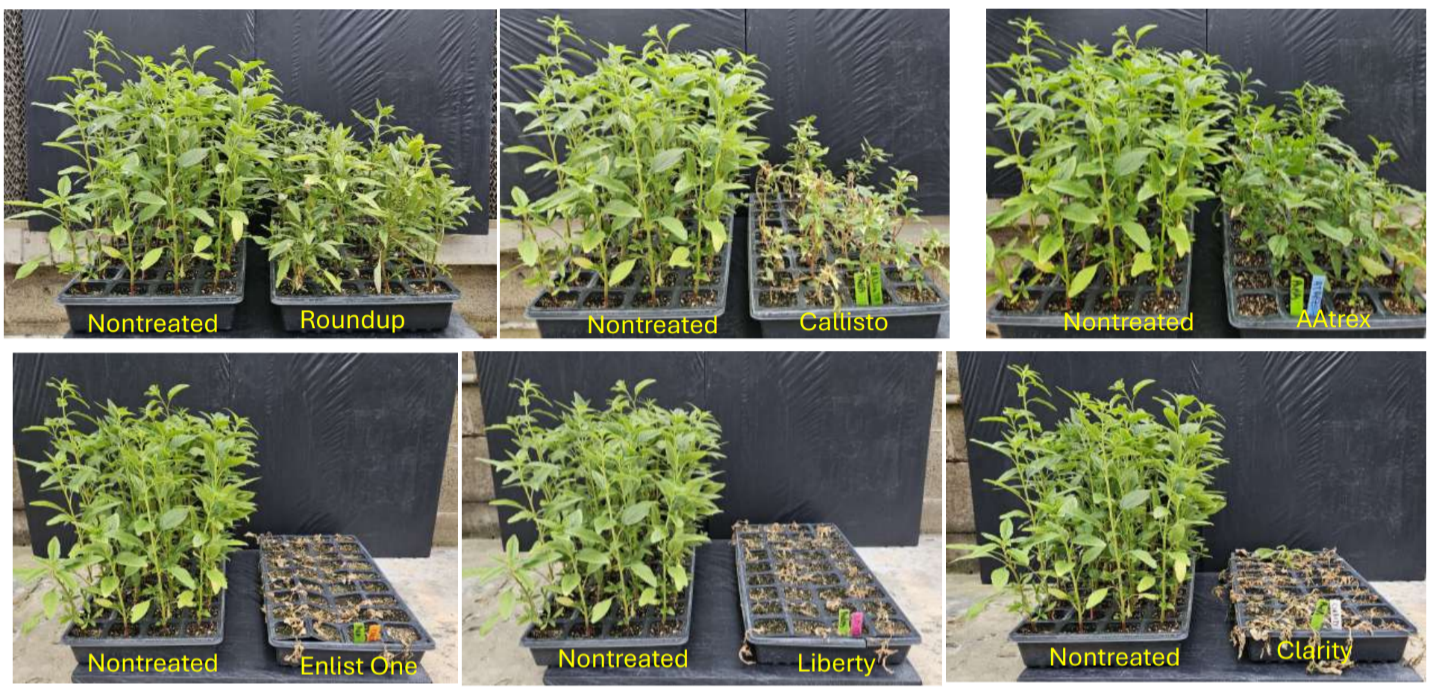
Out of the tested populations, nine carried four-way herbicide resistance. However, the team found no waterhemp carrying resistance to 2,4-D (Enlist One), dicamba (Clarity), glufosinate (Liberty) or lactofen (Cobra), a PPO inhibitor.
Palmer amaranth carried high levels of genetic resistance to glyphosate, as well as resistance to ALS inhibitors, atrazine and HPPD inhibitors.
In addition to pigweed species, Kumar’s research includes other weeds that are carrying herbicide resistance in New York fields, including horseweed, which shows resistance to glyphosate and ALS inhibitors. During the first part of 2026, the team was in the process of screening collected populations of common ragweed, foxtail species and lambsquarters.
“Glyphosate-resistant Italian ryegrass is also becoming a problem in western and northern New York,” he adds. “Collected populations survived applications as high as 16 times the labeled rate of glyphosate.”
Successful Management of Problem Weeds Is Possible
Once farmers understand the challenges of weed resistance likely in their fields, they can adjust programs to control those weed populations. Kumar tested a variety of alternate burndown, pre- and post-emergence herbicide options to identify effective options for soybean producers.
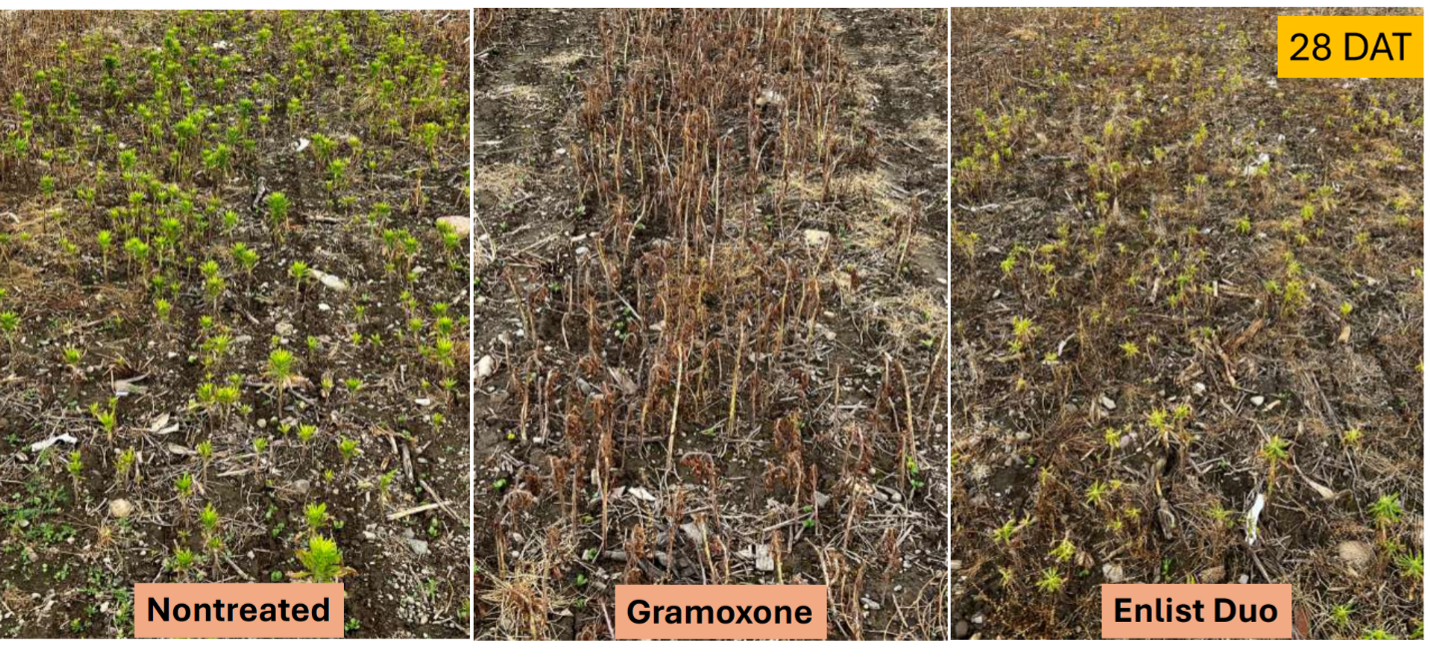
Trials included pre-emergence premixes with multiple herbicide modes of action, including two herbicides not yet registered for use in New York. These options combined two or more active ingredients using two or three of these modes of action.
- The ALS inhibitors of Group 2, like chlorimuron (Classic) in combination with other active ingredients, can be effective as part of soil-applied herbicides, though many problem weeds have developed resistance to post-emergence applications of these active ingredients.
- Photosystem II inhibitors, Group 5, include metribuzin, one of the ingredients in pre-emergence herbicides like Boundary, Panther Pro, Tendovo, Tricor and others.
- PPO inhibitors from Group 14 include active ingredients like fomesafen (Flexstar and others), lactofen, flumioxazin (Valor and others) and sulfentrazone (Spartan).
- Group 15 herbicides, or very long-chain fatty acid synthesis inhibitors, fight weeds with ingredients like acetochlor (Warrant and others) and pyroxasulfone (Zidua).
Kumar encourages farmers to apply soil residual herbicides prior to soybean emergence, a practice not yet common in New York. The premixes he tested controlled glyphosate-resistant waterhemp well in June, though their residual activity faded by mid-July. He followed these treatments with a tankmix of 2,4-D and glufosinate, which successfully extended control through the growing season.
“We have good pre-emergence programs growers can use with an early-post application of Enlist or Liberty,” he says. “We’ve even looked at Spartan and Zidua, herbicides not yet labeled in New York. Should these new products get labeled here, we know how they work.”
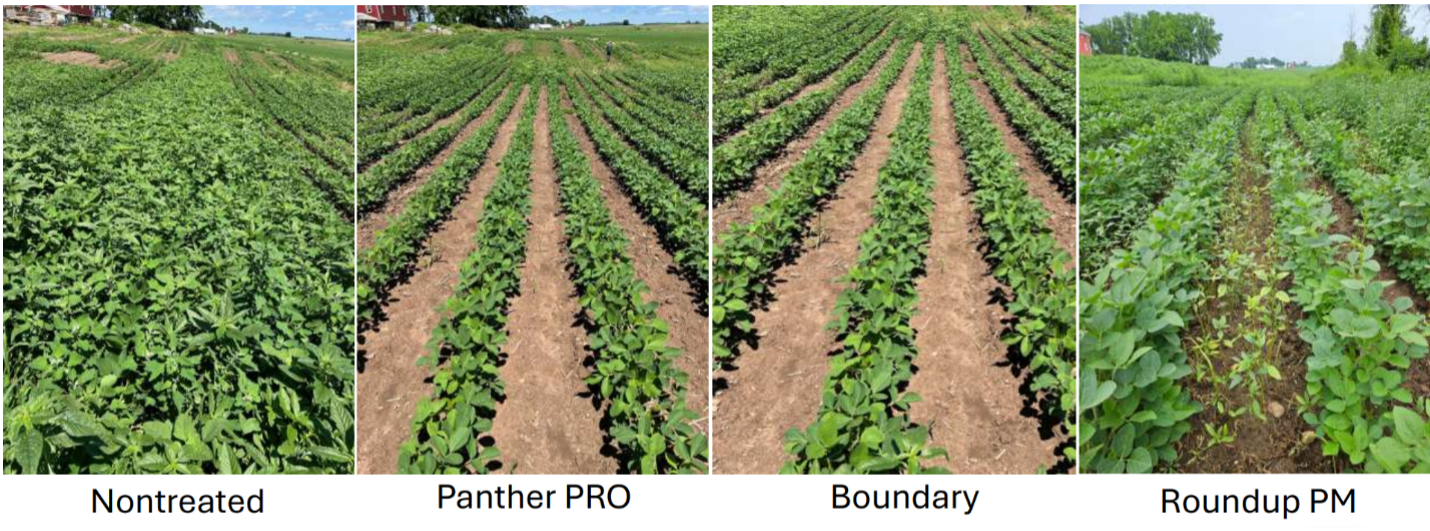
In addition, his greenhouse trials have found that 2,4-D, dicamba and paraquat (Gramoxone) all provide post-emergence control of Palmer amaranth populations found in New York. In the field, Kumar has found that burndown applications of glufosinate and paraquat effectively control glyphosate-resistant horseweed, as well as glyphosate-resistant Italian ryegrass.
“We are also studying the interaction of cover crops and residual herbicides for integrated approaches to waterhemp and horseweed suppression,” he adds.
These trials, in cooperating farmers’ fields, compare termination timing for cereal rye cover crops and application timing for residual herbicides prior to planting, at planting or after planting.
“This research brings integrated weed management tools together to find the best combinations to manage tough weeds,” Kumar says.
He is currently exploring other novel weed control tactics, including harvest weed seed control with seed impact mills and chaff lining, electrocution and inter-row mowing. This research is part of a multi-tactic approach to managing the seedbanks of invasive herbicide-resistant weed species in New York soybean fields.
Additional Resources
Waterhemp – GROW information webpage
Vipan Kumar: Combating Glyphosate-Resistant Weeds – Cornell University article
Superweed in NYS Found Resistant to Widely Used Herbicide – Cornell University article
Confirmation of Glyphosate-Resistant Waterhemp (Amaranthus tuberculatus) in New York – Weed Technology journal paper
Managing Glyphosate-Resistant Waterhemp in NY Corn and Soybean – Cornell University article
Watching Waterhemp for Resistance and Integrated Control Strategies – SRIN article
Researchers are Seeking How to Improve Control of Herbicide-Resistant Waterhemp – SRIN article
Palmer amaranth – GROW information webpage
Glyphosate- and atrazine-resistant Palmer amaranth in New York: Confirmation and Management with Alternative Postemergence Herbicides – Weed Technology journal paper
Palmer Amaranth Management in Soybeans – Take Action fact sheet
Controlling Palmer Amaranth with a Limited Toolbox – SRIN article
Horseweed – GROW information webpage
Multiple Herbicide-Resistant Horseweed (Conyza canadensis L.) in New York: Management Implications in Field Crops – Cornell University Field Crops blog post
Italian Ryegrass – GROW information webpage
Glyphosate-Resistant Italian Ryegrass in New York: What Growers Need to Know – GROW article
Glyphosate resistance in Italian ryegrass (Lolium perenne ssp. multiflorum) from New York State associated with EPSPS gene amplification – Weed Science journal paper
Meet the Researcher: Vipan Kumar SRIN profile | University profile
The Soybean Research & Information Network (SRIN) is funded by the Soy Checkoff and the North Central Soybean Research Program. For more information about soybean research, visit the National Soybean Checkoff Research Database.
Published: Aug 3, 2026


