

Research HighlightsPost-Emergence Waterhemp Control Recommendations for Northern Soybeans
Highlights:
- Michigan weed specialist Christy Sprague offers recommendations to help reduce post-emergence waterhemp pressure in soybean fields.
- Through Soy Checkoff-supported research from the Michigan Soybean Committee, Sprague has evaluated waterhemp control strategies with multiple herbicide resistances.
Christy Sprague, Michigan State University professor and weed extension specialist, has utilized Soy Checkoff funds from the Michigan Soybean Committee to provide recommendations to handle this problem weed. Reprinted with permission.
By Christy Sprague
Waterhemp continues to be one of the most difficult weeds to manage in Michigan soybean production, and post-emergence control failures remain. Extended emergence patterns, rapid growth rates and the expansion of herbicide-resistant populations have narrowed the margin for error. Successful post management hinges on early timing, correct product selection, the use of multiple effective sites of action and thoughtful decisions regarding overlapping residual herbicides.
Understanding Resistance is the Starting Point
A majority of waterhemp populations in Michigan are resistant to glyphosate (Group 9) and ALS-inhibiting herbicides (Group 2), which have fundamentally changed how post waterhemp control programs are structured. Of increasing concern is the continued expansion of PPO-resistant (Group 14) waterhemp and confirmed cases of 2,4-D resistant waterhemp in Michigan. Additionally, glufosinate resistance has been reported in Illinois and Minnesota, further narrowing effective post-emergence herbicide options. Many times, these resistance traits occur together, making reliance on a single post herbicide increasingly risky. Because waterhemp is highly capable of evolving metabolic resistance, post herbicide programs should always be built around at least two herbicide sites of action known to be effective.
Timing is Critical: Weed Size Drives Success or Failure
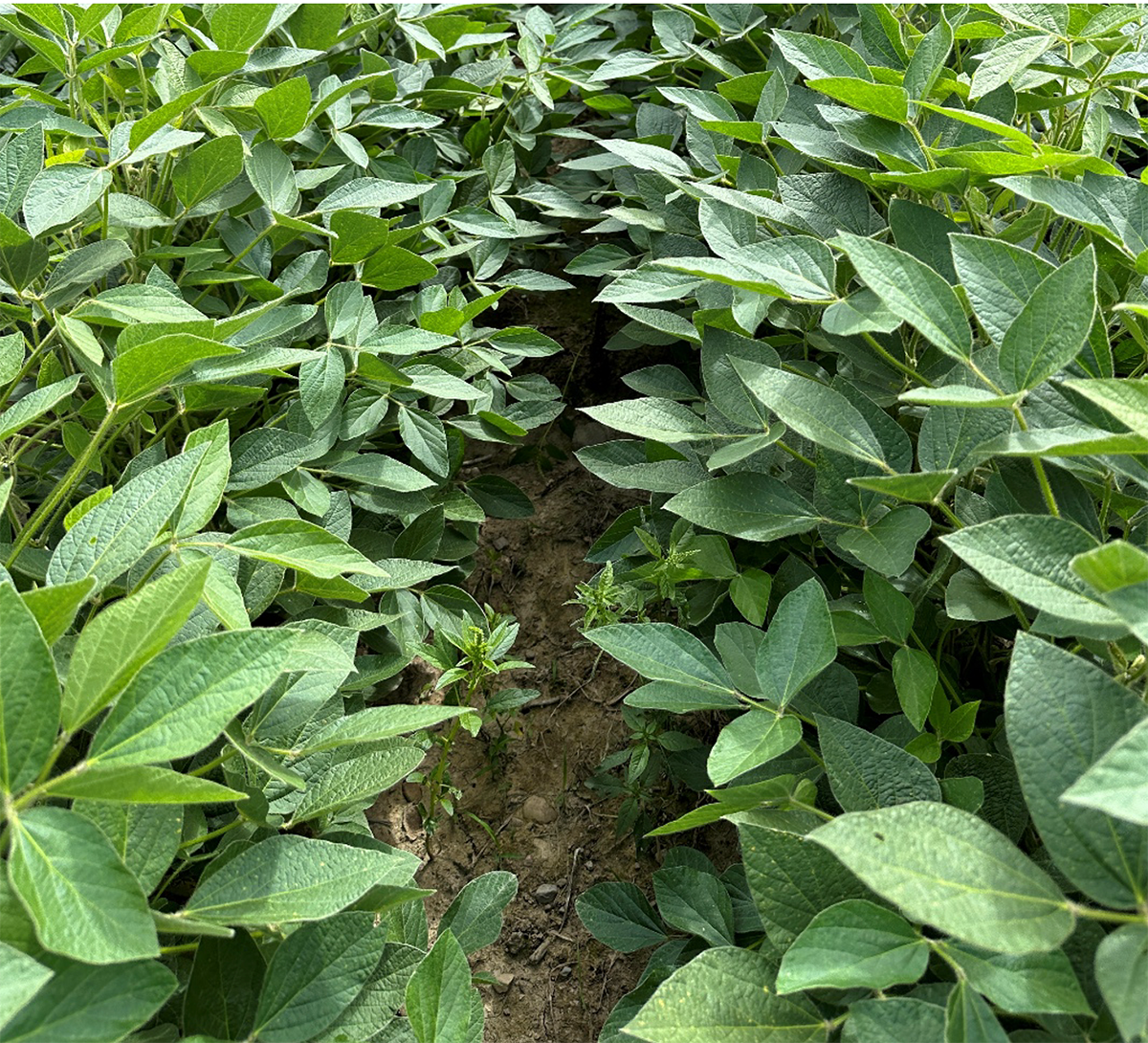
Proper timing remains the most important factor in post waterhemp control. Applications should target waterhemp when plants are 2- to 4-inches tall. Waterhemp grows rapidly, and control consistency drops sharply once plants exceed this size. Delayed applications often result in survivors that regrow or escape entirely, contributing to seed production and the spread of resistance.
Soybean growth stage restrictions further emphasize the need for early post herbicide applications. Liberty Ultra can be applied up to R1 growth stage, or beginning bloom, soybean with the glufosinate resistance trait, while Enlist One (2,4-D) and Enlist Duo may be applied through R1 in Enlist E3 soybean. With the reregistration of dicamba products for use in XtendFlex soybean, there is another option for post waterhemp control, with Tavium applications allowed through V4, and Stryax and Engenia allowed through R1. However, cutoff temperatures and increased label restrictions make dicamba applications more challenging. Waiting until soybean growth stages approach these cutoffs significantly reduces management flexibility and limits the ability to respond to escapes.
Product Selection in Enlist E3 Soybeans: Liberty Ultra and Enlist One
In Enlist E3 soybeans, the most consistent post waterhemp control has come from tank mixtures of glufosinate (Liberty Ultra) plus 2,4-D (Enlist One). When applied timely to small waterhemp, this combination provides two effective sites of action and more reliable control than either product applied alone. This approach also aligns with resistance management principles by reducing selection pressure on any single herbicide site of action.
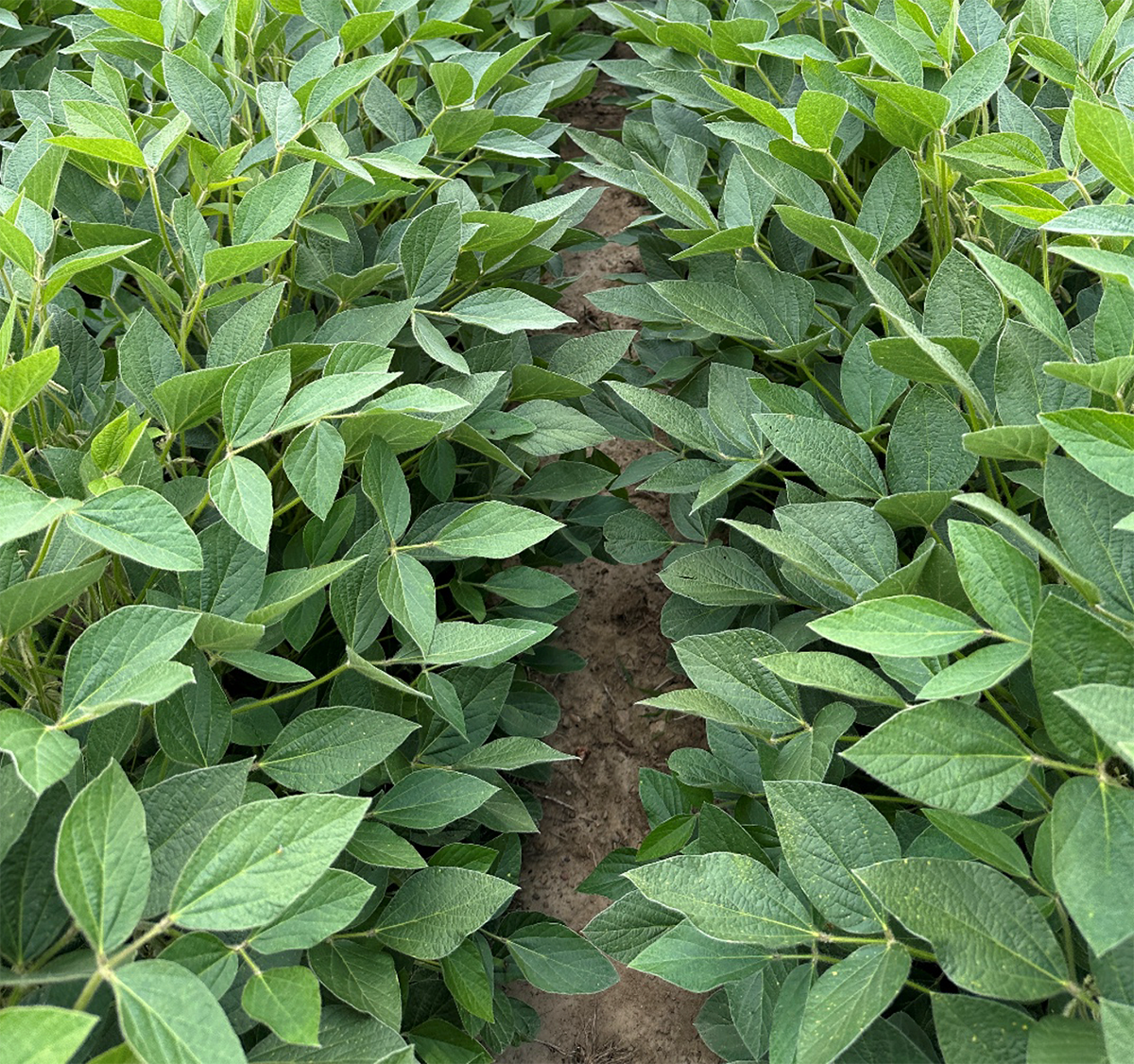
Liberty is a contact herbicide and requires adequate spray coverage. The recommended use rate is 24 fl. oz. per acre, and as waterhemp size increases, rates of up to 34 fl. oz. per acre can be used. While Liberty is effective on small waterhemp, performance declines rapidly on larger plants, and control can be inconsistent under cool, cloudy conditions. Enlist One provides systemic activity and complements Liberty well, but it should not be viewed as a standalone solution, especially in areas where resistance to 2,4-D exists. Tank-mixing these products improves control consistency and helps protect the longevity of both chemistries. Glyphosate can be tank-mixed with either or both of these herbicides to control other weeds, especially larger grasses.
Application Details Still Matter
Optimizing application parameters is essential, especially for Liberty-based systems. Carrier volumes of 15-gallons per acre or more are needed, along with nozzle selection that balances coverage with drift reduction. Ammonium sulfate should be included at a minimum of 8.5 lbs. per 100 gallons of spray solution to enhance herbicide uptake when using glufosinate and glyphosate.
The Role of Post Residual Herbicides: Insurance Against Late Emergence
One of the defining characteristics of waterhemp is its extended emergence window, which can last well into July. Post-emergence herbicides can only control weeds that have already emerged, making late-season waterhemp a persistent challenge. Including a Group 15 residual herbicide with the post application provides an added layer of protection by controlling waterhemp that emerge after the post spray.
Common Group 15 herbicides used in soybean include Dual Magnum, Warrant or Enversa, Outlook and Zidua. These products do not control emerged weeds and must be tank-mixed with an effective post herbicide, but they provide residual activity that can significantly reduce late-season escapes. Overlapping residuals are best viewed as an insurance policy, not a requirement in every field. They are likely to pay off in early-planted soybeans, fields with a history of high waterhemp populations, irrigated fields and in seasons where higher rainfall is expected later in the summer. Precautions: When using post residuals, maximum post and total seasonal use rates must be followed. Additionally, rotation restrictions are critical, especially where winter wheat is planned. There must be a minimum 4.5-month interval between Dual Magnum application and winter wheat planting, while Outlook, Warrant, Enversa and Zidua require a 4-month interval. These restrictions should be evaluated before making post herbicide decisions.
Scout for Escapes and Act Quickly
Every post herbicide application should be evaluated 10 to 14 days after spraying. Surviving waterhemp plants should be investigated immediately. Poor coverage, late emergence and oversized weeds are common explanations, but persistent survivors may indicate herbicide resistance. Escapes should be managed to prevent seed production whenever possible, and strategies should be put in place to avoid spreading seed to other fields. Herbicide resistance screening is available through MSU Plant & Pest Diagnostics, which can help confirm resistance and guide future management decisions.
Bottom Line
In 2026, effective post-emergence waterhemp control in soybean requires early applications to small weeds, the use of multiple effective sites of action, and careful consideration of overlapping residual herbicides.
Additional Resources
2026 Michigan State University Weed Control Guide
Getting Rid of Weeds (GROW) – website
Take Action herbicide resistance management – website
Researchers are Seeking How to Improve Control of Herbicide-Resistant Waterhemp – SRIN article
Meet the researcher: Christy Sprague University profile
The Soybean Research & Information Network (SRIN) is funded by the Soy Checkoff and the North Central Soybean Research Program. For more information about soybean research, visit the National Soybean Checkoff Research Database.
Published: Aug 17, 2026


