
Research HighlightsIntegrated Solutions for Soybean Stem Diseases Break the Triangle
Highlights:
- An integrated approach to managing soybean stem diseases is based on the disease triangle.
- Modeling and fungicide resistance screening aims to understand and predict pathogen presence.
- Novel cultural practices could make the field environment less favorable for disease development.
- Breeding efforts incorporate disease resistance into soybean varieties so they are less susceptible to infection.
By Laura Temple
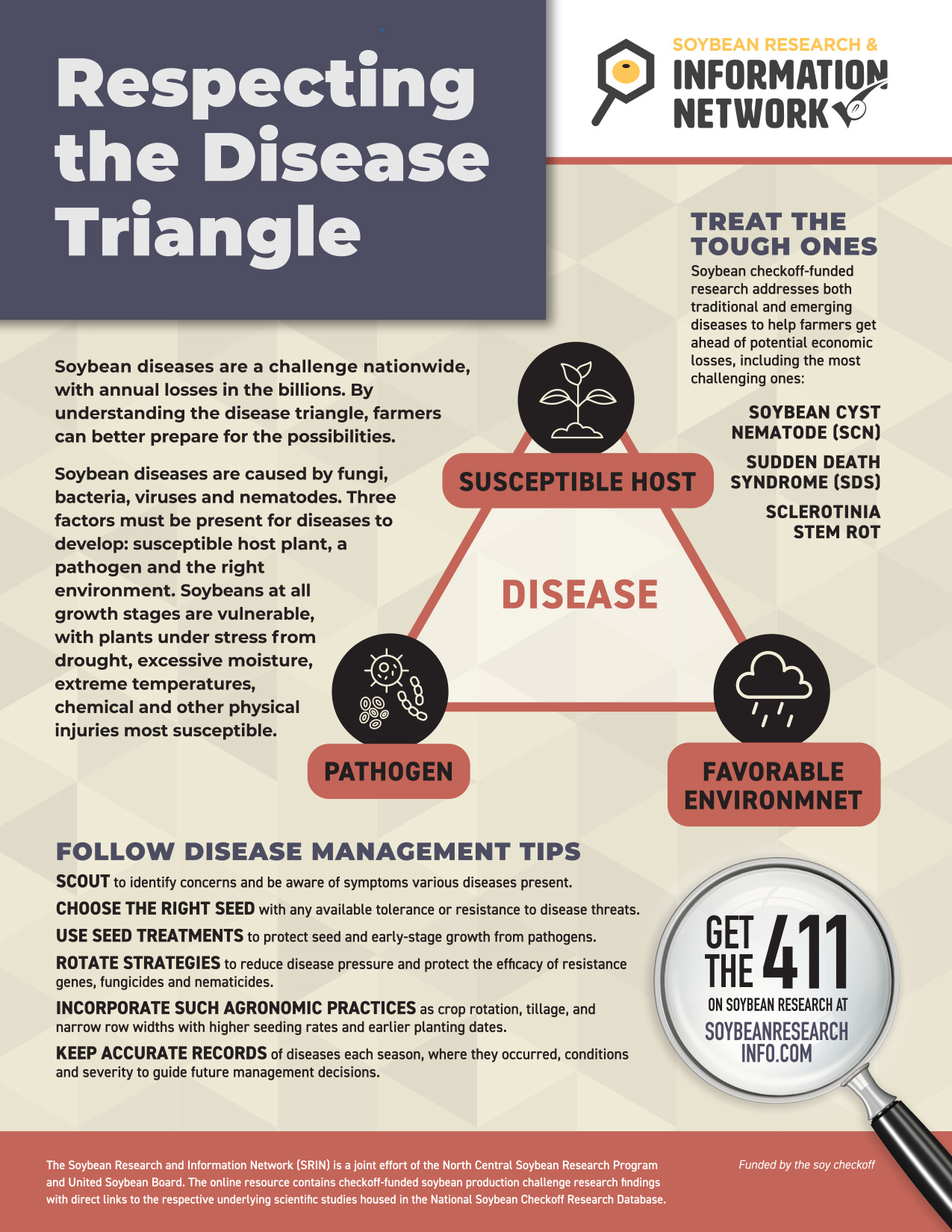
Geometry links directly to disease pressure, at least according to plant pathologists. They explain the disease triangle at every opportunity.
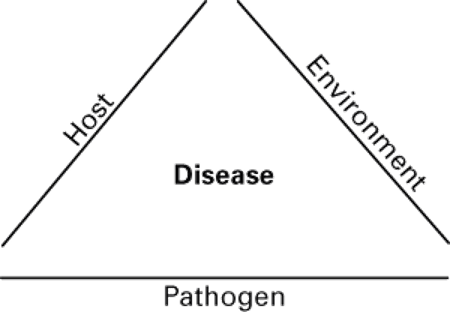
Diseases need three factors to thrive, the sides of the disease triangle.
- Pathogen present
- Favorable environment
- Susceptible host
Weaken or remove one factor, and the disease doesn’t form or is less severe.
With the disease triangle as their guide, a multi-state team of researchers is tackling several costly soybean stem diseases: sudden death syndrome, white mold, stem canker and charcoal rot, as well as iron deficiency chlorosis.
“We have a truly integrated team and approach to finding solutions for these challenges,” says Leonor Leandro, professor of plant pathology for Iowa State University. “Our team includes plant pathologists, breeders and extension experts from five universities.”
Leandro leads the research funded by the Soy Checkoff through the United Soybean Board. Team members work at Iowa State, Michigan State University, Mississippi State University, North Dakota State University and the University of Kentucky.
Together their work addresses each element of the disease triangle.
Predicting Pathogen Presence
Leandro says one objective of this research seeks to predict the risk of disease development. Increasing knowledge about the biology of pathogens leads to new insights and tools for farmers and agronomists.
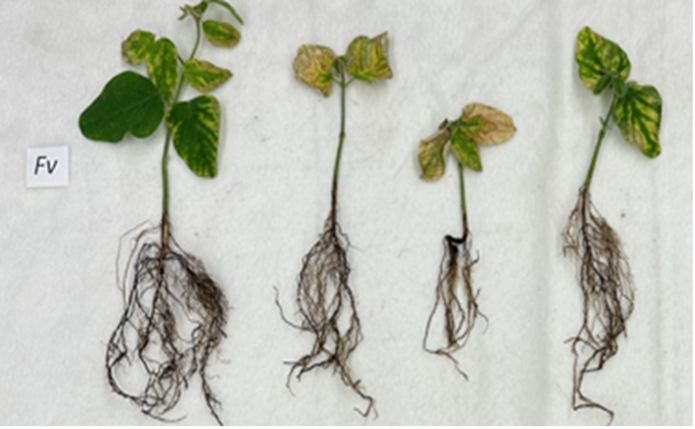
For example, the team has developed a molecular tool to detect the presence of Fusarium virguliforme, the pathogen that causes sudden death syndrome, or SDS, in the soil.
“Farmers that have never seen SDS in their soybeans may still have the pathogen in their fields,” Leandro says. “If conditions become favorable for SDS development, they will be unprotected.”
She saw that happen in Iowa in 2010, a year with ideal conditions for SDS. Western Iowa farmers hadn’t experienced SDS, but they learned the pathogen was in their fields when conditions allowed it to develop in this very wet year.
For white mold, the research team has used machine learning to improve models that predict white mold.
“The new models have up to 90% accuracy,” Leandro reports. “That helps farmers anticipate pressure and make timely treatments to protect soybean flowers as white mold spores are released.”
The research team is also screening pathogens for fungicide sensitivity and geographic distribution. This work helps both predict the potential for fungicide resistance and identify emerging disease threats.
- Two fungicide seed treatments, fluopyram (Ilevo) and pydiflumetofen (Saltro), protect against SDS infection, but they use the same mode of action. That increases the potential for resistance to develop.
- Farmers rely on the quinone outside inhibitor (QoI) fungicide group to fight against Diaporthe fungi that cause stem canker, but these fungicides have very specific sites of action and a high risk of developing resistance.
Making the Field Environment Less Favorable
Novel field additives show potential for disrupting conditions for disease development in soybean fields. These cultural practices may aid in preventing diseases, especially where fungicide resistance is a growing concern.
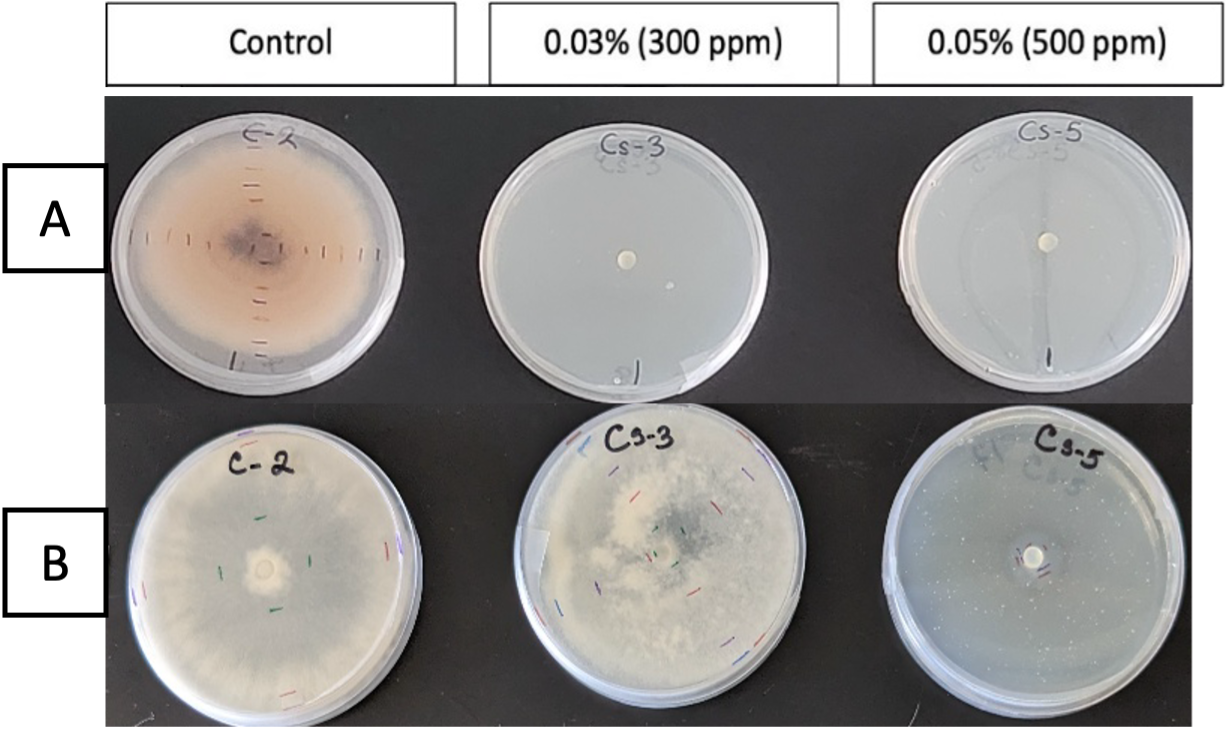
Greenhouse testing shows that plant essential oils have suppressive activity against pathogens that cause charcoal rot, SDS and white mold.
“We’ve found that cassia oil, which is related to cinnamon, has activity on all these pathogens and is cheaper than other oils,” Leandro says. “We are working to develop it into a seed treatment.”
She notes that cassia oil can be phytotoxic to soybean seeds, but nanotechnology encapsulation can reduce that potential and allow for slow release of the essential oil antimicrobial compounds for longer protection.
Biochar, a high-carbon byproduct of biofuel production, is increasingly being used as a soil amendment to improve soil health. Ongoing research is looking at its performance against SDS.
Leandro says the team is considering unique approaches to chemical control, as well.
“We currently don’t have good resistance or fungicide options for charcoal rot,” she explains. “We are looking at in-furrow fungicide treatments, an approach not commonly used in soybean production, to manage charcoal rot and stem canker.”
Breeding Soybeans for Disease Resistance
The research team’s soybean breeders have been developing new sources of disease resistance for SDS, white mold and iron deficiency chlorosis and incorporating these genetics into high-yielding soybeans.
“Some of the newly released material has been out-performing commercially available resistant varieties,” Leandro says. “Our team is also finding genetic markers for these sources to accelerate breeding for resistance to these diseases for everyone.”
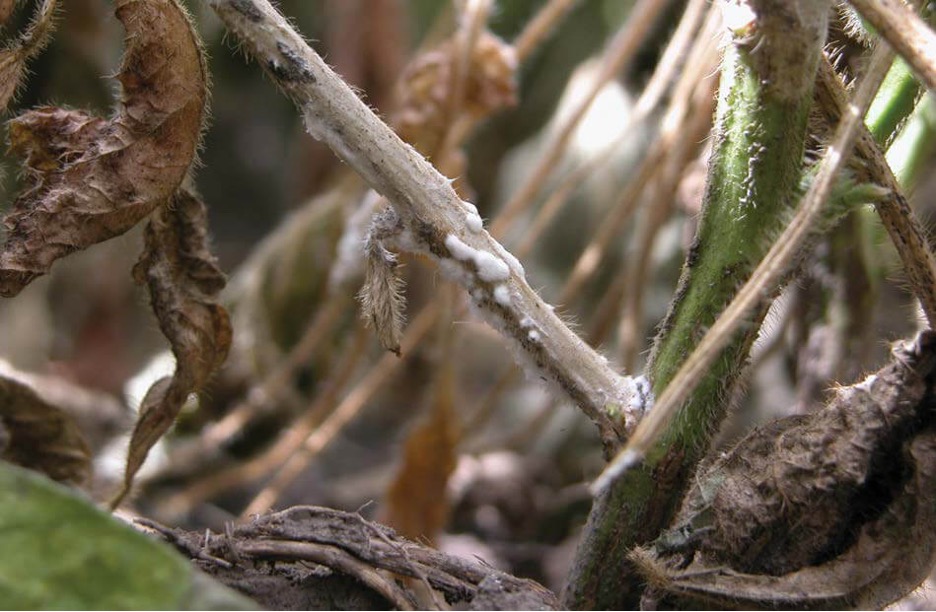
They are also creating lines with resistance to multiple diseases. To date, they have released soybeans with resistance to SDS plus white mold, as well as SDS and white mold plus iron deficiency chlorosis.
The team is currently screening soybeans to find potential genetic resistance to charcoal rot and stem canker.
Putting It Together
To account for progress related to every point in the disease triangle, field trial treatments combined new varieties, seed treatments, novel cultural practices and disease forecasting.
“We want to develop a truly integrated approach to managing these costly soybean stem diseases,” Leandro says. “We have been sharing updates with farmers via the Crop Protection Network.”
The team provides the latest research results for specific diseases in a variety of formats.
Additional Resources
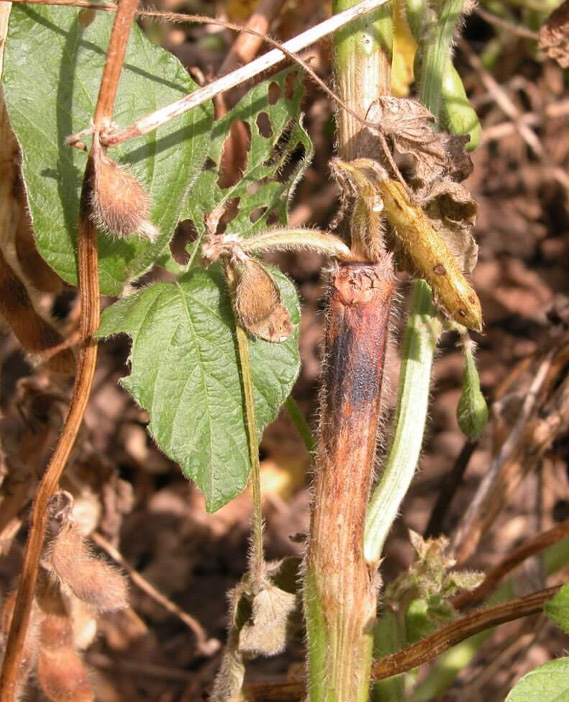
Respecting the Disease Triangle – SRIN infographic
An Overview of Sudden Death Syndrome of Soybean – Crop Protection Network
An Overview of White Mold of Soybean – Crop Protection Network
An Overview of Stem Canker of Soybean – Crop Protection Network
An Overview of Charcoal Rot of Soybean – Crop Protection Network
Pesticide Impact on White Mold (Sclerotinia Stem Rot) and Soybean Yield – Crop Protection Network
Iron (Fe) Deficiency Chlorosis (IDC) of Soybean – Crop Protection Network
White Mold: Insights and Updates for 2025 – Crop Protection Network YouTube video
Calculating Fungicide ROI for Soybean White Mold – Crop Protection Network YouTube video
Nano-encapsulation of Essential Oils: A Unique Approach to Soybean Disease Control – SRIN article
Biochar as a Soil Amendment May Help Battle Soybean Seedling Diseases – SRIN article
Meet the Researchers:
Iowa State University
- Leonor Leandro SRIN profile | University profile
- Daren Mueller University profile
Michigan State University
- Martin Chilvers SRIN profile | University profile
- Dechun Wang University profile
Mississippi State University
- Tessie Wilkerson University profile
North Dakota State University
- Febina Mathew SRIN profile | University profile
University of Kentucky
- Kiersten Wise University profile
The Soybean Research & Information Network (SRIN) is funded by the Soy Checkoff and the North Central Soybean Research Program. For more information about soybean research, visit the National Soybean Checkoff Research Database.
Published: Aug 17, 2026