

Research HighlightsSoy Supplements Alleviate Fescue Toxicosis in Cattle
Highlights:
- Soybeans show promise in mitigating the symptoms of tall fescue toxicosis in beef cattle.
- The condition results from cattle grazing high amounts of the drought-tolerant forage, which carries a fungus that produces toxic compounds that interrupt normal animal physiology.
- In initial trials, soybean meal supplements almost completely negated major symptoms associated with fescue toxicosis.
By Laura Temple
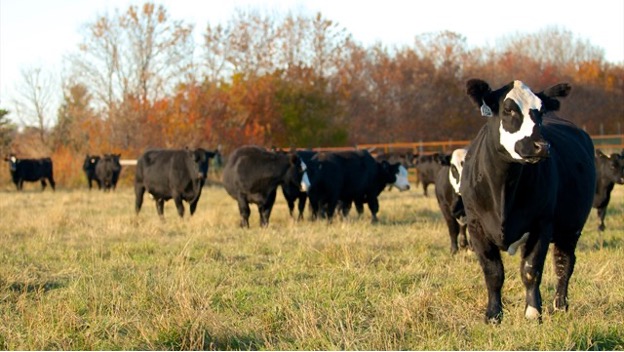
Throughout the Southeast U.S., small beef herds graze in long-standing pastures. Many of those pastures include tall fescue, a hardy forage that grows well under the hot, dry conditions common in the region.
“Some of tall fescue’s hardiness can be attributed to a fungus that infects it,” explains Ron Trotta, assistant professor of ruminant nutritional physiology and molecular biology at the University of Kentucky. “That fungus produces ergot alkaloids that cause toxicosis in beef cattle.”
Renovating pastures to remove tall fescue costs significant dollars and time. In looking for nutritional ways to address this challenge, Trotta sources suggesting soy could be a solution. With support from the Kentucky Soybean Board, he studied how adding forms of soy to cattle diets affects fescue toxicosis symptoms.
Toxicosis Symptoms
The ergot alkaloids produced by the fungus in tall fescue bind to neurotransmitter receptors in cattle, interrupting the production of hormones like serotonin and dopamine in cattle. That impacts a host of their normal functions.
Cattle consuming 15 micrograms of ergot alkaloids per kilogram of body weight begin showing symptoms of fescue toxicosis. The condition reduces growth rates, fertility and reproductive performance and lactation. It also increases heat sensitivity. All these symptoms hurt the cow-calf herds common in this region.
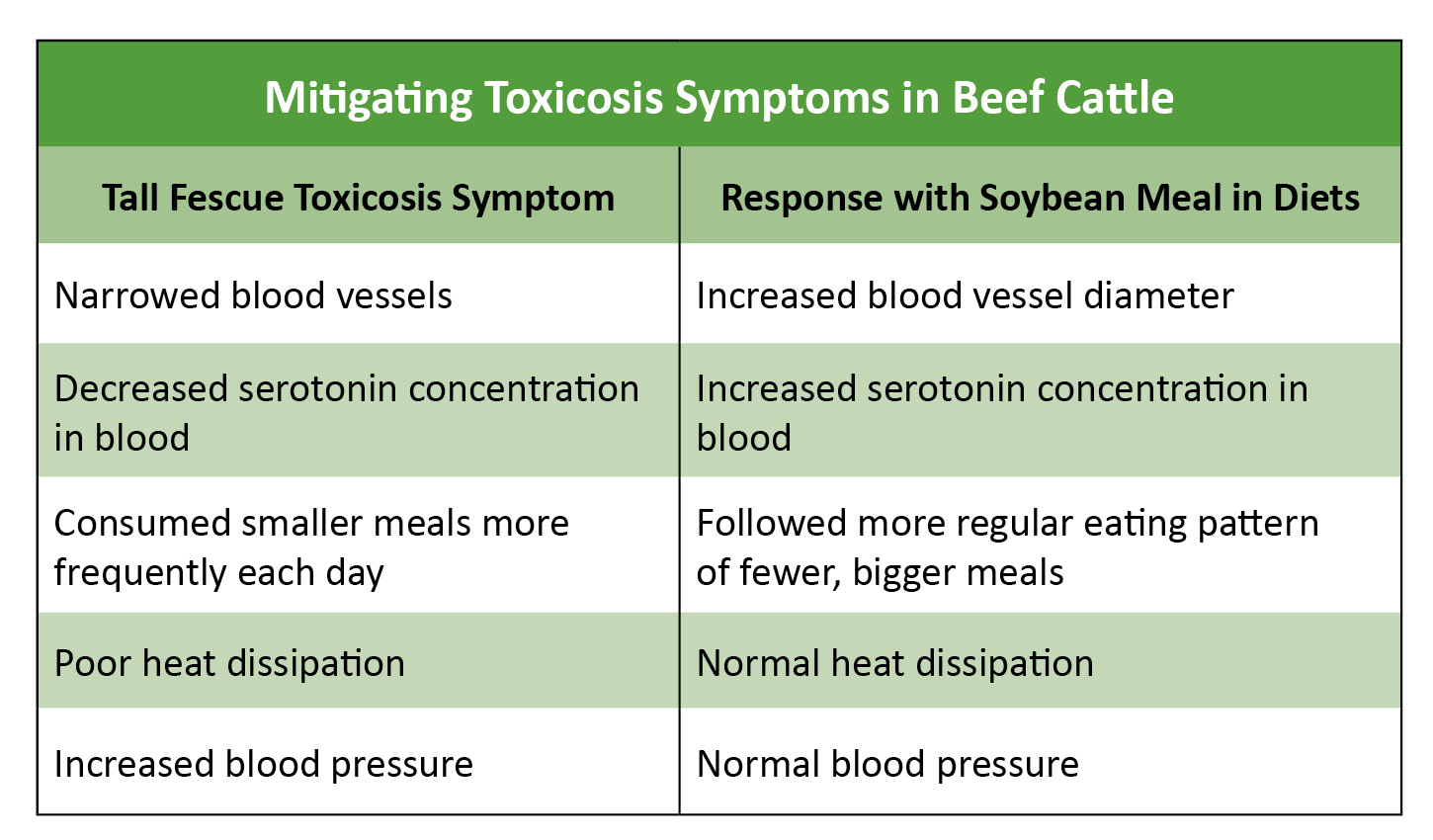
For example, fescue toxicosis causes blood vessels to narrow, a condition called vasoconstriction. With less blood flowing through their system, cattle cannot dissipate heat as well, so they lay down more often, eat less and have high blood pressure.
Trotta explains that soybeans contain essential amino acids and isoflavones that could counteract the ergot alkaloid activity.
Feeding Soy
In controlled feeding trials, Trotta’s team observed how cattle respond to soy supplements. They induced toxicosis in groups of beef steers. Then, they compared various supplement options that accounted for 10% to 15% of the dry matter intake, or about 1.5 pounds per day. That volume mimicked the amount shown to be effective in the previous research that prompted this work. All cattle were fed equal amounts per day to ensure that differences would only be due to changes in the supplement nutrient composition.
- One group received soybean hulls, which are high in fiber and low in protein and isoflavones.
- Another group received ground whole soybeans, containing all soy nutrients, including an intermediate level of protein and isoflavones.
- The group supplemented with soybean meal received the highest concentration of protein and isoflavones.
- The positive control group had toxicosis induced and received a corn supplement.
- The trial also included a negative control group, which did not have toxicosis induced and also received the corn supplement.
The team monitored a wide variety of factors in the cattle, such as feeding behavior, response to heat stress, cardiovascular measurements, health characteristics and metabolism.
Soy Mitigates Symptoms
Based on the data gathered, soy supplements alleviated several key symptoms of tall fescue toxicosis.
“Cattle on all soy diets performed better than the positive control group with induced toxicosis,” Trotta reports. “The soybean meal supplement provided the biggest response, followed by soybean hulls.”
He adds that whole soybeans produced the smallest response, but all the soy supplements addressed fescue toxicosis symptoms.
“Data from the group that received soybean meal was almost like that from the untreated, healthy group,” he reports. “We don’t know why soybean meal was more effective than other forms of soy, but the next stage of our research aims to answer that question.”
He adds that whole soybeans and soybean hulls may offer other benefits to cattle. However, adding soybean meal or another cost-effective soy supplement shows great promise for supporting cattle at risk for tall fescue toxicosis.
Trotta believes that U.S. beef cattle currently underuse the potential benefits of soy, with the U.S. beef industry accounting for just 6% to 7% of total soybean meal use. That’s an opportunity for soybean producers. Increasing use would create new domestic demand for soy.
“We estimate that fescue toxicosis impacts 9 million calves every year,” he says. “Feeding just 1.5 pounds of soybean meal per day to those calves would increase soybean meal demand by 13.5 million pounds daily.”
He also believes soy could benefit beef cattle in other climates and systems that face challenges causing similar symptoms. He expects future research to further define the value of soy’s protein and isoflavones for beef cattle.
Additional Resources
Feeding Soybeans to Beef Cattle – University of Kentucky article
To Feed or Not to Feed, Soybeans That Is – Ohio State University article
Could Soy Help Cattle Breathe Easier? – SRIN article
Whole, Roasted Soybeans are a Viable Option for Beef Cattle Feed – SRIN article
Re-Introducing Soybean Meal into Cattle Diets – SRIN article
Minimizing Influenza D Virus Impacts in Soy-Consuming Cattle – SRIN article
Meet the Researcher: Ronald Trotta University profile
The Soybean Research & Information Network (SRIN) is funded by the Soy Checkoff and the North Central Soybean Research Program. For more information about soybean research, visit the National Soybean Checkoff Research Database.
Published: Feb 2, 2026


