

Research HighlightsDouble Cropping Soybeans and Pennycress for Sustainable Fuel
Highlights:
- To meet demand for sustainable aviation fuel, feedstock production needs to increase.
- Winter oilseeds like pennycress that can be crushed for fuel production could allow farmers to add an income stream, while maintaining soybean and other crop production.
- Research is just underway to gather data to learn how to double crop an oilseed like pennycress with soybeans.
By Laura Temple
By 2050, The U.S. Department of Energy aims to replace the country’s jet fuel demand with sustainable aviation fuel. Derived from sustainable feedstocks like plant biomass or oilseeds, this low-carbon fuel option would replace conventional petroleum-based jet fuel.
“The stated goal is for 100% of this sustainable aviation fuel to be produced domestically,” says Virginia Sykes, associate professor of plant science at the University of Tennessee. “However, this needs to happen without displacing current crops that fulfill existing food, feed and other demand.”
This creates an intriguing challenge for Sykes, who focuses on optimizing economic and environmental benefits of agronomic systems that include cover crops, double-cropping, crop rotations and similar practices.
“In our region, theory suggests a winter oilseed as an option for a harvestable winter crop that contributes to sustainable aviation fuel production,” she explains. “However, limited applied research exists to guide how to add one into typical crop rotations in the southern U.S.”
The Tennessee Soybean Promotion Board agreed to invest in her preliminary research to explore and develop guidelines to add a profitable, sustainable winter oilseed into soybean-corn cropping systems. Such a system would secure an additional income stream for farmers and help meet the need for sustainable aviation fuel feedstock.
Pros and Cons of Pennycress
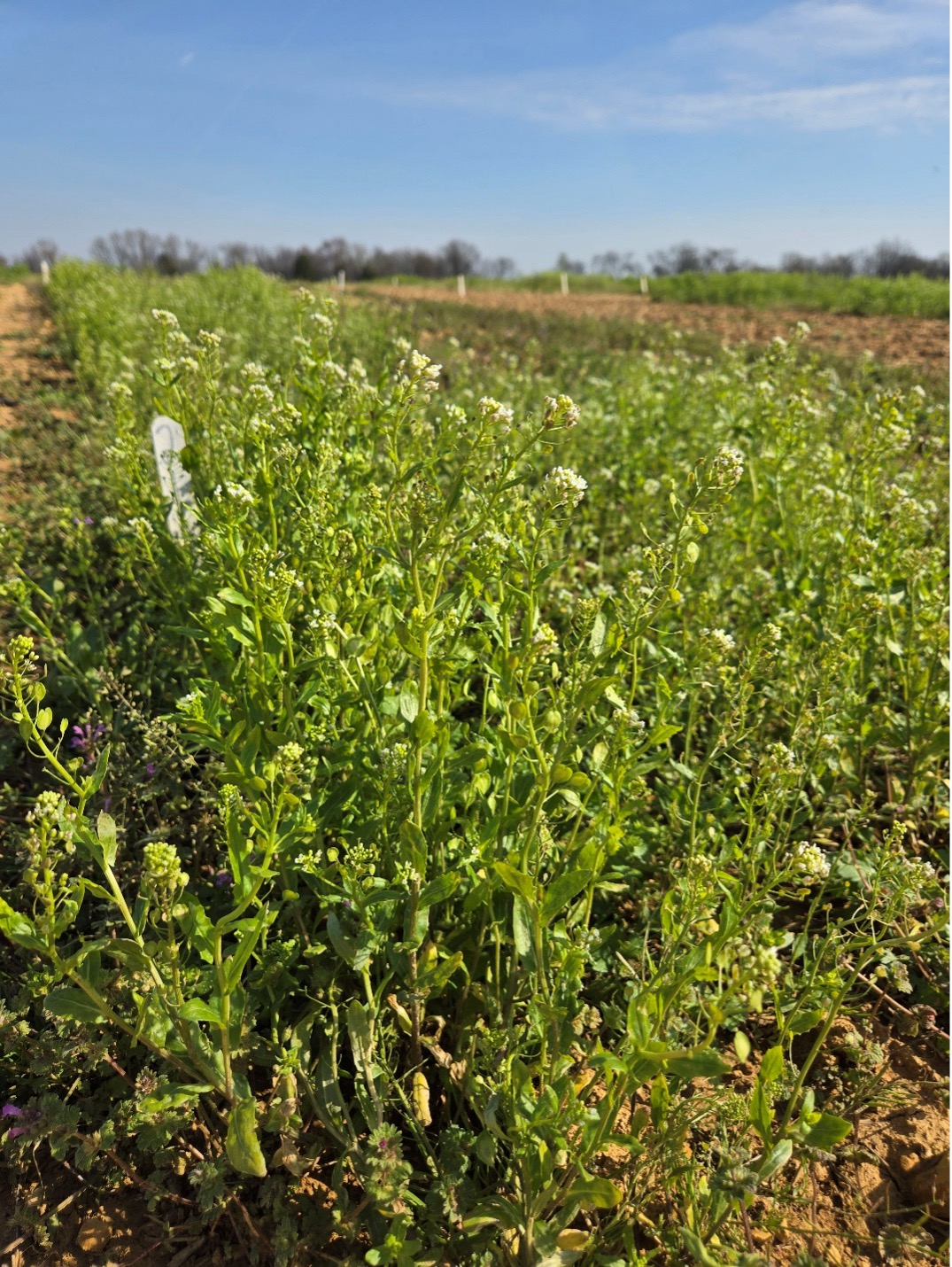
Based on likely planting and harvesting dates and agronomic theory, Sykes opted to focus oilseed research on pennycress, a member of the mustard family. It has potential to be grown and harvested as a winter oilseed and fuel feedstock. Pennycress is an earlier-maturing plant that was already garnering attention in the Midwest due to its chemical composition, which is functionally similar to conventional jet fuel.
“Pennycress could fit well when planted before soybeans, similar to double-cropping with winter wheat,” she says. “Farmers can plant and harvest it using the same equipment as for soybeans.”
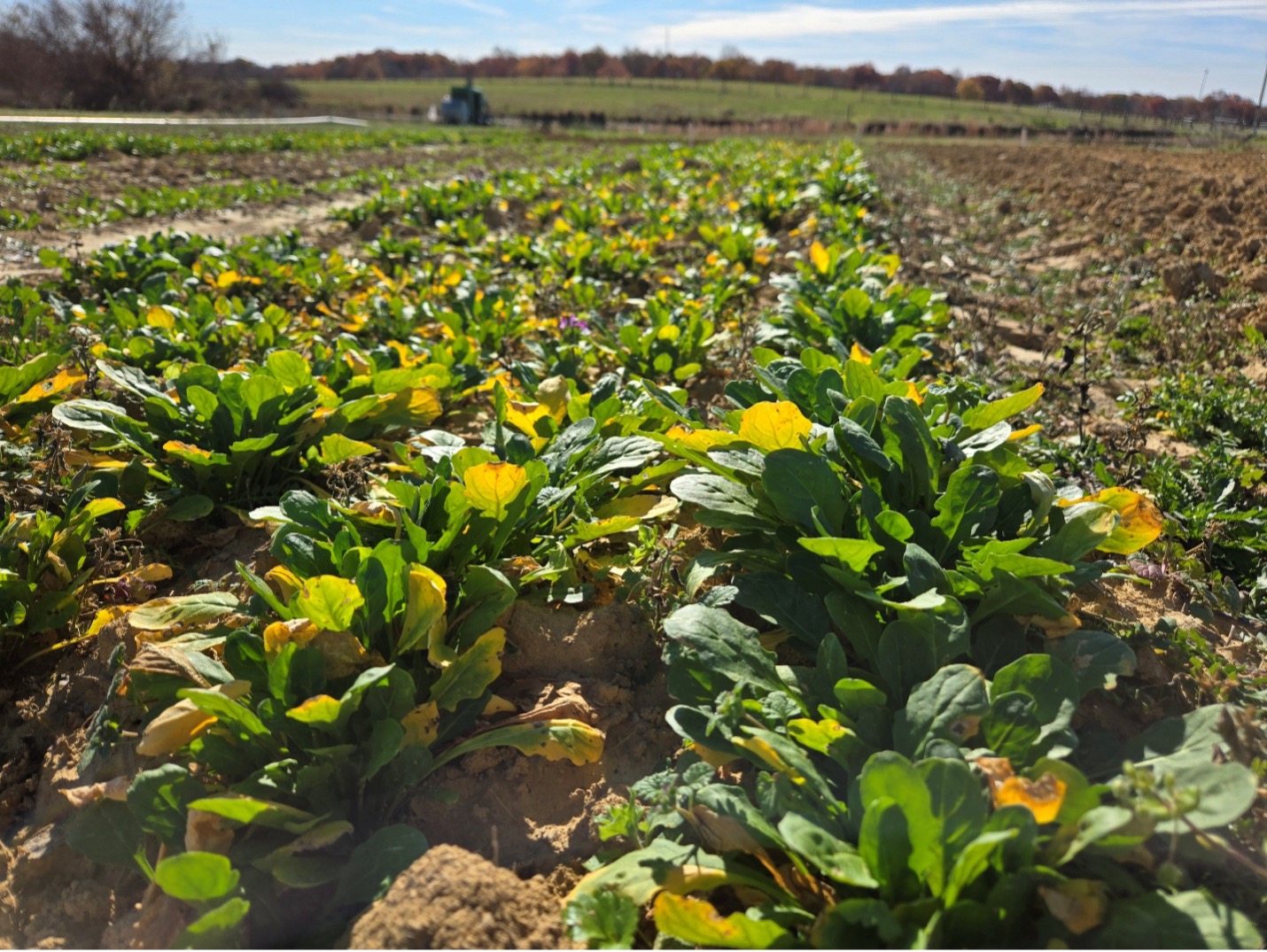
When planted in the fall in Tennessee, pennycress usually germinates within a couple weeks and grows to its rosette stage. It then goes dormant during the winter. Once it starts to elongate, it matures through flowering and seed set in about six weeks. Then it dries down naturally in the field and can be harvested.
Pennycress also has drawbacks, including characteristics that help it thrive naturally as a weed. Germination rates can be low because seeds can remain dormant in the soil for a few seasons before germinating. The seeds also shatter easily, to help it spread.
“Public and private breeding work has been underway to select for domesticated characteristics that address these issues in this region,” Sykes reports.
Pennycress also produces very tiny seeds that can be challenging to handle.
“Basically, if equipment can hold water, it can hold pennycress,” she says. “That could require additional work, like covering equipment seams or corners with duct tape.”
But based on her previous research, Sykes notes that pennycress may have an allelopathic effect on marestail and Palmer amaranth without impacting soybean yield. That means pennycress produces a compound that appears to restrain the growth of these problem weeds, another potential benefit of this winter crop.
Practical Systems Research
To realize the potential of harvesting a winter oilseed crop like pennycress for sustainable fuel, farmers need to know how it can fit into their systems.
“We have lots of theories, but many questions,” Sykes says. “When can pennycress be planted? When does it need to be harvested so it doesn’t impact soybean planting? How does it yield? How does it support the bottom line? We need data.”
She designed trials to answer these questions. Her team planted five different varieties of regionally available, domesticated pennycress at five different dates between mid-September and mid-November, following corn. They evaluated pennycress germination, emergence, height, yield, shattering that leads to yield loss and oil content for processing. They followed all these plots with a late Maturity Group 4 soybean variety, planting as soon as possible after pennycress harvest. Then they measured soybean yield and protein and oil content.
“During the first year of the trial, all the pennycress matured at roughly the same time in May, regardless of planting date,” she reports. “That allowed soybeans to be planted in mid- to late-May.”
Maturity timing could relate to winter temperatures. However, Sykes stresses the need for multiple years of data to create meaningful guidelines and recommendations. With more information, her colleague Edward Yu, professor of agricultural and resource economics at the University of Tennessee, will also complete an economic analysis of adding pennycress into a soybean-corn rotation.
“We are trying to learn everything about the potential of this system at once,” she says. “This preliminary research and Tennessee Soybean Promotion Board support has been critical.”
Sykes hopes to leverage the early stages of this research to secure federal funding that will expand the regional scope of this work, collaborating with researchers in Georgia, Kentucky, Mississippi, South Carolina, Texas and Virginia to build knowledge about how winter pennycress, along with other winter oilseeds like canola and camelina, might complement existing Southern cropping systems, including soybeans. This would complement similar research underway in other regions.
Additional Resources
Soybeans: Powering the Circular Economy – SRIN article
Educating Key Audiences on the Benefits of Biomass-Based Biodiesel – SRIN article
Do Cover Crops Impact Weed and Crop Germination? – SRIN article
Meet the researcher: Virginia Sykes SRIN profile | University profile
The Soybean Research & Information Network (SRIN) is funded by the Soy Checkoff and the North Central Soybean Research Program. For more information about soybean research, visit the National Soybean Checkoff Research Database.
Published: May 4, 2026


