

Jenny Koebernick – Soybean Research Profile
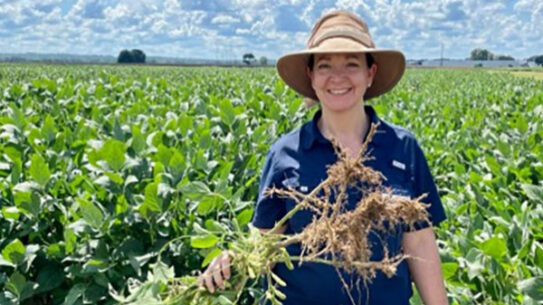
Jenny Koebernick, Associate Professor, Cotton and Soybean Breeding, Auburn University
Why did you decide to pursue a career that includes soybean research?
Soybean chose me! I have a passion for helping growers. Plant breeding is a long-term investment with tangible outputs to farmers, and I want to be a part of that. My position covers both soybean and cotton breeding, and I am continuing the legacy of this double breeding program.
What research topic have you completed in the past or are working on now that could have or has had the most significant impact on soybean production?
The progress our program has made on soybean genetics for resistance to diseases will have the most impact on soybean production.
How has the soybean checkoff enhanced your ability to find answers to production problems for farmers?
A breeding program needs steady support, and it should benefit growers directly. However, federal research grants don’t support breeding, which is a reason public plant breeding in general as declined through time. The Alabama Soybean Producers have allowed me to maintain Auburn’s soybean breeding program and I am grateful for the trust they put in me and my team.
Within your area of expertise, what are the top two or three general recommendations you would offer farmers to improve their management practices?
Variety selection is critical to soybean production. Reliable, third-party variety trials, mostly run through land grant institutions, can help growers figure out what works well in their region, but they need to understand how to look at variety testing data and select their best options. In addition to yield, they should consider disease and pest resistance. For example, in Alabama, we often get too much water, which can cause disease pressure. Extension professionals can help growers interpret variety trial data and the disease resistance they might need.
Within your area of expertise, what do you consider to be critical soybean research needs that can impact the profitability of farmers in the future?
We need to emphasize maintaining university research pipelines and breeding programs. That includes the infrastructure that supports research, like genetic tools, the soybean germplasm collection and the ability to train future researchers. Keeping tools and the pipeline current ensures we can continue doing research to benefit farmers in the future.
SRIN articles:


