

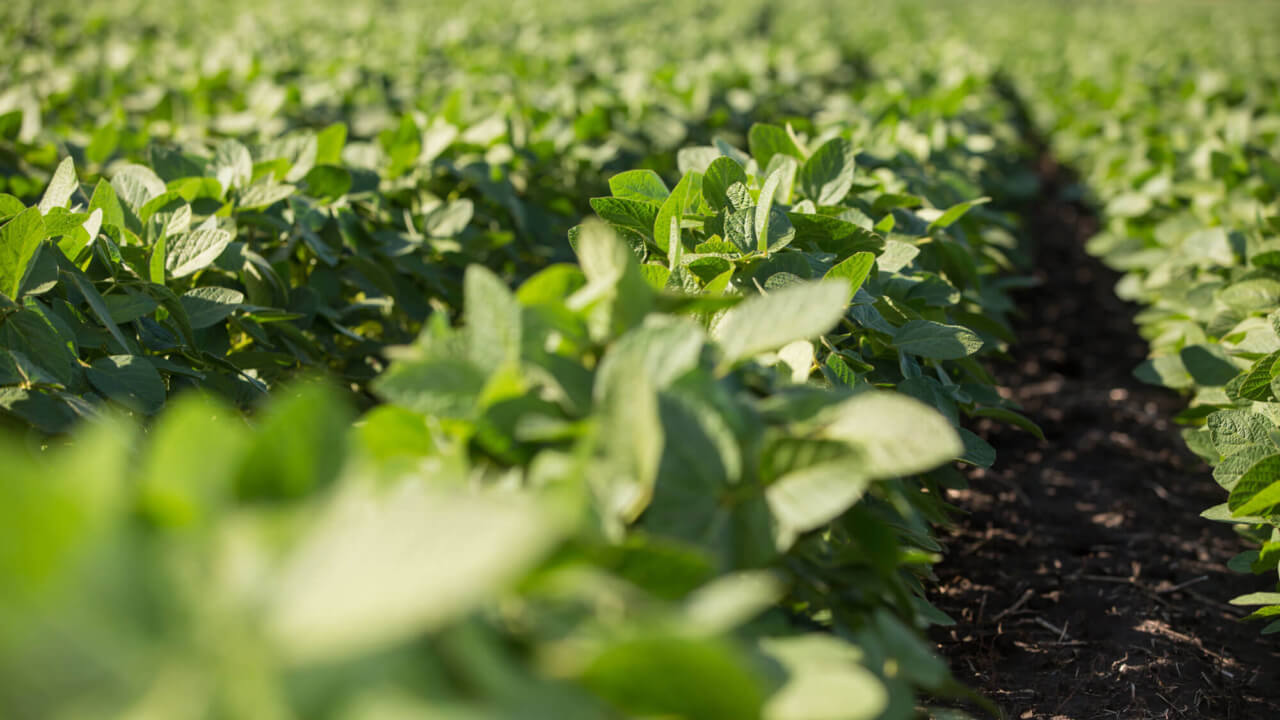
Research HighlightsFinding Disease Resistance in Soybean Genetics
Highlights:
- Breeders use diversity panels to find genes that provide disease resistance.
- Auburn’s soybean breeding program is developing genetic markers to help commercial breeders identify and incorporate resistance to target spot and Cercospora leaf blight.
- Auburn is breeding with a soybean line resistant to these diseases plus iron chlorosis tolerance.
By Laura Temple
Genetic resistance effectively protects soybeans from disease.
Jenny Koebernick, associate professor, soybean and cotton breeder at Auburn University, leads research to identify genetics that confer resistance to key diseases. Working with both crops allows her team to apply what they learn from one crop to the other.
“Disease resistance protects yield,” she says. “We’ve found a soybean line with resistance to target spot and Cercospora leaf blight, plus tolerance for iron chlorosis. We are incorporating it into our program and developing tools for other breeders.”
Alabama Soybean Producers funds Koebernick’s ongoing genetic research with Soy Checkoff investments, enabling this progress.
Identifying Genetic Resistance
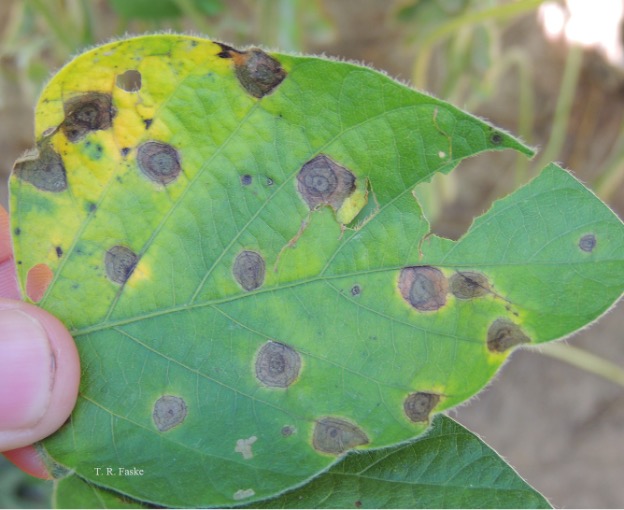
In current research, Koebernick is focusing on target spot, a disease that has been causing more noticeable yield loss in southern soybeans over the past several years. It has also been identified in the Midwest.
She and her team conducted a genome-wide association study, growing nearly 260 different soybean varieties and taking disease ratings for target spot.
“Because the soybean genome has been sequenced, we have genotypic information for these varieties,” she explains. “By comparing the response of the soybean lines under target spot pressure, we were able to identify areas of chromosomes and genes likely to provide resistance.”
From that analysis, her team identified six single nucleotide polymorphisms, or SNPs. Pronounced “snips,” these DNA sequences are markers that appeared across the 260 soybean lines in those with little to no disease symptoms, implying they are possibly involved in providing target spot resistance.
“With this information, we are now developing genetic markers for target spot resistance that seed companies can use,” Koebernick says. “From what we’ve seen, maturity group is not a limitation for resistance.”
That means the genetics involved in target spot resistance appear to transfer across maturity groups, which is valuable as farmers shift the maturity groups they choose to varieties less likely to carry resistance. At the same time, the disease may become more of a problem beyond southern states, when wet, humid conditions occur in regions less familiar with target spot. Commercial breeders can use markers to identify resistance in current soybean varieties and efficiently incorporate it into new varieties.
Building on Previous Genetic Research
In addition, Koebernick and her team looked for genetic resistance to Cercospora leaf blight, another soybean disease. This work started with analyzing data from a diversity panel of more than 560 soybean lines for that disease funded by the Mid-South Soybean Board several years ago.
“Our analysis identified 47 SNPs likely connected to Cercospora leaf blight resistance,” she says. “Now, we are narrowing these down, so that we will be able to identify genetic markers for it, as well.”
Working on target spot and Cercospora leaf blight at the same time allowed her team to identify a soybean line with resistance to both diseases.
“That’s what is being incorporated into our breeding program,” Koebernick says.
Stacking Tolerance for Iron Chlorosis
In addition, Koebernick conducted the diversity panel in the highly alkaline soils of Alabama’s Black Belt. The collected data notes varieties able to tolerate iron chlorosis, a condition caused by soils with a high pH level. It causes soybeans to yellow and inhibits photosynthesis.
The line being used in Auburn’s breeding program includes this tolerance. Information from the panels about this tolerance could be useful to others breeding soybeans for other regions with soils prone to causing iron chlorosis.
Whether combined or incorporated separately, the genetics identified through this research will help effectively protect soybean yield.
Additional Resources
Breeding Targets Target Spot and Other Disease Resistance – SRIN article
Target Spot of Soybean – Crop Protection Network article
Cercospora Leaf Blight – SRIN information page
An Overview of Cercospora Leaf Blight of Soybean – Crop Protection Network article
Iron Deficiency Chlorosis – SRIN information page
Iron (Fe) Deficiency Chlorosis (IDC) of Soybean – Crop Protection Network article
Meet the Researcher: Jenny Koebernick SRIN profile | University profile
The Soybean Research & Information Network (SRIN) is funded by the Soy Checkoff and the North Central Soybean Research Program. For more information about soybean research, visit the National Soybean Checkoff Research Database.
Published: Nov 16, 2026


