Red Crown Rot
Overview
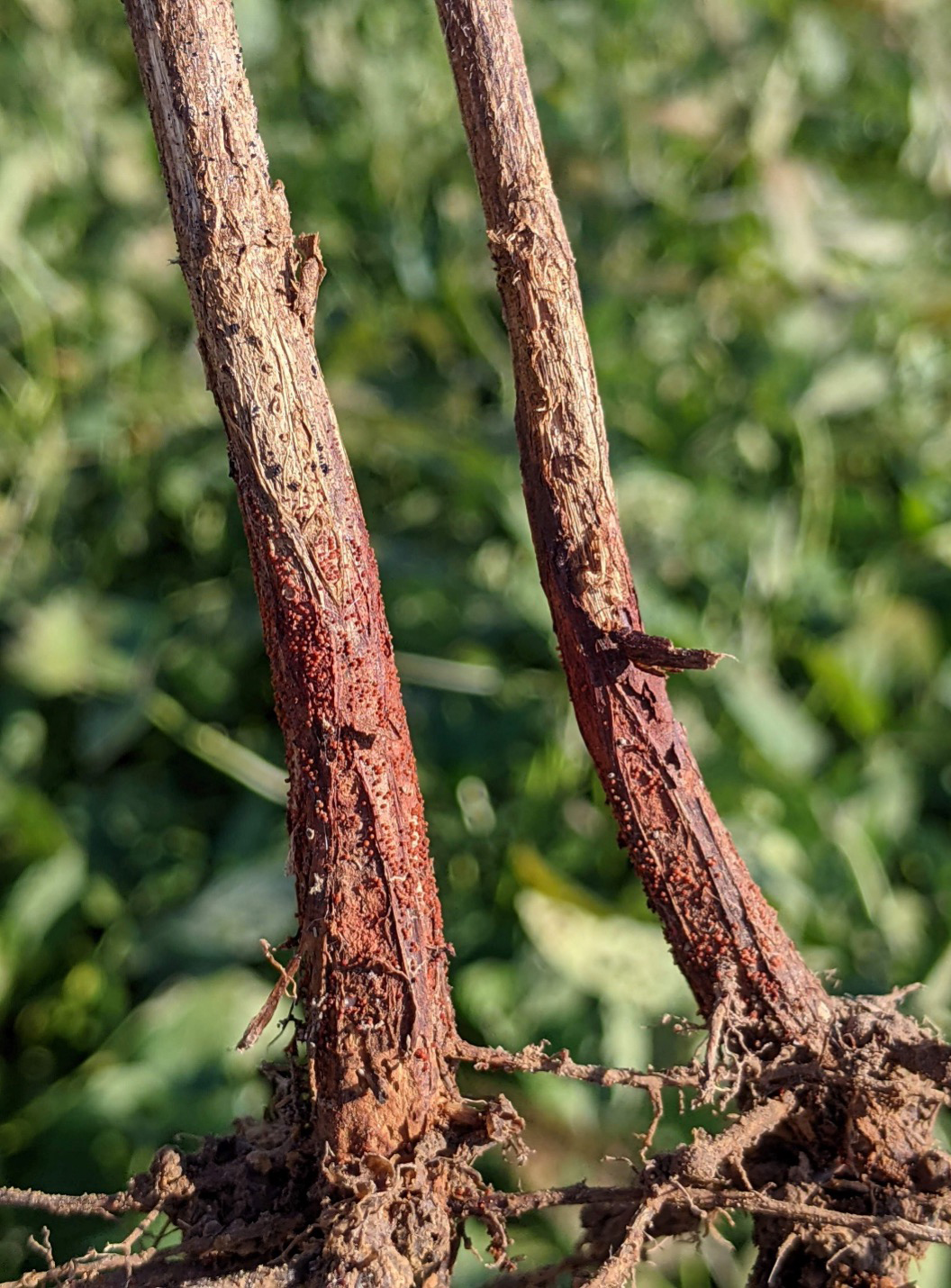
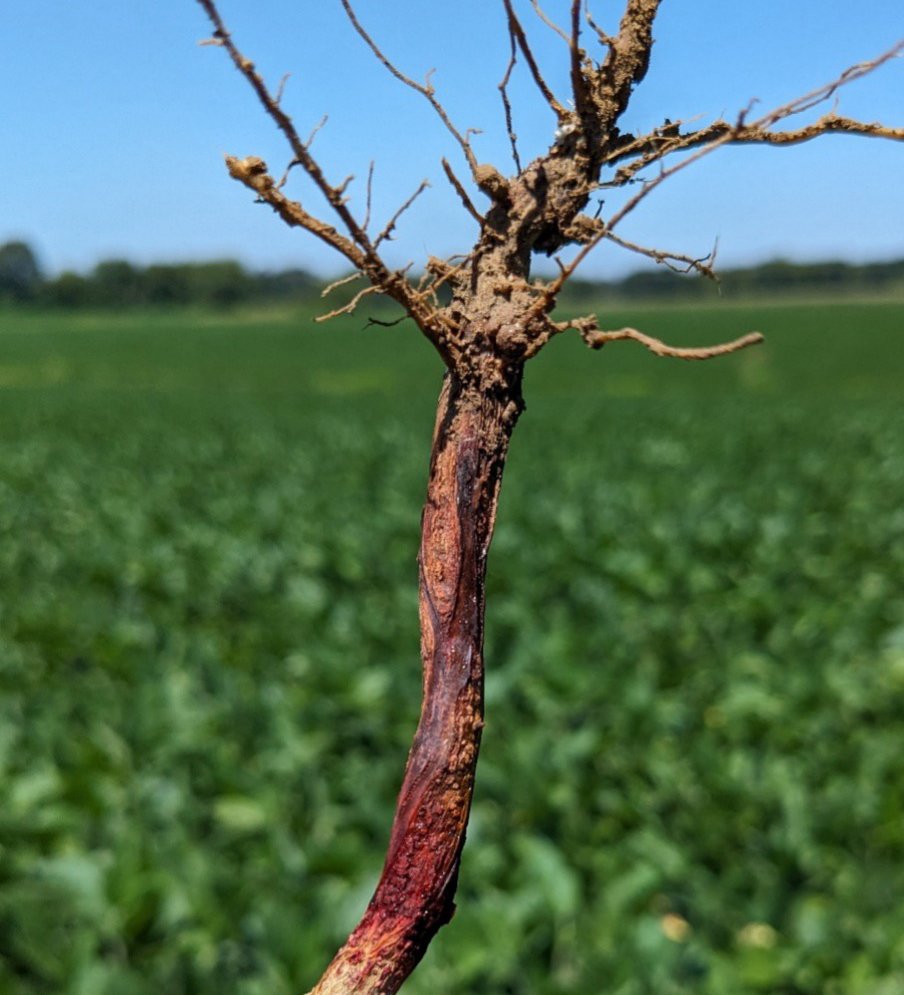
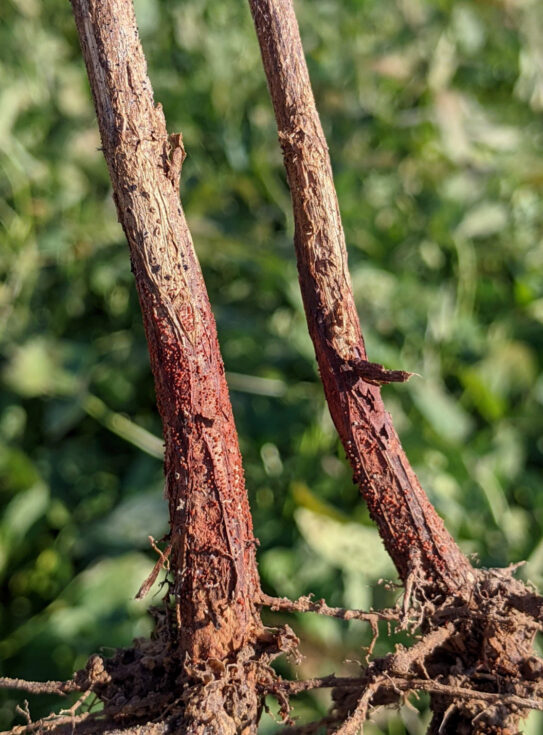
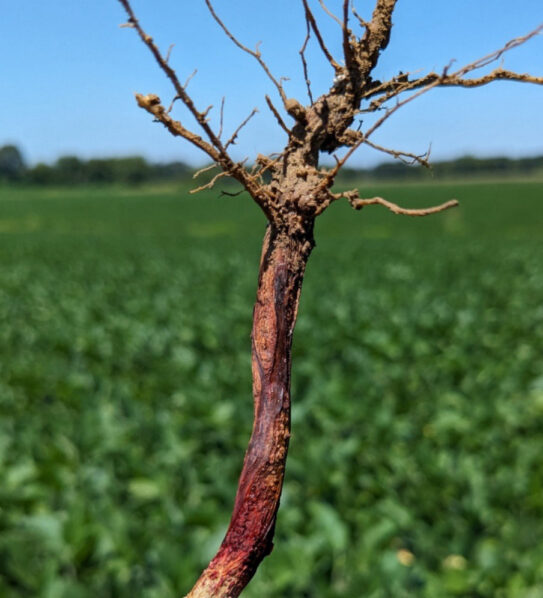
Red crown rot has been detected in a growing number of Midwest soybean fields. It can cause significant yield loss under severe disease pressure. The disease is caused by a soilborne fungus, Calonectria ilicicola. The reddish discoloration at the base of the stem, also considered the crown of the root, inspires its name.
The pathogen lives in soil as microsclerotia, which are tiny hard structures that can survive for several years without a host. These structures germinate in warm, wet soil to produce mycelia that can infect host roots. In addition to soybeans, red crown rot attacks crops like peanuts and alfalfa, as well as other plants.
The disease appeared sporadically in soybeans in southern states in the 1970s, 1980s and 1990s. In 2018, red crown rot was identified and confirmed in western Illinois soybean fields. Since then, it has been found in several areas in the Midwest. A Crop Protection Network map tracks detection of red crown rot by county.
Scouting
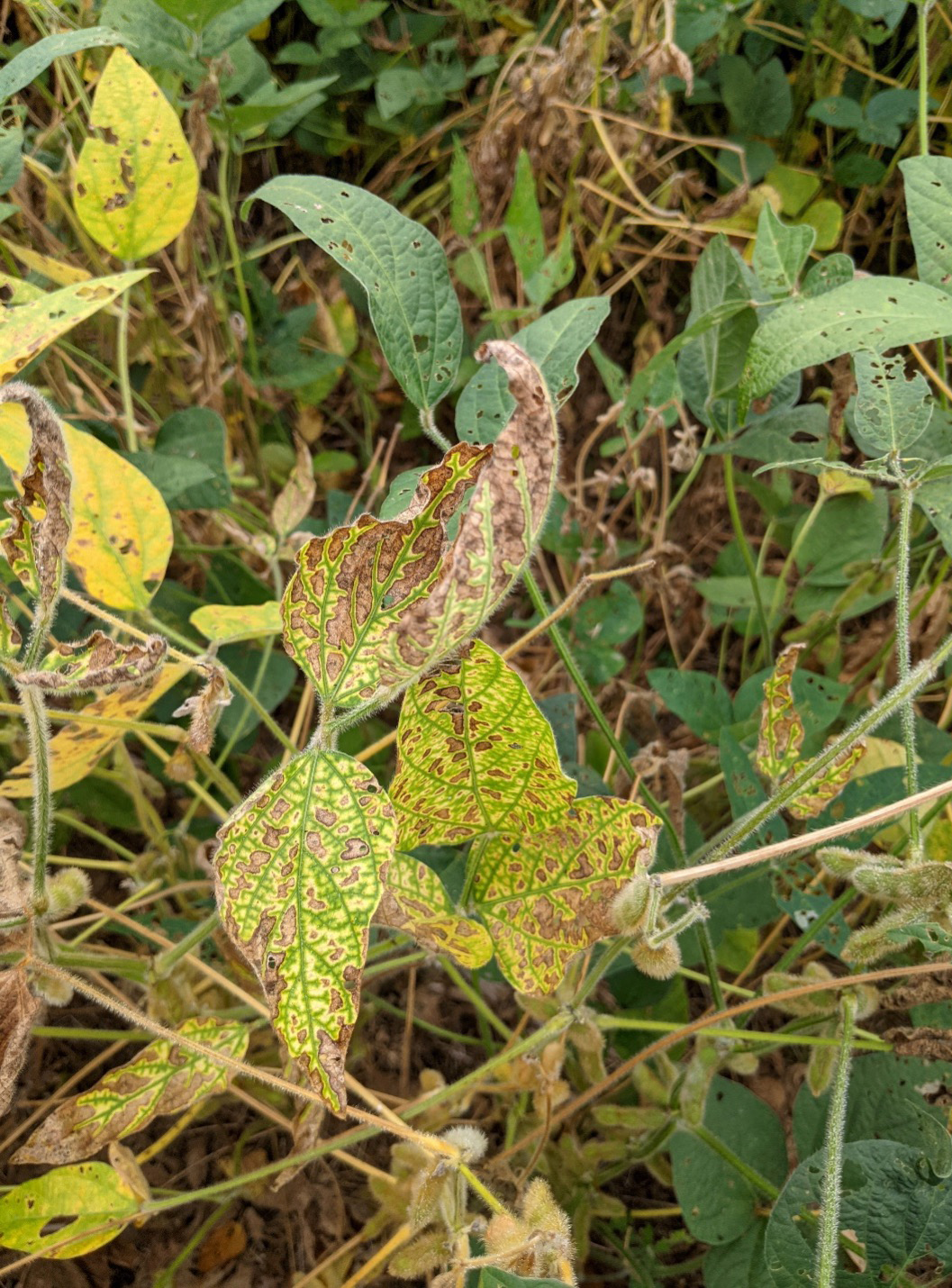
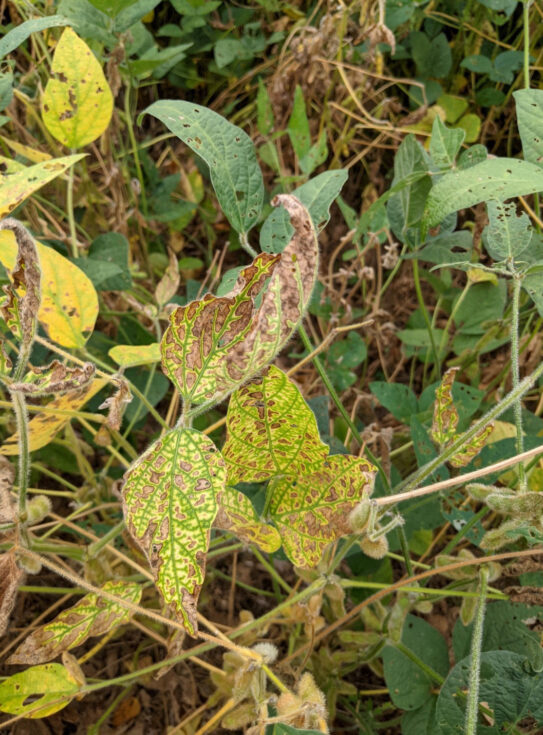
Diagnosing red crown rot can be difficult because the obvious symptoms, seen in leaves, mimic other more common diseases, like sudden death syndrome, brown stem rot and stem canker.
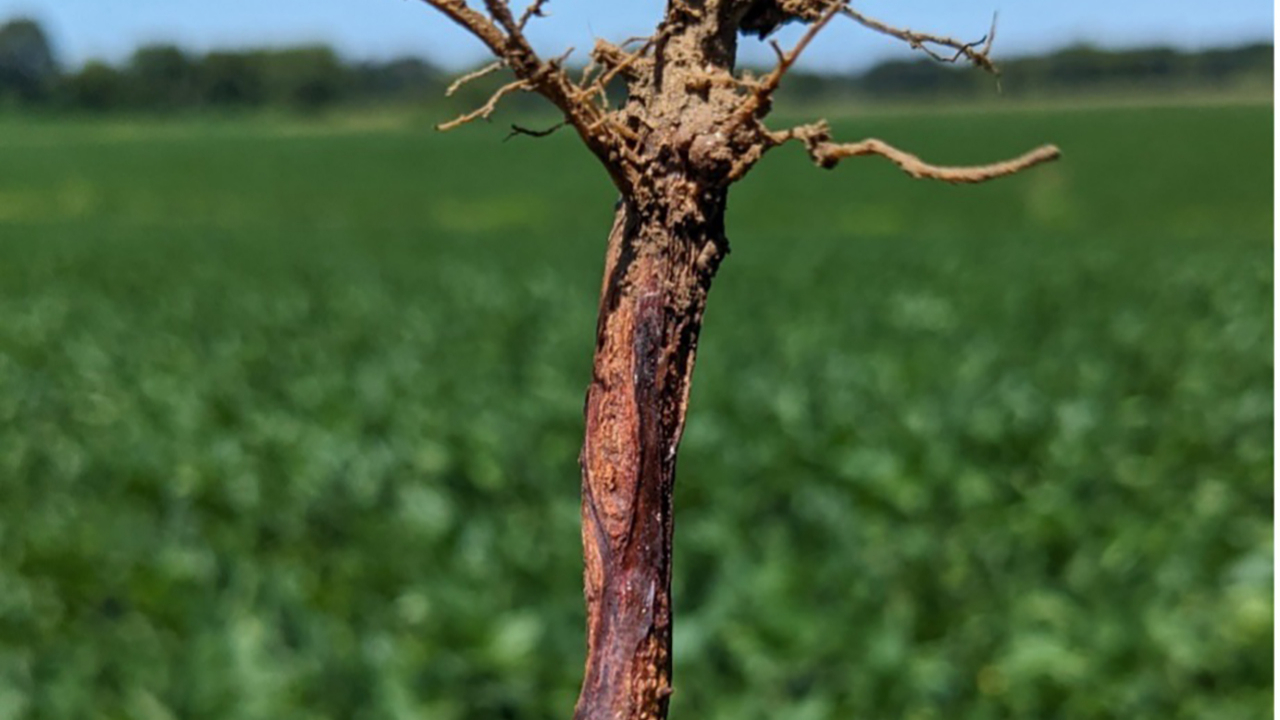
The first symptom that can be observed during the growing season is the reddish discoloration at the base of soybean stems during early vegetative growth.
Foliar symptoms show up during reproductive growth and start as small yellow or light green spots between leaf veins that expand to interveinal chlorosis and interveinal necrosis. In some cases, plants may also begin to wilt prior to expressing interveinal symptoms on the leaves. Eventually, affected plants generally die prematurely. Affected plants will likely be in patches, meaning they will not normally be uniformly distributed across a field.
Perithecia, small reddish or rusty-orange balls that produce spores eventually appear on lower stems late in the growing season. These balls often develop alongside the fuzzy white growth associated with fungus, called hyphae.
The roots of infected plants can rot severely, allowing them to be easily pulled up from the soil.
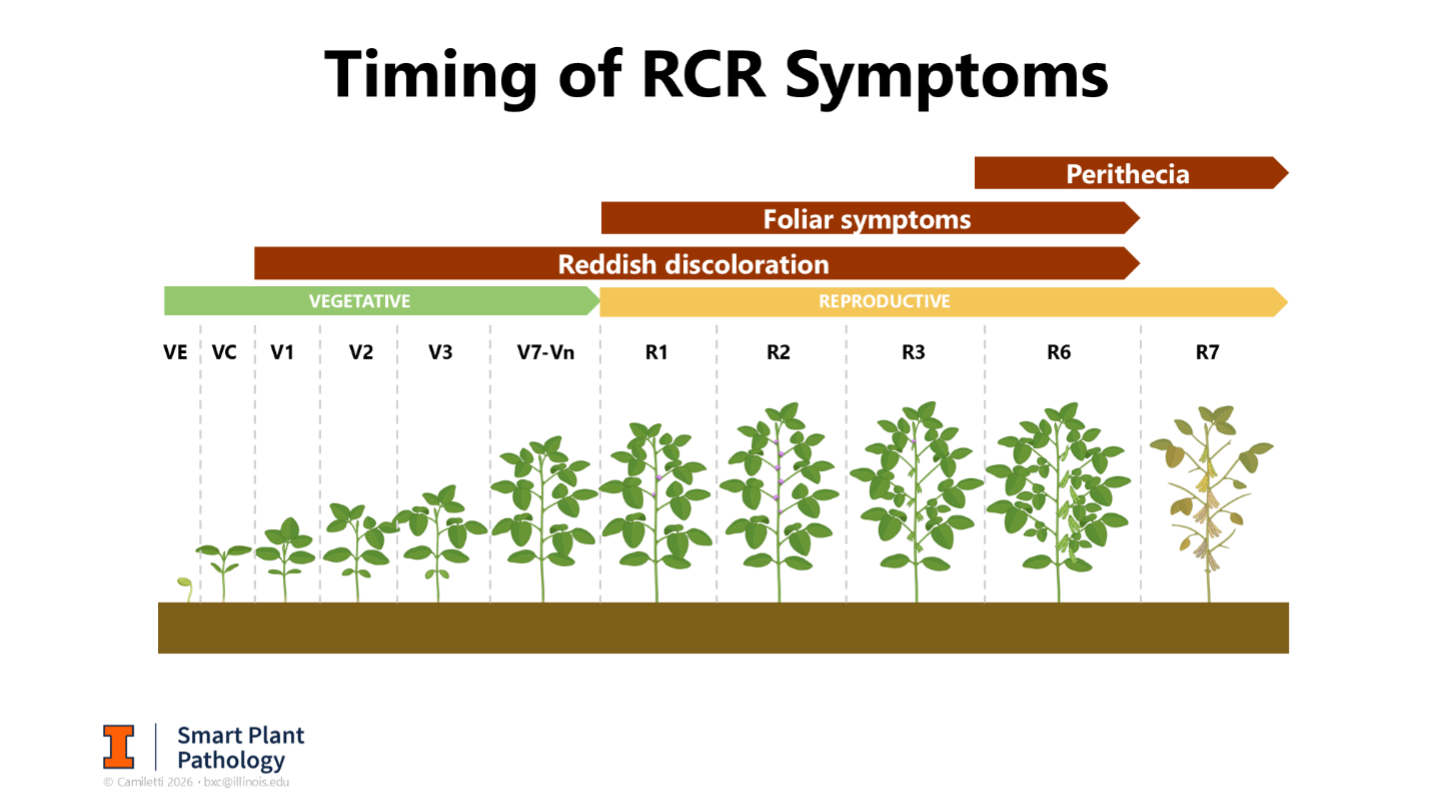
Credit: Boris Camiletti, Extension Plant Pathologist, University of Illinois Urbana-Champaign
Management
Confirmation
If red crown rot is suspected in a soybean field, work with agronomists or extension specialists to submit samples to a plant diagnostic lab. If the disease has been confirmed in the area, incorporate management strategies that fit specific fields.
Variety Selection
Differences in susceptibility to red crown rot have been observed between soybean varieties, though currently no commercial varieties are marketed as resistant. For fields with known pressure, ask seed companies and advisors about varieties that appear to handle the stress better than others.
Cultural Practices
Rotating to non-host crops for at least two years may help reduce pressure, though the pathogen survives in the soil for multiple years. Avoid alfalfa and peanuts in those rotations, as they can host the red crown rot fungus.
The pathogen lives in the soil, allowing equipment to spread it between fields. Limit this potential by planting, harvesting or working infected fields last and pressure washing equipment to remove soil afterwards.
Chemical Control
A few fungicide seed treatments have been labeled for red crown rot, though efficacy varies in university field trials. Seed treatments typically protect seedlings for about three weeks after germination, which may delay infection, causing symptoms to show up later and not have as great an impact on soybean yields. For information about specific products, explore Crop Protection Network’s Fungicide Efficacy for Control of Soybean Seedling Diseases.
In addition, managing soybean cyst nematode and southern root-knot nematode may help reduce symptom severity.
Resources
An Overview of Red Crown Rot of Soybean, Crop Protection Network
Red Crown Rot Map, Crop Protection Network
Red Crown Rot: Understanding its Impact and How to Manage it, YouTube video, Crop Protection Network
Red Crown Rot, University of Nebraska
Red Crown Rot, University of Kentucky Cooperative Extension Service
Red Crown Rot of Soybean, North Carolina State University Extension
Red Crown Rot of Soybean: What to Do if You Suspect It Is in Your Field, Purdue University
From Rare to Relevant: Calonectria ilicicola and Its Growing Impact on Soybean Production in Illinois, Farmdoc, University of Illinois
Red crown rot: No cure for this soybean disease, University of Missouri Extension
Red Crown Rot Confirmed in Wisconsin Soybeans: What Growers Need to Know, Badger Crop Network, University of Wisconsin
Fungicide Efficacy for Management of Soybean Seedling Diseases, Crop Protection Network
Images provided by Carl Bradley, University of Kentucky