

Mark Reiter – Soybean Research Profile
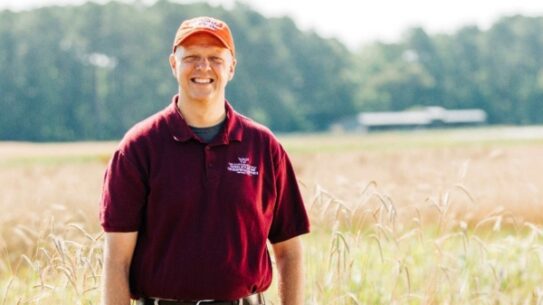
Mark Reiter, Professor of Soils and Nutrient Management, Virginia Agricultural Research and Extension Centers, Virginia Tech
Why did you decide to pursue a career that includes soybean research?
In part, to prove my father wrong! I grew up on a diversified farm in central Virginia, with both crops and livestock. When I was in high school, I helped bale straw, and I told my father we needed to stop. I thought baling straw took nutrients from the double-crop soybeans planted behind the baler. Then, in college, soil fertility became my favorite class. As I learned more, I eventually conducted research that showed how baling straw impacts soil fertility for soybeans, setting the course for my research career.
What research topic have you completed in the past or are working on now that could have or has had the most significant impact on soybean production?
Research on the long-term benefits of cover crops will have the most impact on farmers. I am studying how cover crops support nutrient cycling to bring “lost” nutrients like potassium and sulfur to the surface so they are more available to soybean roots. I am also exploring how cover crop growth and planting green impacts soil fertility. That information will reduce the amount of fertilizer farmers need to apply.
How has the Soy Checkoff enhanced your ability to find answers to production problems for farmers?
Without the Soy Checkoff, I would not be doing applied research for farmers. If I depended only on federal grants, applied research wouldn’t happen. I love going to commodity board meetings to get information and input from farmers on what they need from research.
Within your area of expertise, what are the top two or three general recommendations you would offer farmers to improve their management practices?
- There is no substitute for soil tests. Farmers need to understand their soils, nutrient needs and pH. That’s imperative to managing long-term, sustainable systems.
- Don’t be scared to try something new, but try it in a small area to see if it works for you. Every system is different, so not every practice will work, but some things will.
Within your area of expertise, what do you consider to be critical soybean research needs that can impact the profitability of famers in the future?
We need to continue updating soil fertility guidelines to account for changes, like evolving soybean root structures, using new products and incorporating new management practices into a system. For high-yielding systems, we need to study micronutrients and follow the law of minimums to learn what nutrients are most limiting at each growth stage. This would help farmers find hidden hunger that doesn’t show up visually. We would also increase our understanding of how soybean needs change through their growth cycle.
SRIN articles:


