


Research HighlightsFeeding Catfish: Benefits of Improving Soy Quality
Highlights:
- U.S. catfish production diets include soybean meal.
- Quality improvements to soybean meal for feed translate to production benefits.
- Catfish feeding trials show the potential value of technologies that improve soybean breeding and processing.
By Laura Temple
Deep-fried catfish + Hush puppies + Coleslaw = A classic Southern fish fry.
At first glance, soy doesn’t figure into that equation. But it does.
“Catfish is the largest segment of U.S. aquaculture,” says Allen Davis, professor of aquaculture at Auburn University. “The typical catfish production diet is about 30% solvent-extracted soybean meal.”
He notes that the catfish industry often focuses on reducing feed costs over quality and economic value.
“New soybean varieties and soybean processing technologies have been developed to improve feed quality in general,” he explains. “Is the value of any of these technologies worth the investment for catfish producers?”
To answer this question, Davis led feeding research trials for both channel catfish and hybrid catfish, funded by the Soy Checkoff through the Soy Aquaculture Alliance.
Enhancing Soybean Meal
Soybean meal sets the gold standard for plant-based protein in animal production systems because of its amino acid profile, digestibility and consistent quality, Davis notes. Plus, it is readily available, sustainable and competitively priced.
However, soybean meal contains anti-nutritional factors that can cause inflammation and other challenges in some digestive systems. Fish species vary in their tolerance for soybean meal. Species like catfish and tilapia are very tolerant, while species like trout and salmon often demonstrate allergic responses.
Technology advances in soybean processing and breeding aim to reduce anti-nutritional factors and digestive issues.
“Catfish production uses a lot of soybean meal,” Davis says. “Higher quality soybean meal could improve feed conversion, which could increase feed cost efficiency or reduce time to market.”
In these feeding trials, his team compared feed formulated with improved soybean meal.
- Solvent-extracted soybean meal: Feed with standard soybean meal served as the control. After fat is extracted, a heat treatment breaks down most anti-nutritional factors.
- Low oligosaccharide soybean meal: Extracted from a soybean variety bred for low oligosaccharide content. A type of fiber, oligosaccharides are among the anti-nutritional factors in soybean meal. Breeding soybeans for low oligosaccharides also resulted in increasing protein content, an additional benefit that makes this a higher-protein option.
- Enzyme-treated soybean meal: Conventional soybean meal treated with proprietary enzyme technology to break down anti-nutritional factors. This treatment results in soybean meal with higher protein and lower anti-nutrients.
- Corn fermented protein: Supplementing soybean meal with a corn protein byproduct from ethanol production. This blend improves the amino acid balance of the feed, as soy tends to be high in lysine, but low in methionine. Corn fermented protein is high in methionine, but low in lysine.
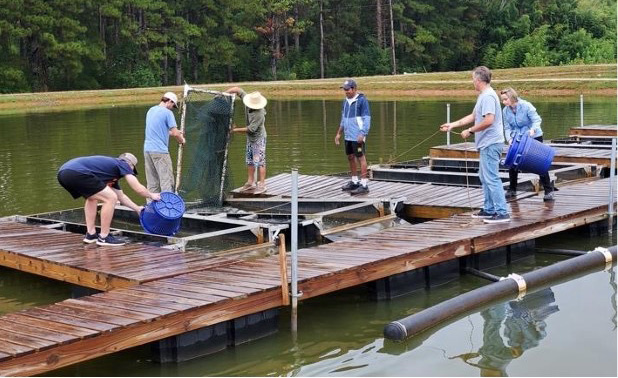
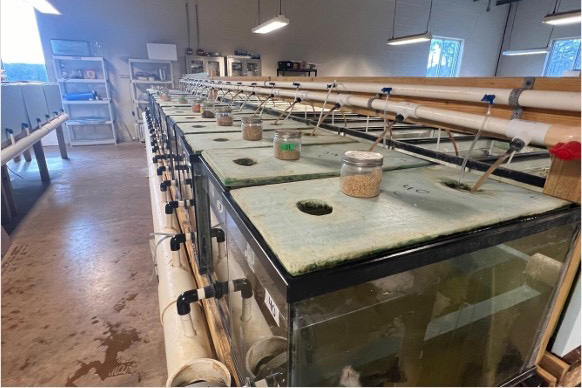
They conducted trials in both indoor production systems and outdoor ponds, and with catfish at fingerling and juvenile growth stages. Results looked at fish growth and health.
Trending Toward Long-Term Gains
Overall, using higher-quality soybean meal in catfish diets results in subtle improvements.
“Low oligosaccharide soybean meal produced statistically larger channel catfish fingerlings, with a better feed conversion ratio,” Davis reports. “In hybrid catfish, the enzyme-treated soybean meal provided a slight improvement.”
The soybean meal supplemented with corn fermented protein also performed a bit better than standard soybean meal in most trials.
While the differences were slight because catfish tolerate soybean meal well, Davis believes that over time, higher-quality soybean meal could benefit production.
“Improving feed conversion ratios and growth can reduce the time catfish live in ponds, where they are vulnerable to diseases and other stress,” he explains. “Those benefits need to be considered when comparing the costs of soybean meals.”
For soybean farmers, improvements in soybean meal quality for fish feed have potential to boost overall demand. As technology addresses the potential concerns about soybean meal, it becomes an even more appealing feed ingredient. And, what works in U.S. catfish production has potential to garner interest in other segments of aquaculture.
In areas with intense catfish production, like Alabama, Arkansas and Mississippi, farmers may want to consider the fit of low oligosaccharide soybean varieties in their system. Or they may choose to deliver soybeans to crushers employing processing technologies that cater to feed production.
Additional Resources
Advanced Soy in Production Diets for Catfish – Soy Aquaculture Alliance research brief
Assessment of Different Dietary Soybean Meals and Corn Fermented Protein in Practical Diets for Fingerling Channel Catfish – Soy Aquaculture Alliance research brief
Largemouth Bass Do Well on Soy-Based Diets – SRIN article
Improving Sustainability and Cost Effectiveness of Soy-Based Aquaculture Diets – SRIN article
Meet the Researcher: Allen Davis University profile
The Soybean Research & Information Network (SRIN) is funded by the Soy Checkoff and the North Central Soybean Research Program. For more information about soybean research, visit the National Soybean Checkoff Research Database.
Published: Mar 16, 2026


