


Research HighlightsSouthern Root-Knot Nematode Shifting with Soybean Management
Highlights:
- Southern root-knot nematode pressure is intensifying and spreading, due in part to changes like Southern farmers planting earlier-maturing varieties.
- Potential genetic links that associate the current known soybean resistance gene with later maturity challenge breeding new, earlier resistant soybeans.
- Comprehensive soybean genome screening is discovering new potential sources of Southern root-knot nematode resistance.
By Laura Temple
Southern root-knot nematode is a known threat in Southern states. Changing soybean management practices have intensified the need for new varieties that can withstand it.
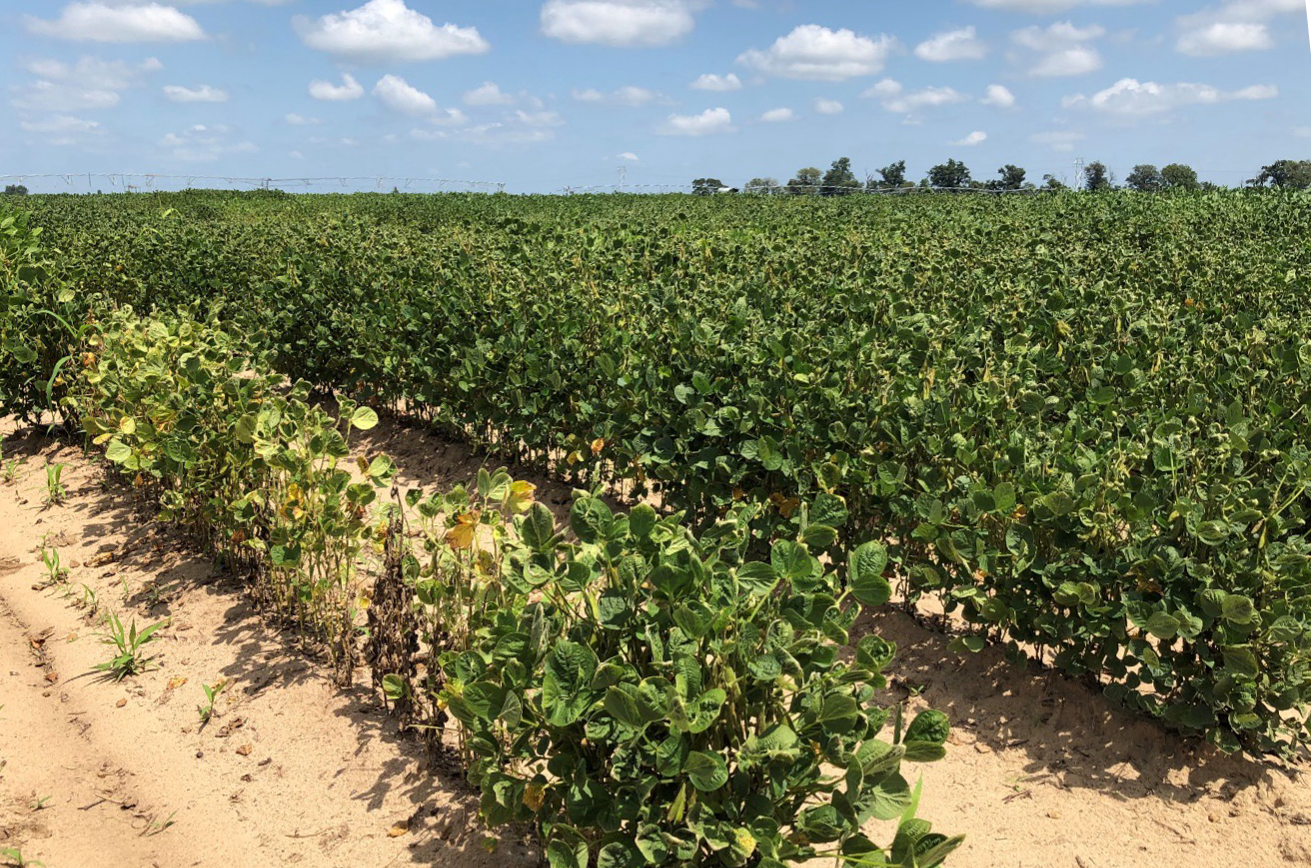
“With earlier planting dates and shifts in soybean maturity ranges, Southern root-knot nematode is becoming the No. 1 pathogen in some areas,” says Caio Vieira, assistant professor of soybean breeding for the Arkansas Agricultural Experiment Station System.
Arkansas farmers used to plant soybeans in Maturity Groups 5 and 6. However, now most of them plant MG 4 soybeans at much earlier dates.
“One known gene does a great job managing Southern root-knot nematode pressure,” he says. “However, it isn’t widely available in earlier maturity groups. Most MG 4 varieties farmers currently plant are susceptible.”
Unfortunately, Southern root-knot nematode is becoming more prevalent in regions planting primarily MG 4 soybean varieties. Because this nematode uses cotton, corn and other crops as hosts, crop rotation often isn’t a viable management option.
“It is also being found in the Midwest,” Vieira adds. “For example, it’s been confirmed in south-central Illinois fields.”
Thus, farmers — even in the Midwest — need resistant soybean varieties in a broader range of maturities.
Vieira is leading research funded by the Arkansas Soybean Promotion Board to develop earlier-maturing soybean varieties with Southern root-knot nematode resistance. At the same time, Soy Checkoff funding from the Arkansas Soybean Promotion Board, the Mid-South Soybean Board and the United Soybean Board, plus a USDA National Institute of Food and Agriculture grant, allows his team to screen soybean germplasm from around the world for new sources of resistance and figure out how and why those genetics work.
Navigating Genetic Interactions
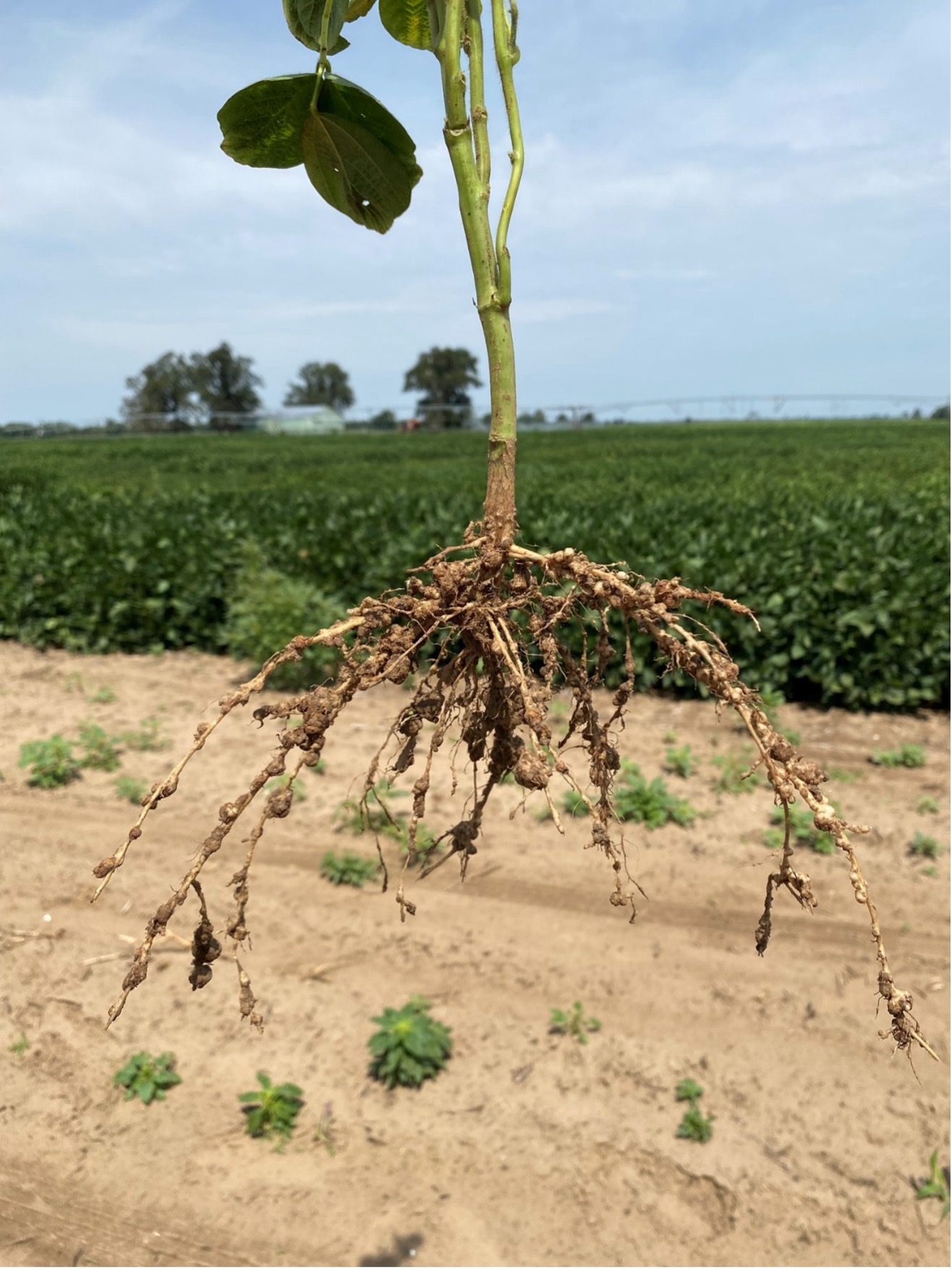
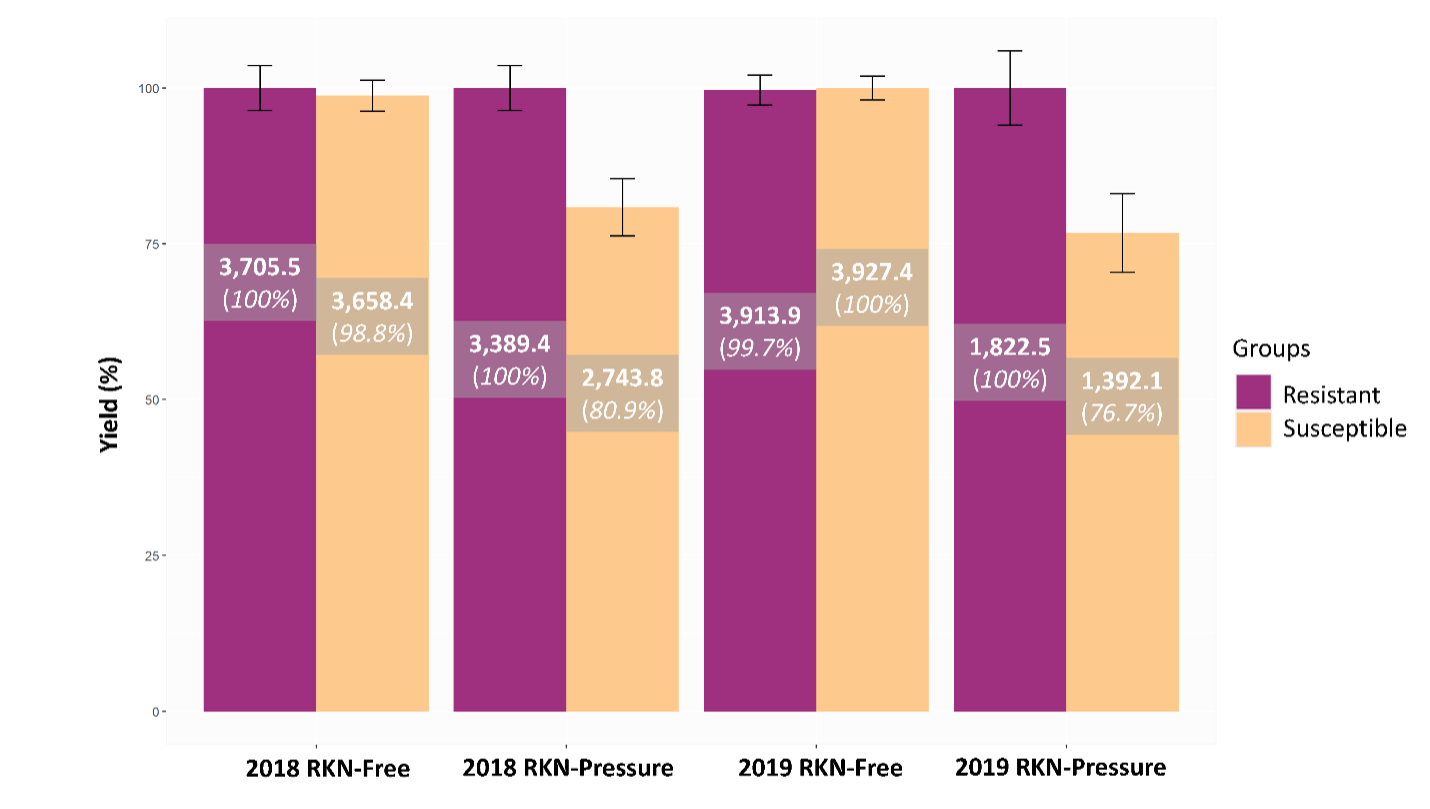
Most research to identify and incorporate soybean resistance to Southern root-knot nematode has been done in MG 5 and later. That’s where the known gene for resistance can be found. It reduces yield losses in infected fields by limiting root galling on soybeans.
“The goal of our breeding research started in 2023 is to incorporate that gene into MG 3 and 4 soybeans,” Vieira says. “That has proven to be harder than it sounds.”
As he and his team select parent lines for breeding, technology like genetic markers helps speed up the process of identifying offspring that carry resistance. Results show that the Southern root-knot nematode resistance gene is genetically linked to later maturity groups.
Because of this, Vieira’s approach has been to make large amounts of crosses to try to break that link and use molecular markers to precisely select the ones that may carry the resistance.
“We’ve created over 250 populations including parents with the resistance gene, and we use modern breeding techniques to select the most promising genetics for field testing,” he explains. “We are close to developing conventional varieties in MG 4 with Southern root-knot nematode resistance, and we are doing herbicide trait introgression to create herbicide-resistant varieties.”
He aims to have field-ready varieties available for farmers in a few years. However, he notes that all this work focuses on root symptoms. Further research would be required to learn if these varieties also reduce nematode reproduction.
Efficiently Screening for More Genetic Resistance
In 2024, Vieira and his team began screening soybean germplasm from the USDA collection for other genetics that resist Southern root-knot nematode pressure. Combining genome-wide markers and phenotypic data, or physical plant characteristics, about root galling, they trained a genomic model to predict the most likely sources of resistance that have yet to be tested. They are now testing the identified genetics for resistance in the greenhouse and in the field.
“We’ve identified some soybeans that appear to be resistant to Southern root-knot nematode without carrying the known gene,” he reports. “That includes, for instance, early maturing materials from various regions in Asia that could help improve our current levels of resistance by combining them with known resistant genetics.”
As the team discovers other sources of resistance, they plan to study how it works and explore the potential to stack that with the known gene currently in use.
Source: Caio Canella Vieira
Reducing Selection Pressure
Stacking types of resistance could prevent future challenges.
“We don’t talk about Southern root-knot nematode resistance breaking,” Vieira says. “But we know current options for resistance in soybeans and other crops are applying selection pressure that could lead to that.”
He hopes that finding more types of resistance in soybeans, characterizing how they provide resistance and learning how they impact nematode reproduction could provide valuable long-term solutions.
“We need to understand if growing resistant soybeans can help reduce Southern root-knot nematode populations for other crops in the rotation,” he says. “When I started working on this, it was just a southern problem, but it has become a bigger problem, in more states, in a short period of time.”
Additional Resources
New Map Charts the Distribution of Southern Root-knot Nematode – SRIN article
Arkansas Research Arms Soybean Farmers Against Southern Root-Knot Nematode – SRIN article
Searching for Southern Root-Knot Nematode Resistance – SRIN article
“Let’s Talk Todes” Southern Root-Knot Nematode Collection – The SCN Coalition videos
Root-Knot Nematode of Soybean – Crop Protection Network
Meet the Researcher: Caio Canella Vieira SRIN profile
Published: Dec 1, 2025


