

Research HighlightsFields Could Hold Slug Management Solutions
Highlights:
- Options for slug control could include naturally occurring parasitic nematodes that use slugs as hosts.
- Through screening slug populations, a research team has identified two parasitic nematode species with potential to become a reliable control option.
- Identifying management practices that support beneficial nematode populations could also limit slug pressure in soybean fields.
By Laura Temple
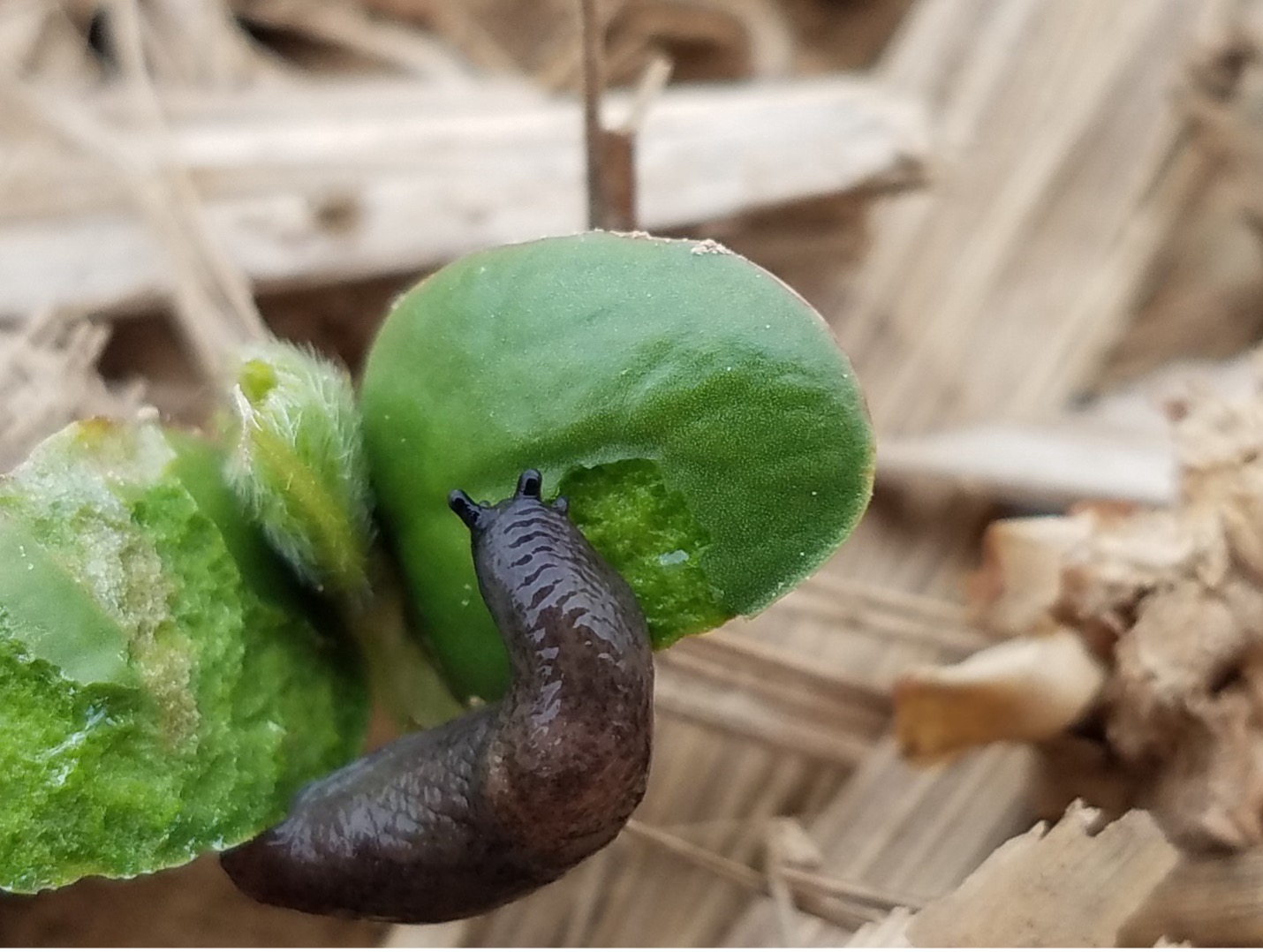
When slugs show up and attack emerging soybeans, they can devastate stands or require replants.
“The best way to control slugs is to till fields,” says Mike Crossley, assistant professor and agricultural entomologist at the University of Delaware. “However, many farmers in this region don’t till, so they need alternatives.”
He says slug baits are often considered the next-best management option, but they can fail for many reasons. Rain can wash bait away, so it leaves fields before slugs ingest it, while also creating water quality issues. Or, the weather could turn hot and dry, so slugs don’t consume it.
“Products available in the United Kingdom use parasitic nematodes to effectively take care of slugs,” Crossley says. “As far as we know, those nematode species don’t naturally occur in our region of the U.S., but other species with a similar effect may live here.”
Many nematodes are parasites. Farmers usually link nematodes to the species that infect soybeans, like soybean cyst nematodes or root-knot nematodes. But thousands of other parasitic nematodes feed on countless other organisms. Including slugs.
Crossley started research to discover potential slug parasitic nematodes in the eastern U.S. with multi-year Soy Checkoff support from the Delaware Soybean Board. The Maryland Soybean Board and Maryland Grain Producers Utilization Board also supported this work.
Slug Screening
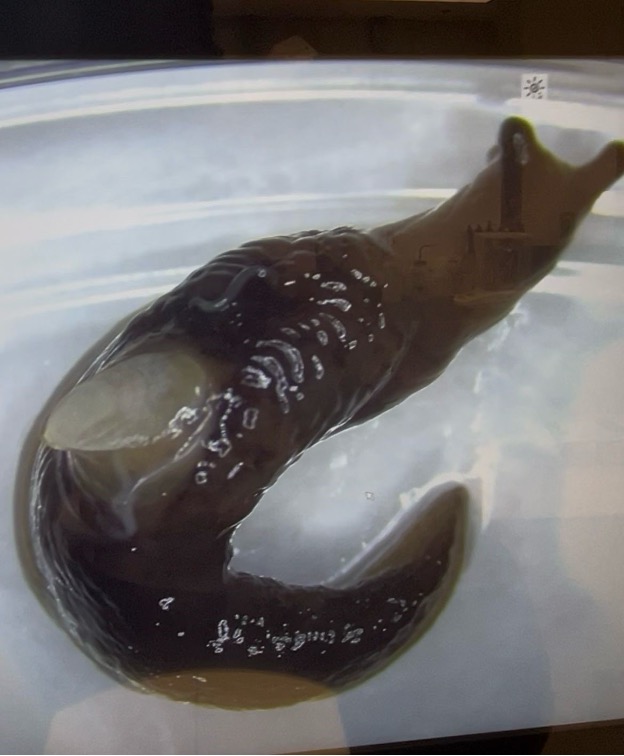
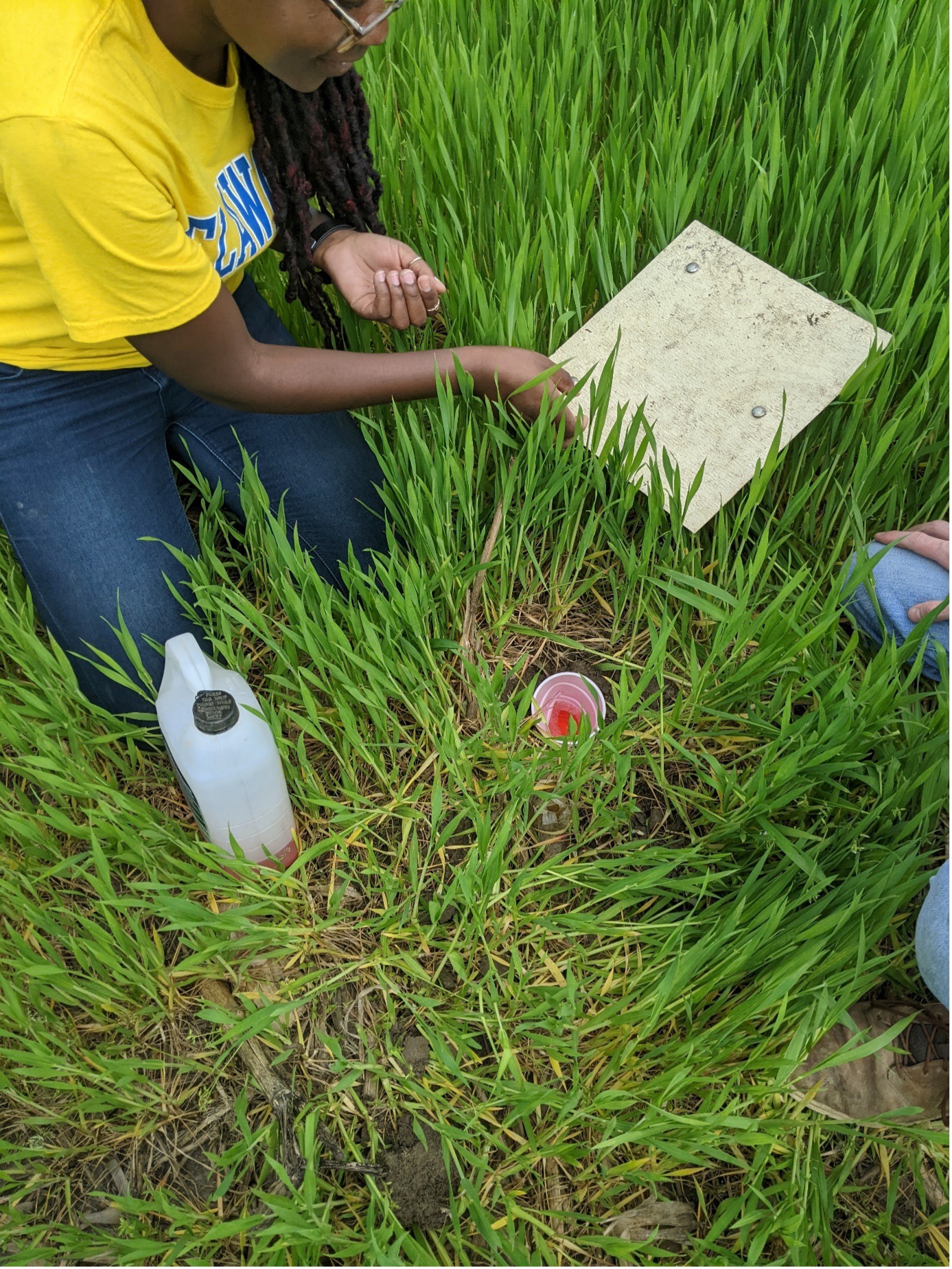
Crossley’s team, including dedicated Ph.D. student Thabu Mugala, collected slugs from various fields in Delaware and Maryland. They pampered the slugs in the lab, looking for those that appeared to “melt,” evidence of potential nematode infection. Nematodes emerge from those slugs, and Mugala tests DNA in an effort to identify the species.
Based on a few years of progress, Soy Checkoff funding from the United Soybean Board widened the scope of the team’s search. They now receive and analyze slugs collected from Kentucky, Ohio, Pennsylvania, Tennessee and Virginia, as well.
“Nematode DNA is difficult to work with,” Crossley reports. “Despite challenges, we’ve found and identified multiple nematode species from the slugs we’ve collected.”
Some of the nematodes are phoretic, meaning they hitchhike with slugs to move to a different environment. Others are necromenic, meaning they wait until the slugs die and feed in environment created by the dead tissue. Crossley’s team is searching for true parasitic nematodes that feed on and damage living slugs.
“So far, we have identified two nematode species known to be parasitic to slugs,” he says. “We are challenging more slugs with isolated populations of these species. Initial tests show that these nematodes have potential as a control option.”
He notes that nematode infections don’t have to be immediately fatal to be effective — if they cause slugs to stop feeding, that also protects emerging soybeans. Ongoing work will determine if either of these species, or any others identified as the work continues, can be developed into a slug control product.
Promoting Natural Nematode Pressure
Crossley’s team has examined thousands of slugs. Just 5% of them have been infected with nematodes. However, when nematodes are present in a field, up to 60% of that slug population can be infected.
“Another option for control, besides developing a nematode product, would be to identify management practices that encourage populations of the slug parasitic nematodes already in the field,” he explains. “As we identify potential slug parasitic nematode species, we hope to identify better ways to promote natural control.”
Slug pressure varies from year to year and field to field. For fields with a history of slug infestation, treating slug parasitic nematodes as beneficial and finding ways to support their presence could protect soybean yield from slug feeding without the need for tillage or bait.
Additional Resources
Parasitic Nematodes Control Slugs – SRIN article
Meet the Researcher: Michael Crossley SRIN profile | University profile
Published: Nov 10, 2025


