

Research HighlightsMaking Progress in the Fusarium Fight
Highlights:
- Researchers are making advancements in reducing the impact of Fusarium on soybean seedlings and root rot through a multi-year research project funded by the United Soybean Board.
- A team has located a QTL in soybean germplasm that confers resistance to Fusarium proliferatum.
- Other research includes exploring seed treatments to find fungicide effectiveness.
- One researcher is focusing on a brassica cover crop to improve the soil microbiome as a pathogen suppressant.
By Carol Brown
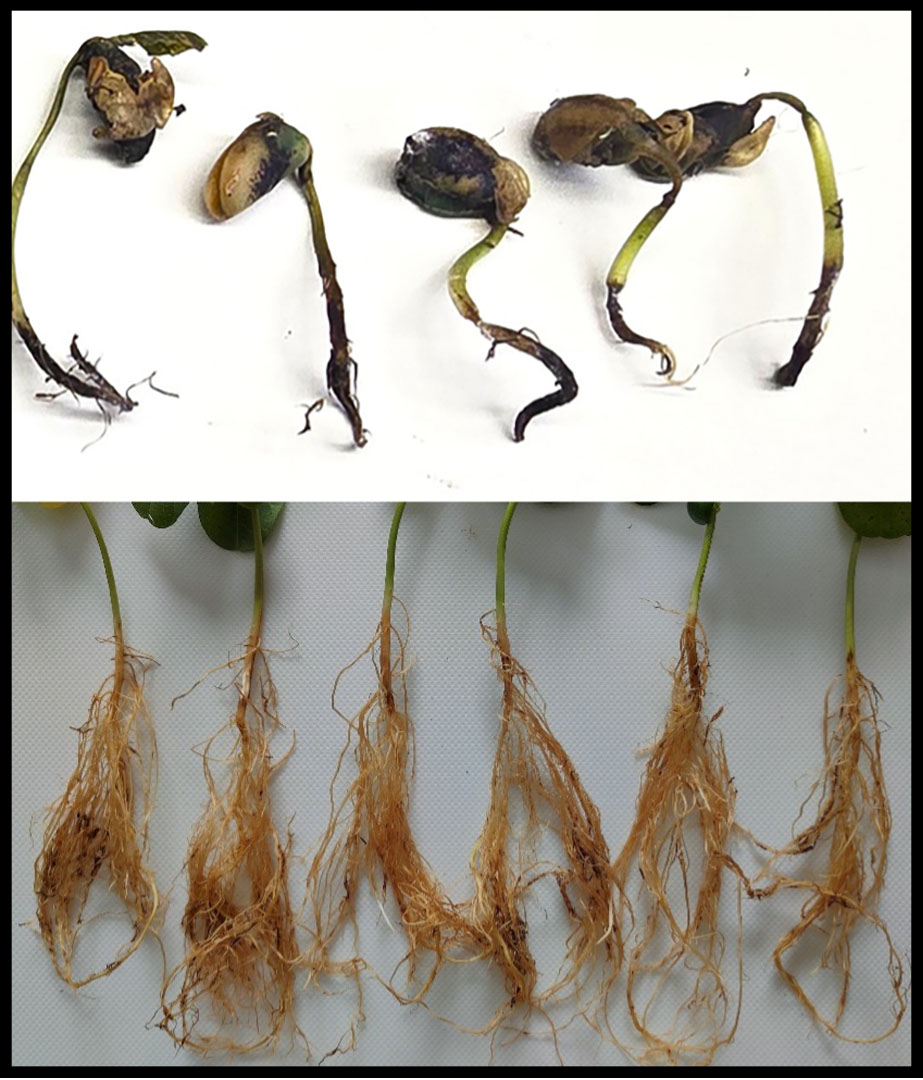
Scientists continue to make advancements in the fight against soybean seedling diseases. Soybean root rot, a yield-limiting disease, is caused by a complex of Fusarium species. In particular, Fusarium proliferatum is aggressive, causing death and destruction of soybean seeds and young roots.
Plant pathologists have been researching soybean genetics in search of resistance genes to Fusarium species. As part of a multi-year, multi-state project, lead project investigator Febina Mathew is exploring several seedling pathogens in soybeans. The research is supported by Soy Checkoff funds through the United Soybean Board.
“Fusarium has a broad host range. It infects every crop and F. proliferatum is a known pathogen of corn,” says Mathew, a plant pathologist at North Dakota State University. “We wanted to study this pathogen after it was also identified in soybeans for the first time in the U.S. in 20111. Research on F. proliferatum causing soybean root rot has been limited.”
This project has been active in learning how Fusarium species operate. Mathew is working with several researchers on this project, including Chris Little, a plant pathologist at Kansas State University.
“Although the Fusarium pathogens exist in the soil, their seed-borne nature is important,” comments Little. “Unlike Rhizoctonia and Pythium, Fusarium rides along with the seed and can become seed pathogens in the field. It’s important to think that we’re introducing the pathogen with the seed. The question then becomes: How do we control that?”
Mathew and her team are focusing on the soybean genetics side of control. They evaluated 268 soybean accessions from the USDA Germplasm Collection and found 16% had seedling mortality, and 42% had poorly developed or fewer secondary roots. In their initial work, the team screened early maturity group soybean lines for F. proliferatumresistance, but couldn’t identify any potential candidate genes. They expanded the maturity groups in the search to the full range — 000 to 9 — and found a major quantitative trait locus (QTL) and a candidate gene that can confer resistance to this particular fungus.
Identifying these genes as a resistance source for Fusarium proliferatum can inform plant breeders in their development of soybean varieties with improved protection against Fusarium. Mathew and graduate student Nitha Rafi authored a peer-reviewed journal that discusses their genetic findings in F. proliferatum.
Fungicide Effectiveness
Currently, several fungicide seed treatments with broad spectrum active ingredients may be effective on Fusariumspecies of fungi, but F. proliferatum has not been studied for fungicide efficacy. Chris Little is testing active fungicide ingredients to find effectiveness against this specific Fusarium species.
“We focused on the Qol fungicides so far, and tested a number of F. proliferatum isolates,” he says. “The majority have some tolerance to azoxystrobin, and the active ingredients that seem to be the most effective are pyraclostrobin or trifloxystrobin, but there is a high variability in tolerance, or sensitivity, to these ingredients.”
These active ingredients have been used in fungicides for a long time, says Little, which could be why he’s seeing different degrees of tolerance. He likens this to antibiotic resistance in humans where, with enough exposure, their effectiveness wanes.
Adding to the Cover Crop Benefit List
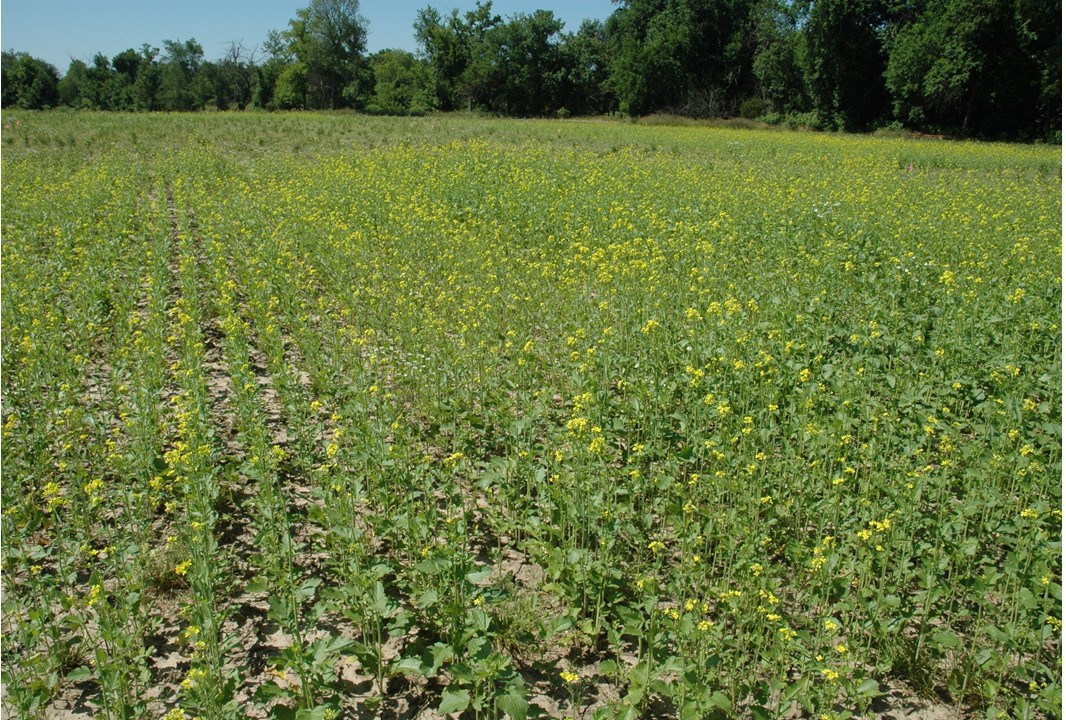
Little is also looking at a cover crop to reduce Fusarium impact, specifically Brassica juncea, commonly known as brown mustard or Indian mustard. The mustard cover crop has been shown to reduce Macrophomina phaseolina, the pathogen causing charcoal rot in soybeans. Little wanted to see if it could have a similar effect on Fusarium.
“The brassica shows promise in suppressing Fusarium,” he states. “It goes back to soil health. Brassicas produce compounds that improve the natural microbial community in the soil. A healthy soil with a diverse microbiome has microbes with pathogen suppression capabilities. A diverse microbiome goes hand-in-hand with a disease-suppressive soil.”
Cover crops have long-term benefits, Little says. If they are used regularly, there is evidence of improved microbial diversity along with the other soil health characteristics. This benefit is not usually included when listing all the good properties of adopting cover crops, such as improved water infiltration and reduced erosion.
“When cover crops are discussed for their benefits, it is usually on the abiotic side,” Little remarks. “I think it’s critical to include their soil microbiome impact.”
Fighting From all Sides
“For long-term solutions, genetics is crucial,” Mathew says. “With F. proliferatum also being a corn pathogen, the inoculum of the fungus can build up over time in a corn-soybean rotation. That’s why we are looking for options genetically in addition to seed treatments.”
Little agrees and elaborates, “Fusarium proliferatum is a generalist: it likes many crops. We want to expand options for the ability to use fungicides, genetics, and even natural suppressants.”
The team has published a peer-reviewed guide: A Diagnostic Guide for Fusarium Root Rot of Soybean. The guide is publicly available and a detailed resource for plant pathologists, breeders, and agronomists to learn more about the Fusarium family, geographical locations, plant symptoms, and pathogen structures.
References
- First Report of Fusarium proliferatum Causing Root Rot on Soybean (Glycine max) in the United States – Plant Disease publication
Other Resources
Genome-Wide Association Study Identified One Major Quantitative Trait Locus Associated with Resistance to Fusarium proliferatum in Soybean – Plant Health Progress
A Diagnostic Guide for Fusarium Root Rot of Soybean – Plant Health Progress
Overview of Fusarium Root Rot – Crop Protection Network publication
Combatting Soybean Diseases from Inside and Out – SRIN article
Researchers Across the Country Collaborate for Soybean Seedling Disease Management – SRIN article
Meet the Researchers
Febina Mathew SRIN profile | University profile
Chris Little SRIN profile | University profile
The Soybean Research & Information Network (SRIN) is funded by the Soy Checkoff and the North Central Soybean Research Program. For more information about soybean research, visit the National Soybean Checkoff Research Database: https://www.soybeanresearchdata.com/Project.aspx?id=55660 and https://www.soybeanresearchdata.com/Project.aspx?id=55437
Published: Apr 13, 2026


