


Research HighlightsResearchers Refine Procedures to Limit Taproot Decline
Highlights:
- Research to understand how Xylaria necrophora, or taproot decline, infects soybean roots is helping researchers find potential solutions.
- Refining procedures to inoculate plants allows researchers to better understand how the disease works.
- Ongoing study aims to understand how plants resist infection, pointing to potential control options.
Reprinted with permission from the 2025 Louisiana Soybean & Grain Research & Promotion Report, September 15, 2025
By V. Todd Miller, LSU AgCenter
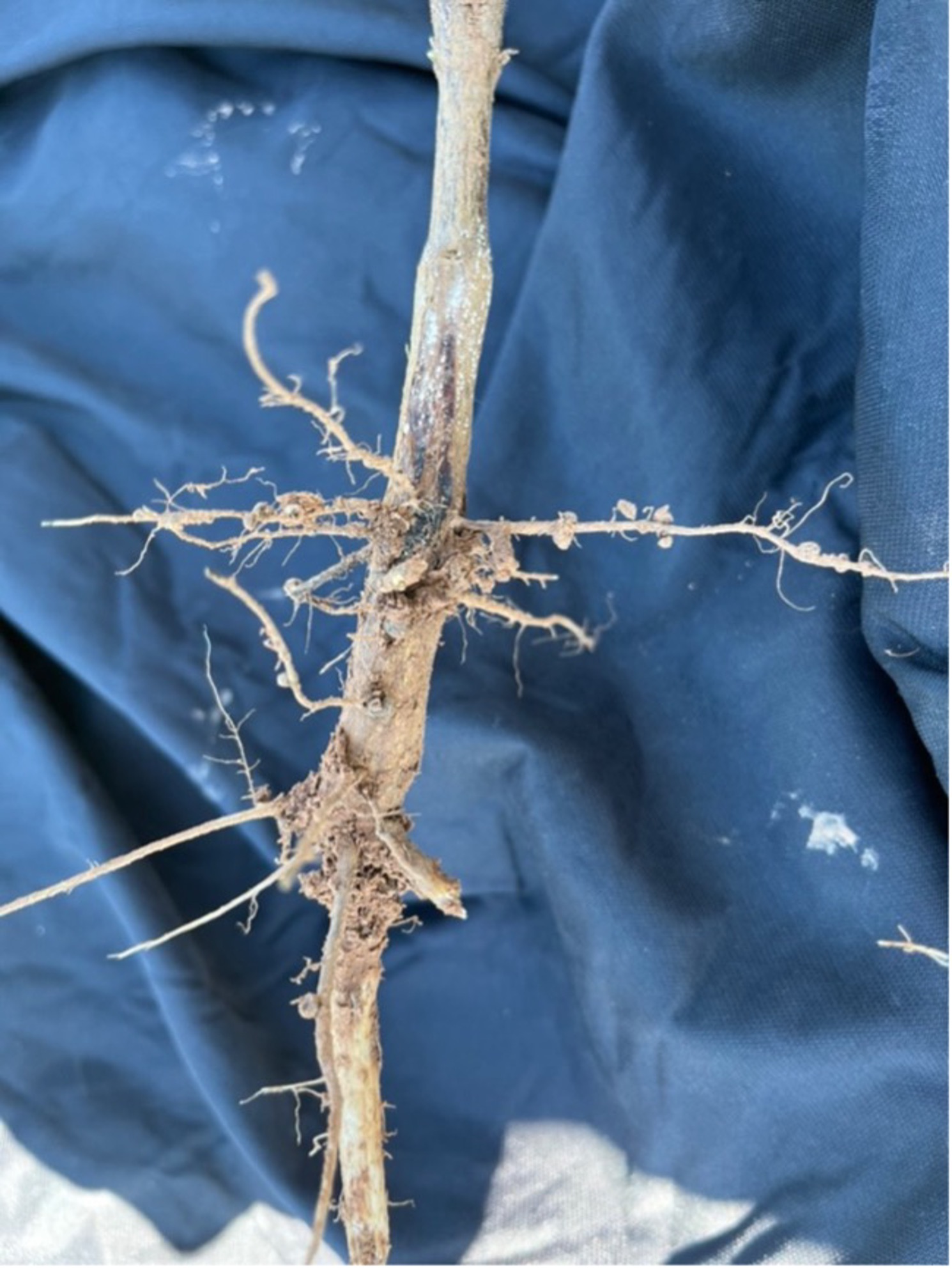
Louisiana State University AgCenter plant pathologist Vinson Doyle has long been studying taproot decline, a disease primarily seen in Louisiana soybeans. Promising new findings from research led by his graduate assistants, Richard Rush and Geona Miles, and former research associate Marcos Urquia show that their research could be nearing a breakthrough, thanks to ongoing funding from the Louisiana Soybean and Grain Research and Promotion Board.
Caused by the pathogen Xylaria necrophora, taproot decline interferes with root development, killing crops before they emerge and limiting yields of any surviving infected plants. Last year, Doyle and his team looked at refining inoculation methods to better understand the problem at hand, and now they are seeing the fruits of their labor through a clearer lens.
Refining these inoculation procedures allows the researchers to better understand the mechanism by which the fungus infects plant roots and affords them the opportunity to evaluate control measures that may limit infection.
“While taproot decline does still affect emergence, by quantifying the reduction in root growth between inoculated and uninoculated plants, we are able to study the interactions between the pathogen and plant roots,” Doyle said.
This is allowing the team to begin understanding the mechanism by which the fungus infects the roots, the genetic tools used by the pathogen to infect the roots, the genetic tools the plants used to resist the infection and identify germplasm potentially resistant to Xylaria necrophora. These refined inoculation procedures are also allowing the team to evaluate control measures that may limit infection.
“We have long suspected that the pathogen infects the roots and is restricted to that organ, while the secondary metabolites that are toxic to the plant are transported from the roots to the leaves,” Doyle said. “Richard’s transcriptomic analyses of plants inoculated under controlled conditions and in the field have provided evidence that Xylaria necrophora is restricted to the root system of its hosts, as mRNA derived from the pathogen is not detected in leaf samples.”
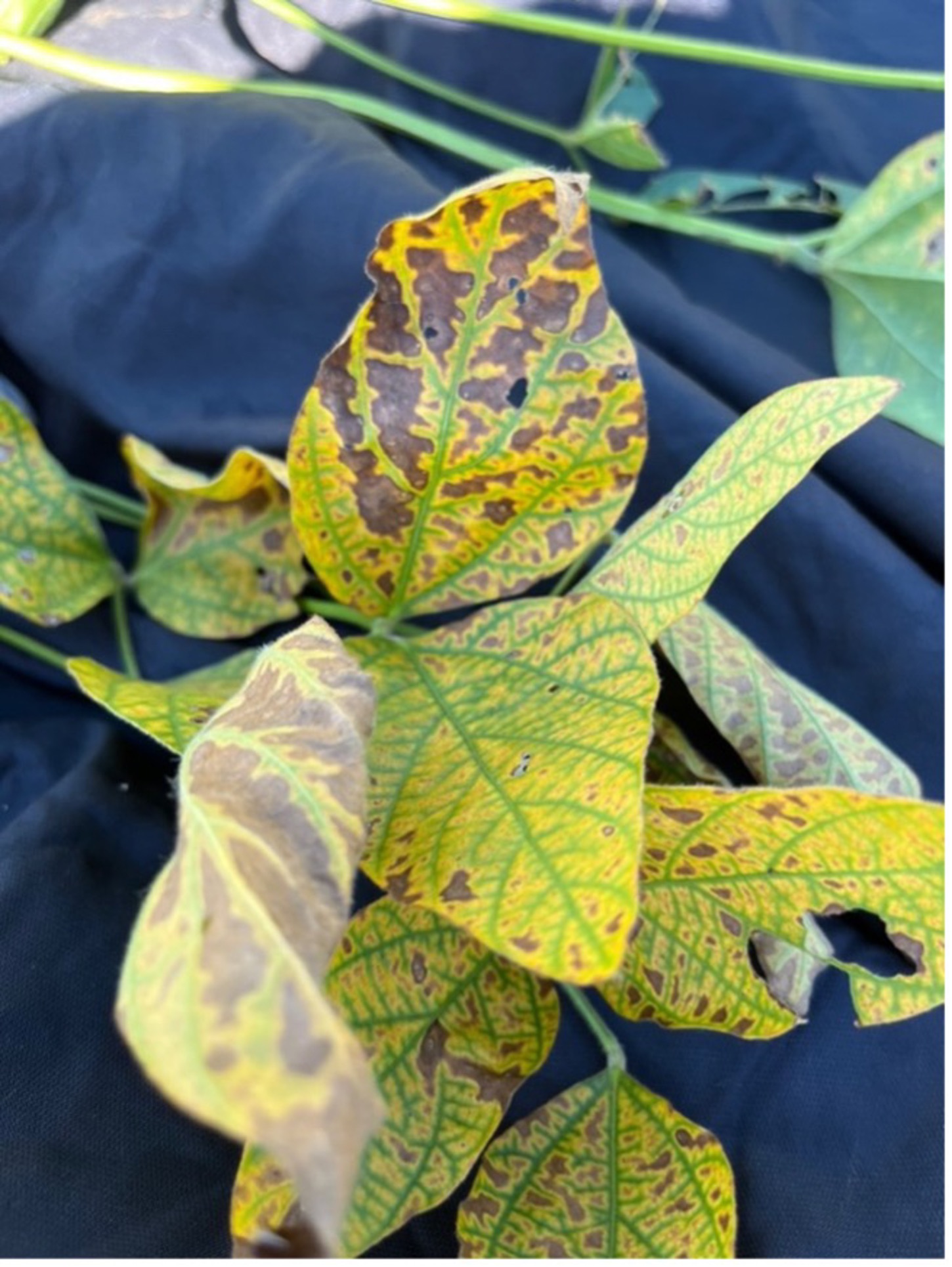
According to Doyle, further analyses of the data aim to characterize the defense mechanisms employed by both cotton and soybean plants as well as other host plants that appear resistant to taproot decline.
The way that the team aims to determine this is by studying host reactions to the metabolites produced by Xylaria necrophora. These reactions are being tested by exposing roots to cell-free culture filtrates and extracting mRNA from them.
“This experiment aims to untangle the host response to metabolites from the response to fungal colonization of the roots,” Rush said.
Doyle added that because taproot decline is likely disseminated on debris, the team has been searching for ways to limit the persistence of the disease on soybean debris and prevent infection of the root system.
Three bacterial isolates separated from debris have shown promising results in inhibiting the growth of Xylaria necrophora. Experimental inoculations of soybean roots treated with the bacterial isolates are being performed to validate the inhibiting effects as the pathogen interacts with its host.
“These bacteria present an opportunity to develop biocontrol agents against taproot decline, but there is a lot of research yet to be done in this area,” Rush said.
Additional Resources
Identifying Symptoms and Solutions for Soybean Taproot Decline – SRIN article
Unlocking the Mystery of Taproot Decline – SRIN article
Soils May Hold Solutions for Taproot Decline – SRIN article
Taproot Decline of Soybean – Crop Protection Network publication
Meet the Researcher
Vinson Doyle University profile
The Soybean Research & Information Network (SRIN) is funded by the Soy Checkoff and the North Central Soybean Research Program. For more information about soybean research, visit the National Soybean Checkoff Research Database and the 2025 Louisiana Soybean & Grain Research & Promotion Report.
Published: Mar 2, 2026


