


Research HighlightsFinding Feed Alternatives for Beef Cattle in Extruded Soybeans
Highlights:
- A research project supported by the South Dakota Soybean Checkoff has found that extruded soybeans can work well in a beef cattle diet.
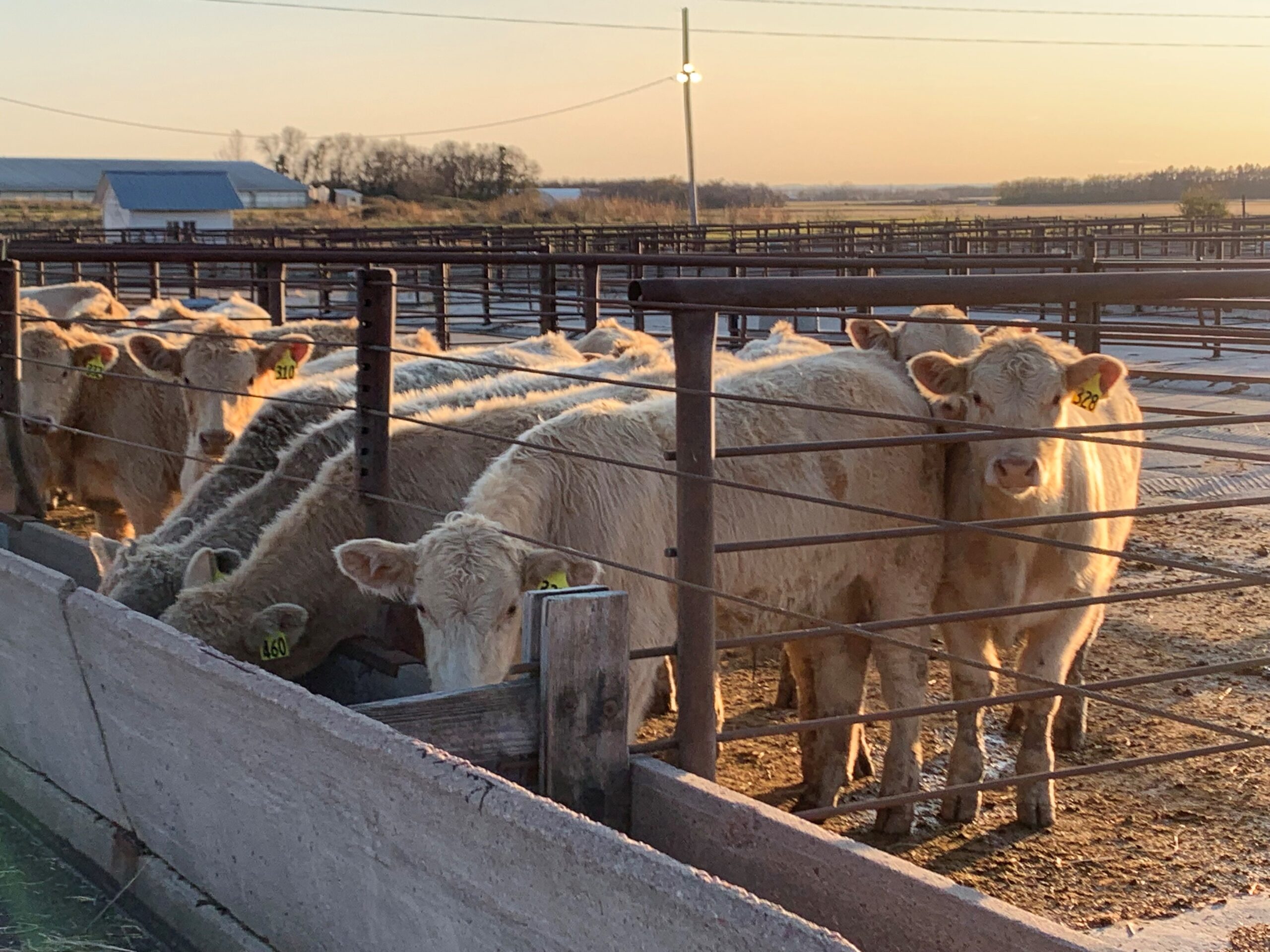
- The feedlot trial comprised of 240 steers that were fed either extruded soybeans, modified distillers grains or modified distillers grains with added corn oil.
- Beef experts compared growth performance and carcass quality, and demonstrated that the cattle fed extruded soybeans performed as well or better than the other groups in several categories.
By Carol Brown
Crop farmers have a reciprocal relationship with those who raise livestock, and both need each other to be profitable. Historically, corn has been the go-to grain in cattle feed. Within the last several decades, distillers grains — a byproduct of ethanol production — have become a staple as well in cattle diets.
Lately, cattle nutritionists have looked for value-added solutions for both the livestock and cropping industries. Soybean meal is a good source of fat and protein for beef cattle, but whole soybeans are also promising. In a research project, beef cattle were fed soybeans that were heat-treated by extrusion processing and had increased average daily gain while consuming similar pounds of feed, when compared to cattle fed modified distillers grains.
Zachary Smith, an associate professor in the animal science department at South Dakota State University, and his team are looking to improve beef quality and productivity while adding value to crops, like soybeans, for producers. He has found that cattle can benefit from a diet that includes extruded soybeans. The research was funded with Soy Checkoff support by the South Dakota Soybean Council.
Smith and his team conducted a feedlot trial comparing three different beef cattle diets: extruded soybeans, modified distillers grains, and modified distillers grains with added corn oil. The trial comprised of 10 head per pen, 24 pens, for a total of 240 steers. They analyzed results in two facets: growth performance and carcass quality.
In comparing growth performance, the cattle fed extruded soybeans had greater average daily gain, better feed conversion efficiency, and weighed more than the other two groups.
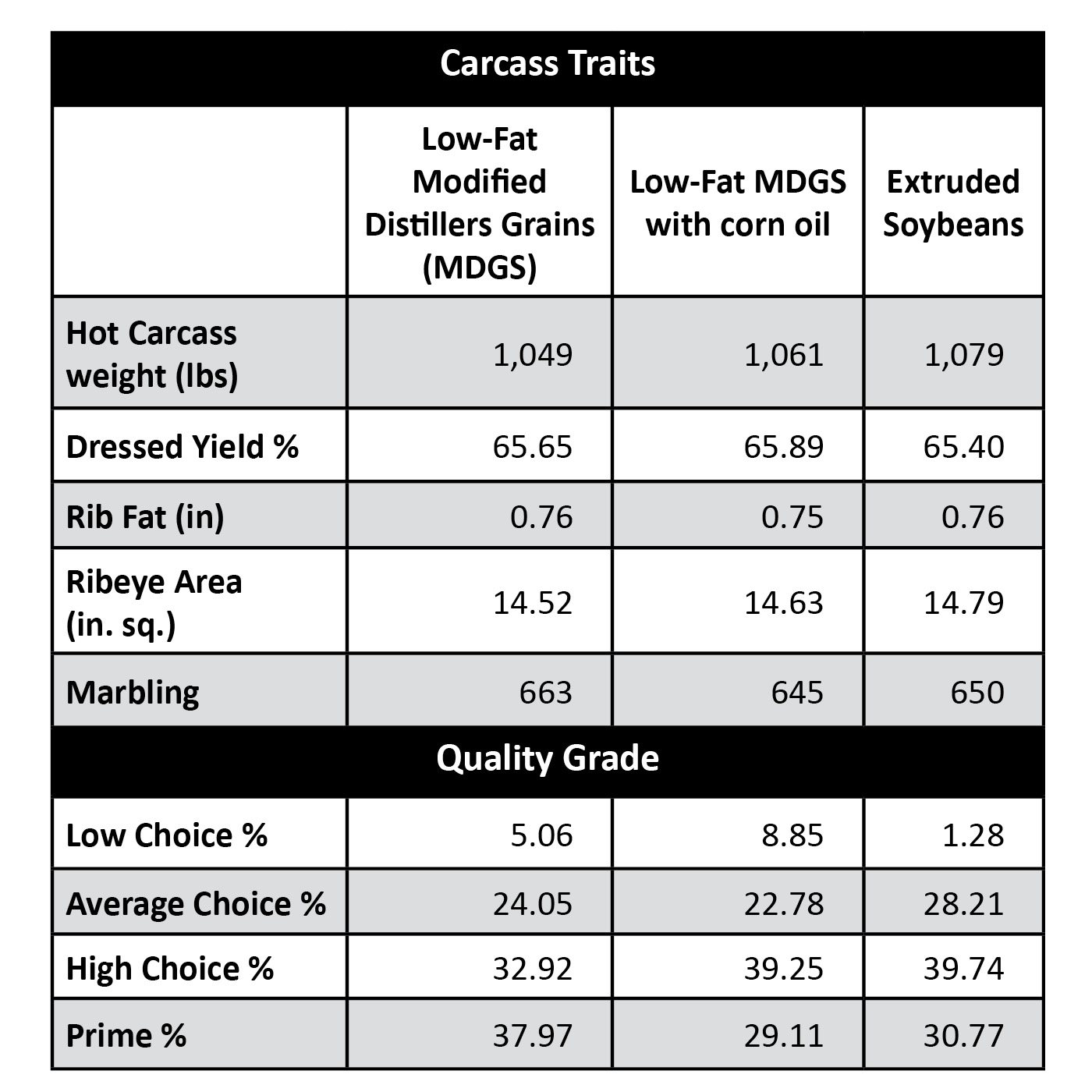
When evaluating carcass quality, the team saw an increase in carcass weight between 20 to 30 pounds over the groups that were fed distillers grains, Smith says, which translates to more than an extra $100 per head for the owner. The team compared the carcasses in several categories including dressed yield, fat thickness, muscularity, and marbling.
“We also measured quality grade, which is how beef is sold at the butcher: low choice, average choice, high choice, or prime,” says Smith. “Overall, the entire group was outstanding quality. The extruded soybean group graded at 30% prime and nearly 40% high choice.”
Benefits of Extruded Soybeans
“Extruding soybeans is a high-pressure, high-temperature process that creates a browning reaction with the protein, making it more available in the cattle’s post-ruminal environment,” he explains. “It becomes rumen undegradable protein, or RUP. The cattle’s metabolizable protein needs are met by both RUP and bacterial crude protein.”
When soybeans go through the extrusion process, the oil in the bean is retained and available for the animal. Meat marbling is derived primarily from oleic acid, according to Smith, and the cattle that were fed extruded soybeans measured high in this category as well. Retaining soybean oil in the feed offers this additional benefit beyond energy for the cattle and could be another value-added end use for crops like high-oleic soybeans.
Extrusion is different than an expeller process, where up to half of the soybean oil is removed, Smith says, and is common within the dairy industry. He had heard of expelled soybeans being used in dairies with success, and wondered how that would translate in a beef diet. He conducted a successful trial with a partial replacement of distillers grains with expelled soybeans prior to this research.
“It never hurts to have new markets for soybeans,” he says. “I began to look at adding full-fat soybeans into cattle diets, which led to the extruded soybeans trial. Although, when we looked at income over feed cost, feeding extruded soybeans to beef cattle is currently too expensive. We’re now looking at using extruded soybeans as a partial replacement in feed.”
Smith points out other benefits of adding soybeans into beef cattle diets. Many who raise cattle in the region have integrated cropping and livestock systems, he says. The soybeans they grow could remain on the farm to be used in their livestock feed, saving transportation costs as well as reducing the cost to purchase feed.
The extrusion process is an extra expenditure, but as prices of soybeans and beef fluctuate, it could be a future option. Smith has the scientific results supporting the use of extruded soybeans in beef cattle diets and will be ready when the markets are favorable for both industries.
Additional Resources
Whole, Roasted Soybeans are a Viable Option for Beef Cattle Feed – SRIN article
Meet the researcher: Zachary Smith University profile
Published: Dec 8, 2025


