

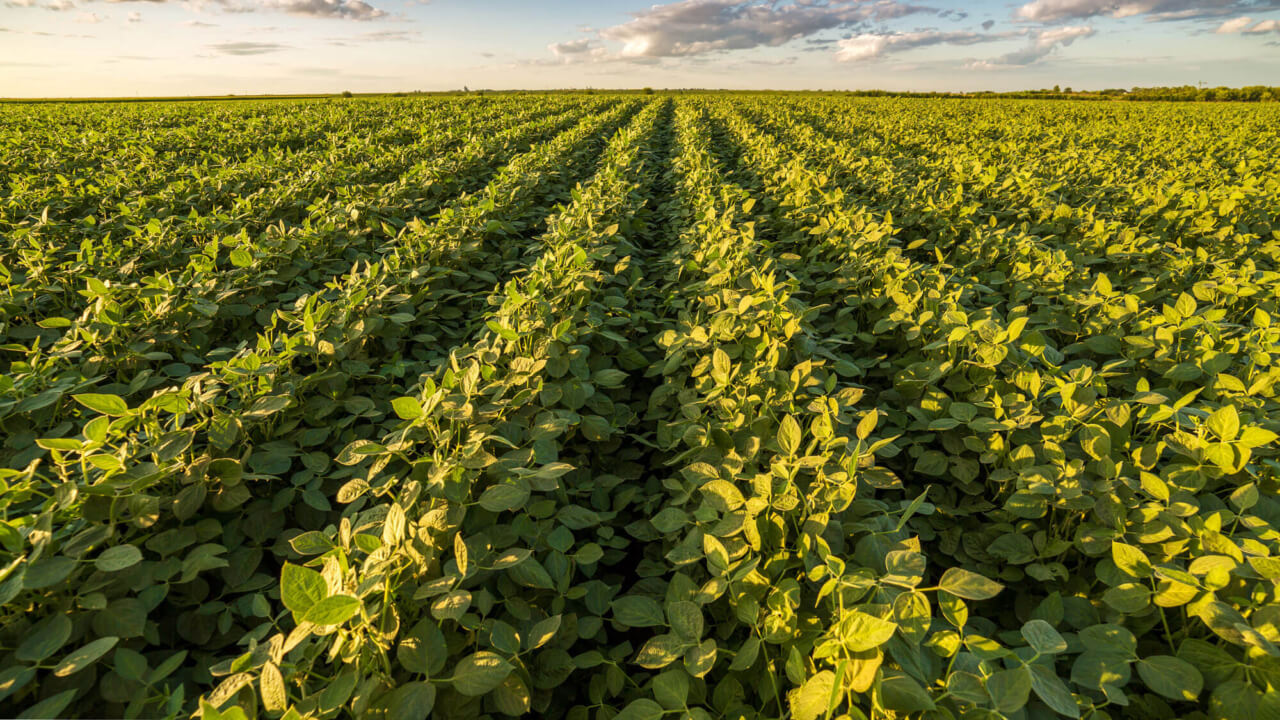
Research HighlightsFighting Frogeye Leaf Spot — Frugally
Highlights:
- Frogeye leaf spot is becoming a more common foliar soybean disease across the country.
- The value of fungicide treatments depends on disease pressure, but variety selection is important, especially with thin crop margins.
By Laura Temple
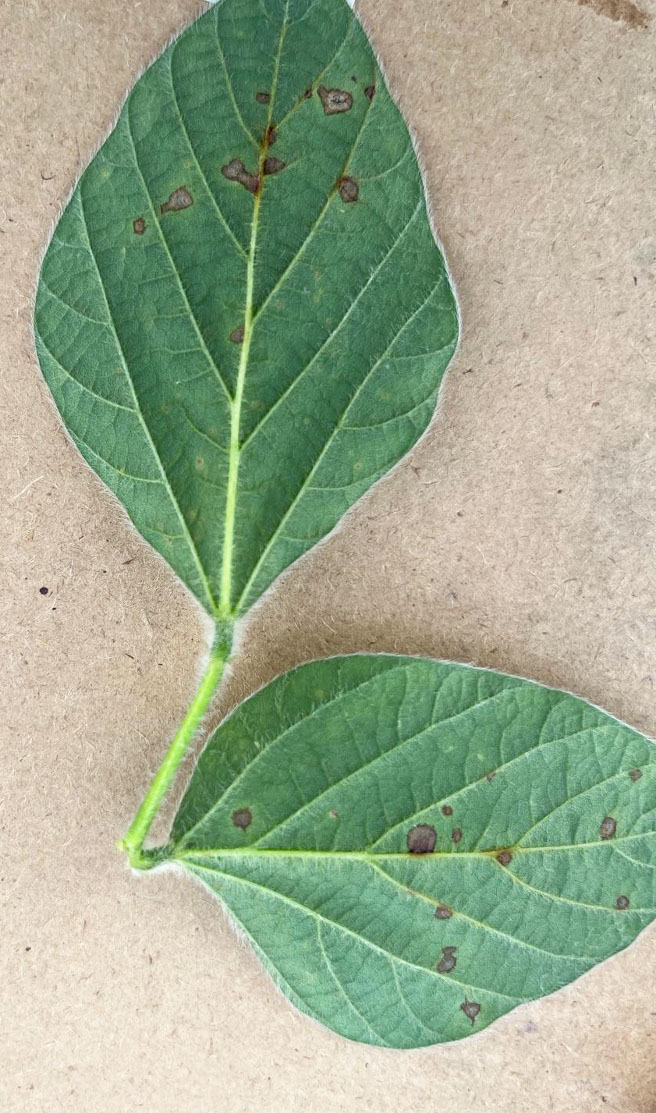
Frogeye leaf spot, a major foliar soybean disease caused by Cercospora sojina, has been a recognized challenge in southern fields for decades. Now, it’s becoming more common across the Midwest. And everywhere, the disease is developing resistance to strobilurin fungicides.
“Frogeye leaf spot pressure depends on the year,” says Laura Lindsey, professor of soybeans and small grains at Ohio State University. “We’ve found it in central and southern Ohio in the past, and during this study, we found it at low levels in northern Ohio.”
To help inform farmer decisions about foliar fungicide applications, Lindsey led a three-year study comparing two fungicides and two application timings on two soybean varieties with different levels of frogeye leaf spot resistance. The Ohio Soybean Council funded this work.
“Frogeye leaf spot is tricky, because we don’t usually see it in the field until the window to spray for it has passed,” she says. “Farmers need information to decide how to handle it.”
Lindsey’s team used small plot trials on farms throughout the state to compare foliar fungicide treatment options during reproductive growth. Over three years, they gathered data from 16 environments.
Though they monitored for frogeye leaf spot, soybeans received fungicide applications at either the beginning of pod setting, which is the R3 growth stage, or the beginning of seed fill, R5, regardless of pressure. Treatments compared a low-cost generic propiconazole fungicide with a branded fungicide containing three modes of action. They applied each treatment to two soybean varieties carrying resistance to frogeye leaf spot, with one measurably stronger than the other.
Results varied, depending on the presence of frogeye leaf spot.
Fungicide Findings
“Where we saw zero frogeye leaf spot pressure, we saw no response from either fungicide or application timing on either soybean variety,” Lindsey reports.
When frogeye leaf spot appeared, regardless of year or location, pressure was low.
“With low pressure, we saw some small yield increases at the R3 application timing,” she says. “The fungicide with three modes of action caused the most yield increase, but with both fungicides, that increase was small. Neither application provided an economic advantage.”
Lindsey confirms that when disease incidence and severity calls for fungicide, R3 is the best application timing.
Varietal Resistance
When monitoring for frogeye leaf spot symptoms in plots, Lindsey’s team observed less frogeye leaf spot in the soybean variety carrying stronger resistance. That variety also responded more to treatment.
“The variety with stronger resistance showed a 3 bushel-per-acre increase under the fungicide with three modes of action,” Lindsey says. “That wasn’t enough to provide an economic return, but it was a response.”
These results reinforce the importance of variety selection.
“Variety selection is a valuable tool in tight margins,” she adds. “Know what diseases are common in a field, and select varieties based on that.”
Additional Resources
Frogeye Leaf Spot of Soybean – Crop Protection Network information page
Crop Disease Forecasting – Crop Protection Network information page
Forecasting Soybean Disease Pressure – SRIN article
Meet the Researcher: Laura Lindsey SRIN profile | University profile
The Soybean Research & Information Network (SRIN) is funded by the Soy Checkoff and the North Central Soybean Research Program. For more information about soybean research, visit the National Soybean Checkoff Research Database.
Published: Dec 22, 2025


