

Research HighlightsA Systems Approach to Soybean Planting Can Maximize Profitability
Highlights:
- Ongoing research by Michigan State University researcher Maninder Singh is using a systems approach for making soybean planting decisions.
- Singh is exploring pieces including planting dates, soybean maturity, seeding rates and more, to help farmers be productive and profitable.
- There are many pieces to the planting puzzle, and every field will have a different solution based on the variables.
By Carol Brown
Soybean planting is only a part of a whole crop production system. The puzzle pieces that create the full planting picture — soybean varieties, maturity groups, timing, seeding rates and more — are what Maninder (Manni) Singh’s research has been focused on for several years.
The Michigan State University associate professor of cropping systems agronomy is thinking like a farmer and considering all the decisions that need to be made before the planter meets the field.
Through research projects supported by Soy Checkoff funding from the Michigan Soybean Committee, Singh and his team are taking these individual pieces into consideration to complete the planting puzzle. The finished picture may look different for each farmer, but Singh’s research can help when deciding which pieces fit the best.
“We’ve been on this planting journey for some time,” he says. “We are using a systems approach towards soybean planting to maximize yield and profitability. Can we push for a few more bushels without spending extra or even reducing inputs?”
When and What to Plant
“We’ve explored early planting and its yield benefits, but in itself, it’s not a silver bullet for higher yields,” he comments.
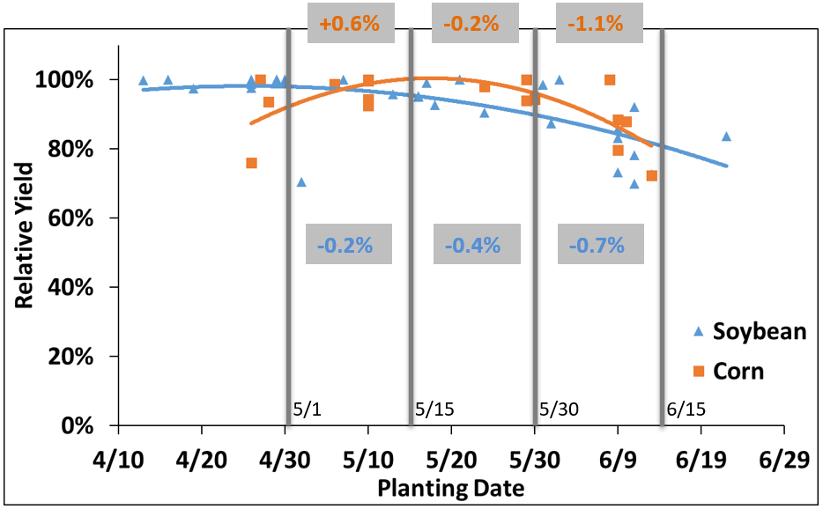
When considering early planting dates, historically corn goes in the ground first. But Singh has studied this and supports other research results that show soybeans can have success when planted before corn.
“Corn doesn’t seem to like those early-season, non-ideal, cool and wet soil conditions that can cause variability in emergence,” he says. “In the northern climates, the length of the growing season is our limitation. There is a short window when farmers can prioritize soybeans over corn, but not as a general rule.”
Singh uses the term “timely” when discussing soybean planting. There is such a thing as planting too early, which, in Michigan, is usually the first few weeks in April. Soils are cold, but soil moisture is a bigger issue, he says, which can lead to compaction issues and possible weed control challenges.
An important factor with earlier planting is varietal maturity. Singh has found that farmers who plant early can see a yield benefit when selecting a half or full maturity group higher than they typically use. He has found that when planting early and not extending the reproductive phase, farmers may see a gain in the number of beans but may suffer a loss in their weight.
If longer maturities are used when planting earlier, the soybean will also have a longer reproductive phase, in addition to a longer vegetative phase, to produce more beans per unit and maintain their weight, Singh says, hopefully gaining a few extra bushels.
Timely planting can mean something different for farmers who are growing wheat or cover crops after soybeans. Keeping the same maturity group or even a little lower works in these situations. This helps with early soybean harvest and allows for timely winter wheat planting, which is critical to achieve high wheat yields. Singh says the goal here is not maximizing soybean yield, but rather maximizing the whole system-level yield.
Seeding Rates and Seed Treatments
Another piece in the systems approach is seeding rate, which depends on when farmers are planting.
“Our hypothesis was if a farmer has cool and wet conditions, a higher seeding rate would be needed,” he says. “But our data did not show this was the case. With early planting, there will be some gaps in germination. But the plant will take advantage of the extra growing degree days and produce more nodes, more pods, and more beans per plant, especially with the longer maturities.”
Singh is more comfortable having farmers use a seed treatment rather than increase seeding rates under early-season planting, based on the pathogens that are in Michigan soils.
Row Spacing and Other Puzzle Pieces
Over the course of Singh’s research, he and his team have explored row spacing in early planting dates. Logically, if planting is delayed, narrow, 15-inch, rows would be better, because there is less time to achieve a closed canopy. But the team saw that narrow rows also worked well under early planting conditions, demonstrating a 9% yield gain regardless of planting date.
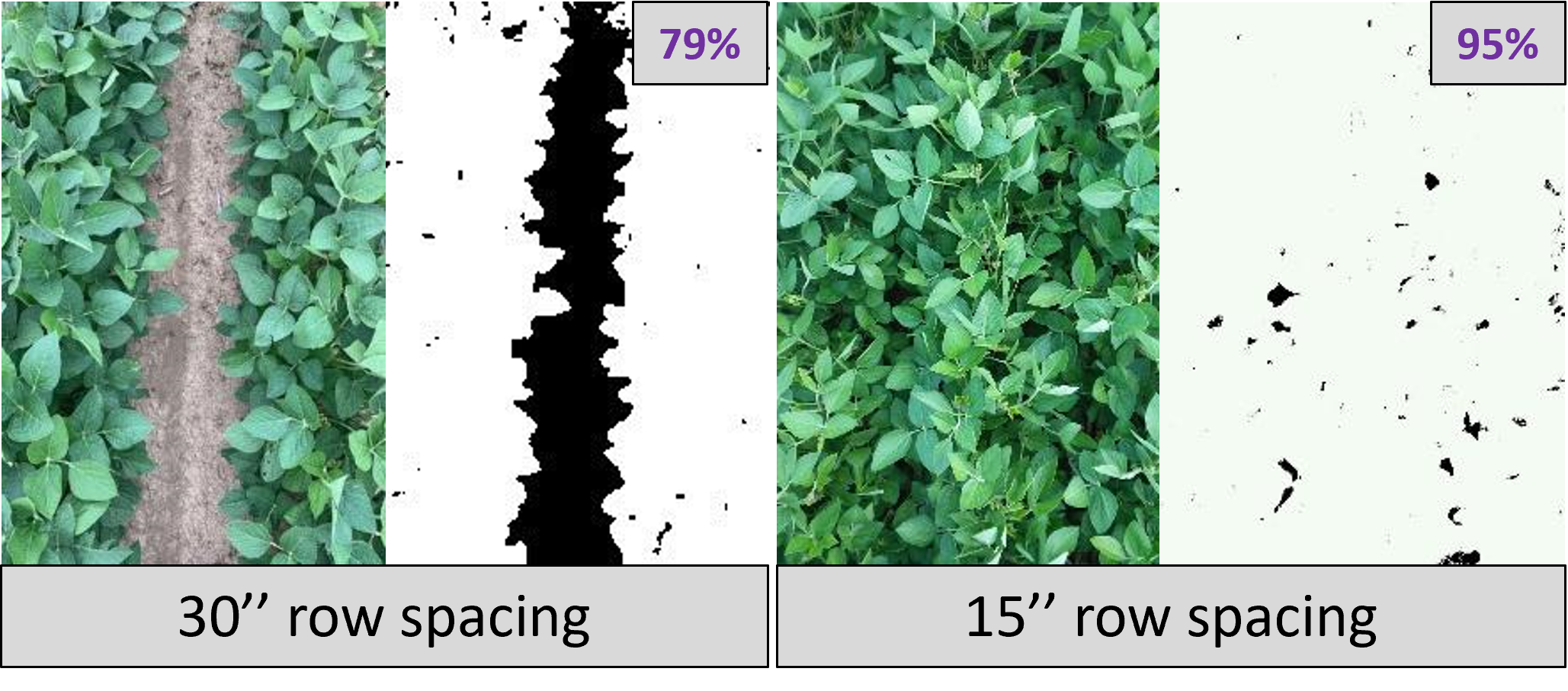
“If there is white mold or other disease pressure, then narrow rows might not be ideal. Unless that’s a factor, narrow rows and optimal seeding rates, rather than high rates, is a good equation,” he says. “We also conducted trials around the idea that seeding rates needed to increase under narrow rows, but we did not see that. Seeding rates that maximized profits were relatively the same for narrow and wide-row spacings for April and May plantings.”
Growers with soils that are prone to crusting might benefit from keeping a higher seeding rate in narrow rows, he suggests, so that plants are closer to each other and can work together in breaking the crust.
The team explored other pieces of the planting puzzle including seed quality and weed control. For earlier planting, Singh suggests using a higher quality seed that performed well under cool germination and vigor tests. For best weed control, a pre-emergence followed by a post-emergence herbicide program is important under early planting conditions. Weed control is important under any conditions, as it could become a bigger issue if farmers aren’t on top of the issue.
The soybean planting puzzle can be daunting when making decisions to find the right combination of pieces for success. Singh’s research results can direct farmers to produce higher yields and hopefully save money on seeds and input costs.
Additional Resources
Making a Difference with Nitrogen Management in Early Planted Soybeans – SRIN article
Planting Date and Tillage Systems Can Affect Variable Rate Seeding – SRIN article
Optimal Soybean Maturity Group Selection is Influenced by Planting Date in Northern Production Systems – Crop Science
Soybean Seeding Rate and Seed Treatment That Maximize Yield and Profitability Based on Planting Date – Agronomy Journal
Michigan State University Cropping Systems Agronomy Lab – website
Meet the researcher: Maninder Singh SRIN profile | University profile
Published: Dec 8, 2025


