

Maninder Singh – Soybean Research Profile
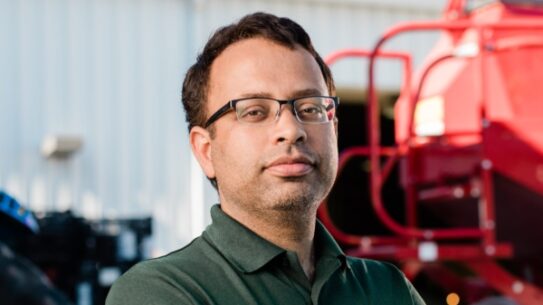
Maninder Singh, Extension Specialist and Associate Professor of Cropping Systems Agronomy, Michigan State University
Why did you decide to pursue a career that includes soybean research?
I grew up in a small village in India, part of a farming community. My father was an elementary school teacher and farmer. He tried different things on the farm to see what worked. He instilled in me the idea of how we can use science to improve our farming and make it profitable. It’s a global issue — how can we keep farmers profitable while producing enough food for our growing population.
I love applied research, which is what my father did on the farm. I like research that is driven by the challenges that farmers are facing now or can foresee in the future. I also love extension, which is doing the research and taking the results back to the farmers.
What research topic have you completed in the past, or are working on now, that could have or has had the most significant impact on soybean production?
I have done a lot in this overarching theme of developing a systems-level approach based on a specific field and the end goals of the farmer. Specifically, planting systems and the variables that come with it: planting time, planting sequence, variety selection and seeding rate. All of these are factors of farm management that farmers can change to get all their crops in the ground and see a return on their investment.
How has the soybean checkoff enhanced your ability to find answers to production problems for farmers?
The Soy Checkoff is critical. For someone like me in applied research and extension, I have my own ideas but I need to make sure the research is actionable for farmers. I believe in the farmer board as a feedback mechanism. We try to understand their problems and opinions, then we can develop more research that can go back to these checkoff organizations that are comprised of farmers. And their investment can lead to larger multi-state or national projects and we can leverage the checkoff investment to make a bigger impact.
Within your area of expertise, what are the top two or three general recommendations you would offer farmers to improve their management practices?
Again, planting decisions are key. Timely planting is crucial along with using a systems approach to maximize the benefit of early planting. We can’t control Mother Nature, so if planting is delayed, farmers need to know what they can change to minimize the yield penalty that occurs from late planting.
In terms of soybean and production prices, farmers need to be aware of the products they are putting on the crop. Maybe they don’t need certain products under their field conditions.
Within your area of expertise, what do you consider to be critical soybean research needs that can impact the profitability of farmers in the future?
As a researcher, I’m conducting one- or two-factor trials, but the farmer has to deal with the entire system. We need more systems-level work to help the farmer improve their productivity, profitability and resilience. Also, if we have more regional research, we can see how results translate across different states.
On-farm research is important, but it’s also important to do it right. We as researchers need to help the farmer conduct on-farm trials so they can learn on their own fields, and we need to take advantage of technology in all aspects.
SRIN articles:
Delving Into Unanswered Questions About Soybean Biologicals
A Systems Approach to Soybean Planting Can Maximize Profitability
Michigan Researcher Focuses on Soybean Yield Potential with Several Management Strategies


