

Research HighlightsDelving into Unanswered Questions About Soybean Biologicals
Highlights:
- A Michigan State University research team is taking a closer look at the handling and lifespan of soybean biological seed treatments through a project supported by Michigan Soybean Committee.
- The team found that after opening the package, the living microbes can be altered, therefore lowering efficacy and ultimately return on investment.
- Product storage was also explored, testing viability at room temperature, under refrigeration, and freezing.
By Carol Brown
Biologicals have garnered a lot of interest over the last few years for soybean growing success. These living organism treatments can help to reduce disease impact, improve nitrogen fixation, promote plant growth and more. But several questions about these products are still unanswered.
A recent research project conducted by the Science for Success group tested numerous biological seed treatments for plant health and growth in trials across 21 states that resulted in some local success. But when the data was amassed across the test sites, none of the treatments were statistically exceptional in accomplishing their jobs.
Michigan is one of those 21 states for the Science for Success project, led by Maninder Singh, an associate professor of cropping systems at Michigan State University. In addition to the multi-state project, he conducted research on the lifespan and handling techniques of biological seed treatments, in collaboration with MSU associate professor and microbiologist Sarah Lebeis. The project is supported by Soy Checkoff funding through the Michigan Soybean Committee.
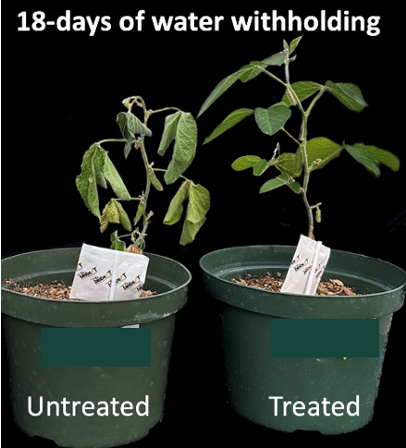
“I wanted to learn how to take the scientific results from a controlled environment, like the greenhouse (Figure 1), to the field and make it work for farmers,” he remarks. “I believe there are missing pieces between the two environments.”
Biologicals are living products; therefore they are more challenging to deal with than chemicals such as herbicides or insecticides. Farmers are used to handling these chemical products, says Singh, so the thought process behind biologicals needs to have different management strategies.
“The moment the product is opened, the composition and the concentration of the microbial species may change,” he explains. “When they are exposed to air and water, there is potential for product contamination and alteration, which can lead to lower efficacy and, eventually, lower return on investment.”
Label Guidelines are Varied
Company product handling guidelines are unique for each biological, Singh says, and there aren’t any regulatory mechanisms in place across the industry. General product information differed in how long the biologicals remain the same once the package is opened.
The research team measured the composition of multiple biological products when opened and left for six hours, a day, and a week. They found that within six hours, the products remain basically similar to when first opened. After 24 hours, several products began to change due to contamination. After one week, there was a large shift in microbial composition with products no longer resembling the original biologicals. As a result, Singh recommends that farmers should apply these products within a few days at the most after they are opened.
The team also compared product stability across different temperatures. They stored the biologicals in the refrigerator, in the freezer, and at room temperature.
“The products stored in the refrigerator were okay even after one year,” he says. “The products kept in the freezer for a year had some variance in composition, but most fared well. The least desirable storage is at room temperature.”
Singh recommends storing these products in refrigerated, but not freezing, conditions to stabilize their lifespan.
Other Questions to Answer
“We are also working on how the various biologicals interact with the fungicide and insecticide treatments already on the seeds,” he says. “We need to figure out survival potential. There is potential for a lot of product-to-product variation, based on the microbe that’s applied.”
When farmers invest in a microbial product, it should perform at optimum levels. But when handling interferes with the microbes’ viability and the introduction of contamination, the effectiveness is reduced. Even when a product is handled correctly, it still must compete with all the native biology in the soil.
“I think this is another missing piece in the use of biologicals,” he says. “How well do they interact with the microbes in the soil? It is said there are a billion individual microscopic cells in a teaspoon of soil. We need to investigate how the microbial products being put on the seed interact with one another and within the soil. Additionally, we also need to look at any potential long-term impacts of these products on soil health.”
When biologicals perform at their best, they can provide a boost to soybean growth and development. Farmers who use these need to be aware of how they handle the products to capture the most return on their investment.
Additional Resources
Biological Seed Treatments on Soybeans – Science for Success fact sheet
Biological Seed Treatments: The Big Picture – SRIN article
Testing Emerging Input Recommendations – SRIN article
Pioneering Protein Biostimulant Research in Soybeans – SRIN article
Collaboratively Delivering Soybean Best Management Practices for Soybean Planting – Crop Protection Network video
Meet the researcher: Maninder Singh SRIN profile | University profile
The Soybean Research & Information Network (SRIN) is funded by the Soy Checkoff and the North Central Soybean Research Program. For more information about soybean research, visit the National Soybean Checkoff Research Database.
Published: Jan 19, 2026


